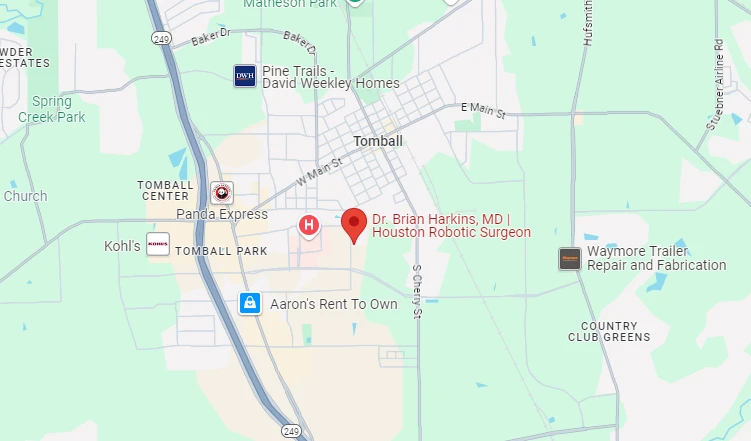
455 School St. Suite 10 Tomball, Texas 77375
Mon-Thu: 9:00 am – 5:00 pm | Fri: 9:00 am – 2:00 pm


An inguinal hernia can sometimes be watched before it is repaired. The National Institute of Diabetes and Digestive and Kidney Diseases (NIDDK) says men with few or no symptoms may be able to safely delay surgery, and it sets no time limit. About 70 percent of men who delay need surgery within 5 years. A strangulated hernia is an emergency.
You may have noticed a bulge in your groin, heard that it is an inguinal hernia, and then wondered how long it can stay as it is before something has to be done about it. If you live in Tomball, Northwest Houston or elsewhere in the greater Houston area, that question can shape how you plan the coming months of work, travel and time with your family.
The answer has two parts: a time frame drawn from published figures on men who delay surgery, and a short list of signs that end the waiting altogether. Knowing both may help you ask clearer questions, whether you are reading about the Tomball surgical practice of Dr. Brian Harkins or preparing to talk with any surgeon about your own hernia.
In this guide, you'll learn whether NIDDK gives a time limit for leaving an inguinal hernia untreated, what the delay figures and one randomized trial show for men with few symptoms, which signs point to a stuck or strangulated hernia, what NIDDK asks of men who delay surgery, where the sources leave gaps, and what Dr. Brian Harkins provides for hernia patients in Tomball.
NIDDK's inguinal hernia page gives no cutoff in weeks, months or years for leaving an inguinal hernia untreated. What the page does say is that men with inguinal hernias that cause few or no symptoms may be able to safely delay surgery, and that men who delay surgery should watch for symptoms and see a doctor regularly.
The only time frame the page offers comes from what happens to men after they delay. NIDDK reports that about 70 percent of men who delay surgery will develop new or worsening symptoms and will need surgery within 5 years. The figure describes a group of men who delayed surgery, and the page does not present it as a safe waiting period for any one person.
NIDDK also says that most people with inguinal hernias will need surgery to repair the hernia. Hernia repair is a surgical operation for the correction of a hernia, and reference sources on the operation name open repair, laparoscopic repair and robotic-assisted repair.
| Situation | What NIDDK's inguinal hernia page says | What it means for timing |
|---|---|---|
| Few or no symptoms (men) | May be able to safely delay surgery, while watching for symptoms and seeing a doctor regularly | No cutoff in weeks, months or years is given |
| New or worsening symptoms after a delay (men) | About 70 percent of men who delay develop new or worsening symptoms and need surgery within 5 years | The 5-year window is the only time frame the page gives |
| Stuck (incarcerated) hernia | Requires emergency surgery to repair the hernia and treat the complications | The delay ends |
| Strangulated hernia | The blood flow to the hernia is cut off, a life-threatening condition that requires emergency surgery | The delay ends |
The delay figures for inguinal hernia cover men with few or no symptoms, and they come from two separate sources that are read here on their own terms. The first is the NIDDK figure above, and the second is a randomized trial that compared watchful waiting with standard repair.
In that trial, as summarized in the journal American Family Physician, 720 men aged 18 and older with inguinal hernias that caused no symptoms or minimal symptoms were assigned either to watchful waiting or to standard repair. Follow-up lasted 2.0 to 4.5 years for 90 percent of the men in the trial.
Over that follow-up, 23 percent of the men in the watchful waiting group crossed over to surgery. The trial found no significant difference between the two groups in pain that limited activity or in quality of life.
The overall complication rate in the watchful waiting group was 1.8 per 1,000 patient-years. The trial summary lists two events behind that rate: one acute incarceration without strangulation within 2 years, and one incarceration with bowel obstruction at 4 years.
The 23 percent and the 70 percent come from different sources with different follow-up periods, so they are two separate figures rather than one statistic. Both describe men, and neither one tells you how long your own hernia can wait.
| Delay figure | Number | Who it covers | Source |
|---|---|---|---|
| Men who delay and then need surgery | About 70 percent within 5 years | Men who delay inguinal hernia surgery | NIDDK inguinal hernia page |
| Watchful waiting group that crossed over to surgery | 23 percent | 720 men aged 18 and older with no or minimal symptoms, followed 2.0 to 4.5 years (90 percent of them) | Randomized trial, summarized in American Family Physician |
| Overall complication rate while waiting | 1.8 per 1,000 patient-years | The watchful waiting group in the same trial | Same trial summary |
| Pain that limited activity, and quality of life | No significant difference between watchful waiting and repair | Both groups in the same trial | Same trial summary |
A delay ends when an inguinal hernia becomes stuck or strangulated, according to NIDDK. The page explains that a hernia may become stuck, or incarcerated, and that it may become strangulated, meaning the blood flow to the hernia is cut off.
NIDDK describes a strangulated hernia as a life-threatening condition, and it says that stuck or strangulated hernias require emergency surgery to repair the hernia and treat the complications. The page lists the signs below as reasons to seek medical help right away.
| Sign | How NIDDK words it |
|---|---|
| Bulge size | A bulge that is suddenly larger than before |
| Fever | Fever |
| Pain at the hernia | Sudden or severe pain or tenderness at the hernia |
| Signs of intestinal obstruction | Abdominal pain, bloating, nausea or vomiting |
These signs come from NIDDK's guidance on inguinal hernia, and the table is not a way to diagnose yourself. Whether a change you notice is one of these signs is a question for a doctor. In the trial described above, the two complications recorded in the watchful waiting group were both incarcerations.
NIDDK asks men who delay inguinal hernia surgery to watch for symptoms and to see a doctor regularly. How often to be seen is a question for the doctor who is following the hernia.
Taken together, the points on NIDDK's page set out how a delay works for men with an inguinal hernia:
None of these points is a time limit. They describe how a delay is handled while it lasts, and the decision about whether and when to repair your hernia stays with your surgeon, who can set it against your own symptoms and health.
The sources behind this guide do not answer every timing question a reader might have, and knowing where the gaps are can keep you from filling them with guesses. The table below lists the questions the sources leave open.
| Question | What the sources reviewed for this guide say |
|---|---|
| A safe number of weeks or years for any one person | Not given. NIDDK's inguinal hernia page sets no cutoff |
| How fast an inguinal hernia grows | Not given |
| Delay figures for women | Not given. The NIDDK figure and the trial both cover men |
| A yearly risk of strangulation | Not given |
| Whether the level of pain predicts risk | Not given |
The delay figures in this guide describe men. The sources give no delay figure for women with an inguinal hernia, and the timing of repair for a woman's hernia is a question for her surgeon.
The trial's follow-up also ran 2.0 to 4.5 years for 90 percent of the men, which is a shorter span than NIDDK's 5-year window. Reading the two figures side by side as one trend would go beyond what either source states.
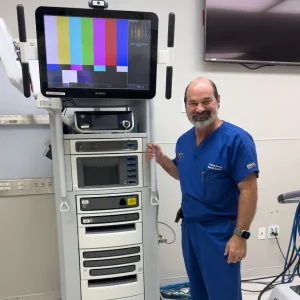
Dr. Brian Harkins, MD, FACS (Fellow of the American College of Surgeons), is a board-certified general surgeon through the American Board of Surgery and has practised in the Northwest Houston area since 1997. You can read more about Dr. Brian Harkins and a practice built on safety, efficacy, and minimally invasive surgery, with personalized treatment plans for each patient.
Hernia surgery. Dr. Harkins treats ventral, incisional and inguinal hernias, and performs robotic hernia surgery in Tomball. If you have been watching a hernia and are unsure about the timing of repair, ask your surgeon which options apply to your own hernia.
Hospital affiliation in Tomball. Dr. Harkins is affiliated with HCA Houston Healthcare Tomball, formerly known as Tomball Regional Medical Center, and sees patients from Tomball, Northwest Houston and the greater Houston area.
If you have had a groin bulge for some time and would like a general surgeon's view of it, you can reach Dr. Harkins' office to ask about a hernia you have been watching.
An inguinal hernia becomes an emergency when it is stuck or strangulated, according to NIDDK. NIDDK also says men with few or no symptoms may be able to safely delay surgery, and it lists the signs that call for medical help right away.
An incarcerated hernia is a hernia that has become stuck. NIDDK says a stuck or incarcerated hernia requires emergency surgery to repair the hernia and treat the complications.
A strangulated hernia is one in which the blood flow to the hernia is cut off. NIDDK describes it as a life-threatening condition that requires emergency surgery.
NIDDK says most people with inguinal hernias will need surgery to repair the hernia. Whether and when your own hernia needs repair is a question for your surgeon.
NIDDK says men with inguinal hernias that cause few or no symptoms may be able to safely delay surgery. It also says men who delay should watch for symptoms and see a doctor regularly.
In the randomized trial of 720 men with no or minimal symptoms, there was no significant difference between watchful waiting and repair in activity-limiting pain or quality of life. The trial enrolled men only.
The NIDDK figure and the trial in this guide both describe men. The sources reviewed give no delay figures for women. Timing for a woman's hernia is a question for her surgeon.
NIDDK lists a bulge that is suddenly larger than before, fever, sudden or severe pain or tenderness at the hernia, and abdominal pain, bloating, nausea or vomiting. It says these call for medical help right away.
Reference sources on hernia repair name open repair, laparoscopic repair and robotic-assisted repair. Your surgeon can explain which approach applies to your own hernia.
Yes. Dr. Brian Harkins is a board-certified general surgeon in Tomball who treats ventral, incisional and inguinal hernias, performs robotic hernia surgery, and is affiliated with HCA Houston Healthcare Tomball.
How long you can leave an inguinal hernia untreated has no fixed answer in NIDDK's guidance, which gives no cutoff in weeks or years. Men with few or no symptoms may be able to safely delay surgery while watching for symptoms and seeing a doctor regularly, and about 70 percent of men who delay need surgery within 5 years.
A stuck or strangulated hernia ends the delay, and NIDDK lists a suddenly larger bulge, fever, sudden or severe pain, and signs of intestinal obstruction as reasons to seek medical help right away. The sources give no figures for women and no safe waiting period for any one person. Your own surgeon's advice for your hernia comes first.
Questions about an inguinal hernia you are watching?
Call 281-247-0503 to discuss your inguinal hernia.
This information is educational and is not a substitute for professional medical advice. Every patient is different. Dr. Brian Harkins will discuss whether robotic-assisted surgery is right for your specific situation based on your anatomy, health, and goals.


Dr. Brian Harkins is a renowned surgeon specializing in advanced, minimally invasive, and robotic surgical techniques. With a dedication to innovation and personalized patient care, he has transformed countless lives by delivering exceptional outcomes.
I want a website like this, where do i start?