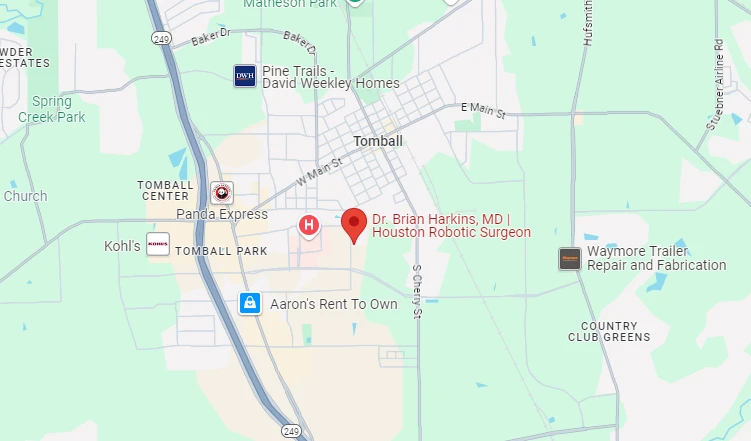
455 School St. Suite 10 Tomball, Texas 77375
Mon-Thu: 9:00 am – 5:00 pm | Fri: 9:00 am – 2:00 pm


For most hernias, mesh is recommended because it reinforces the weak spot and generally lowers the chance of recurrence. For some selected hernias, a repair using your own tissue is a reasonable choice. The right answer depends on the hernia's type, size, and location, the strength of the surrounding tissue, and any earlier repairs.
If you're facing hernia repair, a hernia specialist in Houston weighs the hernia's location, size, and any earlier repairs before recommending mesh or a repair using your own tissue. The word mesh can bring up unsettling stories, while skipping it may leave you wondering whether the hernia will return, so it helps to ask about both options, including discomfort and the chance of another operation.
Your examination and medical history put those concerns in context, and a clear explanation can make the decision feel far less daunting. In this guide, we'll cover what mesh does, which details can change the recommendation for your repair, when tissue repair enters the conversation, and how robotic surgery fits into the picture, so you can walk into your consultation with better questions.
A hernia forms when tissue or part of an organ pushes through a weak spot in the muscle or connective tissue that normally holds it in place. In a tissue repair, the surgeon closes that opening with sutures using your own tissue. In a mesh repair, the surgeon closes or covers the opening and then places a flexible piece of surgical mesh over or behind it, so the surrounding tissue can grow into the mesh and share the load.
Surgeons have long described these choices in terms of types of hernia repair, and both approaches remain in use today. For many hernias, mesh lowers the chance of recurrence, but its potential complications and your preferences deserve discussion. Repair without mesh carries risks too, including recurrence, which is why neither option should be presented as risk-free.
What mesh is designed to do:
Mesh is not one single product. Surgeons choose among permanent synthetic mesh, absorbable mesh, and biologic materials, and they also decide where the mesh sits in the layers of the abdominal wall. Those choices depend on the hernia, the condition of the area, and whether infection or earlier surgery is part of the history.
| Factor | Mesh Repair | Tissue Repair (No Mesh) |
| How the opening is closed | Sutures or coverage, reinforced with mesh | Sutures using your own tissue |
| Recurrence | Generally lower for many hernia types | Can be higher for larger or recurrent hernias |
| Possible concerns | Mesh infection, chronic pain, adhesions, rare mesh-related reoperation | Recurrence, tension on the repair, chronic pain |
| Often considered for | Most inguinal, ventral, and incisional hernias | Selected small hernias, some patients who prefer to avoid mesh |
| Foreign material left in the body | Yes | No |
Neither option guarantees a particular outcome, and the type of hernia matters when comparing them. A Robotic Surgeon in Houston can explain the available approaches and why one may fit your situation better than the other.
A Hernia specialist in Houston looks beyond the bulge. The opening and your surgical history tell a fuller story, and two people with hernias that look similar from the outside can end up with quite different recommendations once the details are known. The examination, and sometimes imaging, helps your surgeon see what the repair will actually need to hold.
A groin hernia raises different questions from one near your navel or an old incision, so the same repair plan won't fit every location. Inguinal hernias in the groin, umbilical hernias at the belly button, and incisional hernias at the site of an earlier operation each place different demands on the abdominal wall.
A small opening may offer different repair options than a wider defect. Your surgeon also checks whether the surrounding tissue can support a durable closure, because stitching weak or thinned tissue under tension can make the repair less likely to last.
If a hernia has returned, past mesh placement and scar tissue may influence how your surgeon approaches the area. A recurrent hernia often requires working through a different layer or route than the first operation, which is one reason to bring records of earlier surgeries to your visit.
| Detail | Why It Matters | What Your Surgeon May Ask |
| Hernia type | Different locations place different demands on the repair | Where is the bulge, and when did you first notice it? |
| Size of the opening | Wider defects are harder to close well with sutures alone | Has the bulge grown or become harder to push back? |
| Tissue strength | Weak tissue may not hold a closure under tension | Any smoking, diabetes, or recent weight change? |
| Earlier repairs | Scar tissue and old mesh change the surgical route | Which operation did you have, and was mesh used? |
| Your symptoms | Pain and activity limits shape timing and priorities | What activities are hardest for you right now? |
It's reasonable to ask whether your own tissue can be used instead. For selected patients, that may be an option, particularly when the hernia's features and the surgeon's experience support a tissue repair. Some well-described groin repairs, such as the Shouldice technique, rely on layered suturing of the patient's own tissue, and very small umbilical hernias are sometimes closed without mesh.
Patients bring up tissue repair for a range of understandable reasons:
The discussion still needs to cover the chance of recurrence and the risks of each approach. Your preference matters, but it belongs alongside an honest look at what the repair must hold together, because a tissue repair that fails may lead to a second operation through scarred tissue, which can be more involved than the first.
| Consideration | May Favor Tissue Repair | May Favor Mesh Repair |
| Size of the opening | Very small defect | Medium or large defect |
| Tissue quality | Strong, healthy edges | Thinned, stretched, or scarred tissue |
| Repair history | First-time hernia | Hernia that has already come back |
| Patient preference | Strong wish to avoid implanted material | Priority on lowering recurrence |
| Infection risk in the area | Contaminated field where mesh is less suitable | Clean surgical field |
A good conversation about this topic is two-sided. You should hear why a particular approach is being suggested, and your surgeon should hear what worries you most, so the final plan reflects both the medical facts and what matters to you.
Robotic surgery describes how the surgeon reaches and repairs the hernia. Mesh describes a material that may reinforce the repair. One decision doesn't automatically settle the other, even though the two are often discussed together, and you can ask about each one separately during your consultation.
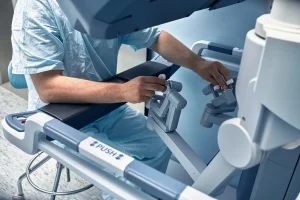
With robotic-assisted surgery, the surgeon operates the da Vinci system from a console, working through a few small incisions rather than one long one. The system never operates on its own. It offers features that can help during hernia repair:
Because the incisions are small, most patients return to light activity within 2 to 3 weeks, compared with 6 to 8 weeks after open surgery, and full recovery takes longer than that. Robotic surgery is not right for every patient or every hernia, some repairs do just as well with laparoscopy or an open approach, and any operation may need to be converted to open surgery.
Our practice has experience with robotic inguinal and ventral hernia repairs, and mesh can be part of a robotic operation. A robotic surgeon in Houston can explain both decisions in the context of your anatomy, surgical history, and concerns before you decide how to proceed.
| Question | What It Decides | Example Options |
| Surgical approach | How the surgeon reaches the hernia | Robotic, laparoscopic, or open |
| Reinforcement | Whether mesh supports the closure | Mesh repair or tissue repair |
| Mesh placement | Which layer of the abdominal wall holds the mesh | In front of, within, or behind the muscle layers |
| Recovery plan | How and when you resume activity | Depends on the approach, repair, and your health |
Ask how those findings shape the proposed repair, and whether imaging has shown anything the examination alone could not.
Discuss recurrence, relevant risks, and your expected recovery, along with what would change the recommendation.
If you have them, bring records from earlier operations, including any notes about mesh used in a prior repair.
Short answer: The best next step is a consultation where your hernia is examined, your history is reviewed, and the reasoning behind the recommended repair is explained in plain terms.
Bring your questions and find out why a particular repair fits your hernia. Dr. Brian Harkins is a board-certified general surgeon who has practiced in the Northwest Houston area since 1997, bringing decades of surgical experience and robotic hernia expertise to his Tomball practice and welcoming patients across the Houston area.
During a consultation, you can expect:
Surgery for a hernia is a decision you should understand before you agree to it. A recommendation that comes with clear reasoning gives you room to weigh it, ask follow-up questions, and involve family members who will help during your recovery.
To speak with our hernia specialist in Houston, call 281-351-5409 to book a consultation.
Mesh has been used in hernia repair for decades and is recommended for many hernias. Like any implant, it carries possible complications, including infection, chronic pain, and adhesions. Your surgeon can explain how those risks compare with the chance of recurrence after a repair without mesh.
Yes, some hernias can be repaired with your own tissue and sutures. This option is more often considered for selected small or first-time hernias with healthy surrounding tissue. Your surgeon will explain whether your hernia's features make a tissue repair a reasonable choice.
For many hernia types, mesh generally lowers the chance of recurrence compared with suture repair alone. It spreads tension across a wider area and lets your tissue grow into it. No repair can fully guarantee the hernia will not return.
Surgeons choose among permanent synthetic mesh, absorbable mesh, and biologic materials. The choice depends on the hernia, the condition of the area, and factors such as infection or earlier surgery. Your surgeon can explain which material, if any, fits your repair.
Most patients do not feel the mesh once healing is complete, because tissue grows into it over time. Some people notice tightness or mild discomfort during recovery. Ongoing pain should always be reported to your surgeon so it can be evaluated.
No. Robotic surgery describes how the surgeon reaches the hernia, not whether mesh is used. Mesh is common in robotic inguinal and ventral repairs, but the decision still depends on your hernia's type, size, tissue strength, and history.
Most patients return to light activity within 2 to 3 weeks, compared with 6 to 8 weeks after open surgery. Full recovery takes longer, and heavy lifting is usually restricted for a period. Your surgeon will give you a plan based on your repair.
Yes, a recurrence can still happen after a mesh repair, though it is generally less common for many hernia types. If a hernia returns, your surgeon will review the earlier operation, scar tissue, and old mesh before planning the next repair.
Bring operative reports from any earlier hernia repairs, notes on whether mesh was used, recent imaging, and a list of medications. These records help your surgeon understand your history and plan a repair route that avoids unnecessary surprises.
Some small hernias without symptoms can be watched for a time, while others are better repaired sooner. A hernia that becomes painful, hard, or cannot be pushed back needs prompt medical attention. Your surgeon can help you weigh the timing.
Choosing between mesh and no mesh is rarely a matter of one option being right for everyone. A Hernia Specialist in Houston looks at the type and location of your hernia, the size of the opening, the strength of the tissue around it, and any earlier repairs, and then explains how each approach balances the chance of recurrence against its own risks.
Robotic surgery can be part of that plan, but it answers a different question: how the surgeon reaches the hernia rather than what reinforces it. When you understand both decisions and the reasons behind them, you can move forward with a repair plan that fits your anatomy, your history, and the way you want to recover.
Schedule your hernia repair consultation today.

Dr. Brian Harkins is a renowned surgeon specializing in advanced, minimally invasive, and robotic surgical techniques. With a dedication to innovation and personalized patient care, he has transformed countless lives by delivering exceptional outcomes.
I want a website like this, where do i start?