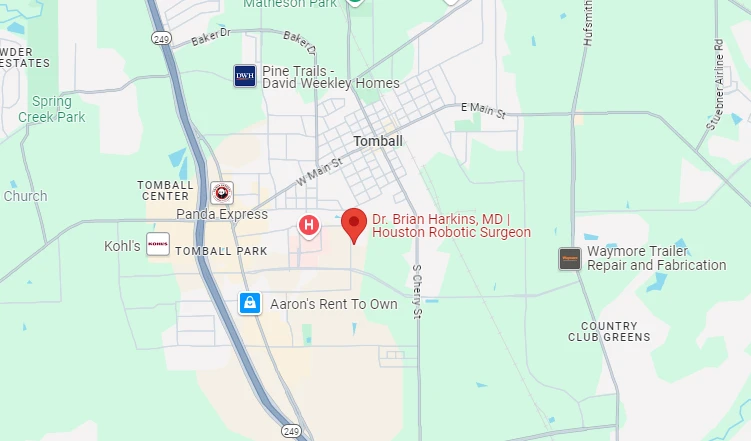
455 School St. Bldg. 1, Suite 10 Tomball, Texas 77375
Mon-Thu: 9:00 am – 5:00 pm | Fri: 9:00 am – 2:00 pm


Most patients experience mild to moderate discomfort after robotic surgery, not severe pain. Pain typically follows a predictable pattern: highest in the first 24 hours, significantly reduced by the end of week one, and largely resolved within two to four weeks. Modern multimodal pain management protocols mean most patients go home without an opioid prescription.
If you're considering robotic surgery in Tomball, TX, you're probably wondering how much pain you'll experience afterward. While robotic surgery is often described as nearly pain-free, the reality is more nuanced. This article covers what pain levels to realistically expect, how robotic surgery compares to open and laparoscopic approaches, and what pain management options are available to help you recover comfortably at home.
Most patients experience manageable discomfort during the immediate postoperative period, with pain gradually diminishing over the first two to four weeks. One study found approximately 27% of patients achieved home readiness within 12 hours, 46% within 24 hours, and 79% within 48 hours.
Pain after robotic surgery follows a predictable pattern that most patients find reassuring once they know what to expect. During the first 24 hours, patients typically experience mild to moderate discomfort requiring analgesic medication. By the end of the first week, most notice significant pain reduction and can transition to over-the-counter pain relievers. Within two to four weeks, minimal pain occurs during daily activities, though some residual discomfort may persist with strenuous movements.
| Recovery Phase | Typical Pain Level | Medication Needed |
| First 24 hours | Mild to moderate (3 to 6 out of 10) | IV or oral prescription analgesics |
| Days 2 to 7 | Mild (2 to 4 out of 10) | Oral prescription or OTC medications |
| Weeks 2 to 4 | Minimal (1 to 2 out of 10) | OTC medications as needed |
| After 4 weeks | Near zero for most patients | Rarely needed |
While robotic procedures generally produce less pain than open surgery, the distinction between robotic and laparoscopic techniques is often negligible depending on the procedure. Understanding where robotic surgery does and doesn't offer a pain advantage helps set realistic expectations.
For procedures like pancreatic surgery, robotic patients required significantly fewer oral morphine equivalents compared to open surgery patients. The large incisions and extensive tissue disruption of open surgery create more postoperative pain and a longer, more difficult recovery. This is where robotic surgery shows its clearest pain advantage.
A prospective comparison found no significant difference in median morphine equivalent doses between robot-assisted and open radical prostatectomy. Another study comparing robotic and laparoscopic bariatric surgery found no significant difference in postoperative opioid consumption or pain intensity. For many standard procedures, the pain experience is comparable between robotic and laparoscopic approaches.
| Factor | Open Surgery | Laparoscopic | Robotic |
| Incision-related pain | High | Low | Low |
| Opioid requirements | Higher | Moderate | Low to moderate |
| Pain at discharge | Moderate to high | Low to moderate | Low |
| Pain medication at 1 week | Prescription opioids common | OTC often sufficient | OTC often sufficient |
| Return to pain-free activity | 6 to 8 weeks | 3 to 5 weeks | 2 to 4 weeks |
Multimodal analgesia combines multiple pharmacological classes and regional techniques to achieve superior pain control while reducing opioid requirements. This approach has proven remarkably effective, with 68% of patients discharged without opioid prescriptions when these protocols are implemented.
Regional anesthesia techniques commonly used alongside robotic surgery include:
When multimodal protocols were introduced for transoral robotic surgery, average pain levels decreased from 4.1 to 2.6 on a ten-point scale. Opioid consumption declined from 37.7 to 10.8 milligrams morphine equivalent during the same period. As explained by the American Society of Anesthesiologists, multimodal approaches are now the standard of care for postoperative pain management.
Prostate surgery patients have two common and specific pain complaints that differ from general surgical discomfort. Knowing about them in advance helps patients prepare and communicate with their care team.
Many patients experience a moderate cramping sensation in the lower abdomen, typically related to the indwelling urinary catheter that remains in place for 5 to 9 days. These spasms are managed with antimuscarinic medications like oxybutynin and typically resolve once the catheter is removed.
Perineal pain is the most common specific pain complaint, occurring in approximately 10% of patients. This discomfort typically lasts several weeks and responds well to NSAIDs like ibuprofen. Patients who are aware of this possibility in advance tend to manage it better than those who are caught off guard.
Understanding what to expect each week helps patients plan their recovery and avoid unnecessary anxiety when discomfort feels different than expected.
| Week | Pain Level | Activity Level | Medication |
| Week 1 | Mild to moderate | Light walking only, rest | Prescription analgesics |
| Week 2 | Mild | Household tasks, light desk work | OTC pain relievers |
| Weeks 3 to 4 | Minimal | Return to work, normal daily activity | OTC as needed |
| Weeks 5 to 12 | Near zero | Full activity cleared by surgeon | Rarely needed |
Patients typically experience pain with standing, climbing stairs, and prolonged sitting. Prescription pain medications are usually necessary during this period. Walking is strongly encouraged from the first day. Early ambulation promotes circulation and facilitates faster pain recovery, making it one of the most important things you can do during the initial recovery phase.
Most patients can resume household activities and light work during the second week. Transition to over-the-counter analgesics becomes possible for many patients as prescription-level pain needs decrease. Heavy lifting of more than ten pounds remains restricted to protect healing tissue and prevent complications like hernia at the incision sites.
Return to work and normal activities without significant pain is common for most patients. Some residual discomfort may occur with strenuous movements, but daily function is largely restored. Your surgeon will evaluate your progress at follow-up appointments and clear specific activities based on how well you're healing.
Complete strength recovery typically takes 8 to 12 weeks. Most patients feel fully normal well before that point, but full internal healing continues even after surface-level discomfort is gone. Attending all follow-up appointments and reporting any unexpected symptoms promptly keeps your recovery on track and allows your surgeon to catch any issues early.
Several individual factors affect how much pain you might experience after robotic surgery. Discussing these with your surgeon before the procedure allows your care team to build a personalized pain management plan. Patients who communicate openly about these factors consistently report better-managed recoveries than those who don't.
The da Vinci Single-Port system may offer certain pain advantages over traditional multi-port approaches. Meta-analysis demonstrates that single-port robotic-assisted prostatectomy is associated with shorter hospital stays, shorter catheterization times, and less postoperative pain medication compared to multi-port approaches.
Higher rates of same-day discharge are also observed with single-port techniques, potentially reducing overall discomfort by minimizing hospital stay duration. Fewer incision sites also means fewer points of postoperative soreness for the patient. Ask your surgeon which system they use and whether single-port access is appropriate for your specific procedure and anatomy.
HCA Houston Healthcare Tomball holds accreditation as a Center of Excellence in Robotic Surgery from the Surgical Review Corporation. This accreditation reflects a commitment to high surgical volumes, outcomes standards, and comprehensive pain management protocols.
As a robotic surgeon in Tomball, Dr. Brian Harkins brings the case volume and procedural experience that directly translate to better pain outcomes for patients. High-volume surgeons performing more than 200 minimally invasive cases annually demonstrate lower infection and readmission rates, both of which impact comfort and recovery directly.
Most patients experience mild to moderate discomfort, typically rating pain between 3 and 6 out of 10 in the first 24 hours. Pain decreases significantly within the first week and is largely resolved by weeks two to four. Severe or unmanageable pain is uncommon with modern pain management protocols.
Not necessarily. When multimodal pain protocols are used, 68% of patients are discharged without opioid prescriptions. Your care team will build a pain management plan tailored to your procedure, health history, and individual pain tolerance before your surgery date.
For many procedures, the pain difference between robotic and laparoscopic surgery is minimal. Both approaches use small incisions and produce significantly less pain than open surgery. Your surgeon will recommend the approach that offers the best overall outcome for your specific procedure, not just the least pain.
The first 24 hours after surgery typically involve the highest pain levels. Incision site discomfort, gas pain from CO2 insufflation, and muscle soreness from positioning are the most common complaints. Pain decreases noticeably by day two to three for most patients.
Shoulder and upper abdominal discomfort from residual CO2 gas typically resolves within 24 to 72 hours. Walking helps move the gas through your system faster. Most patients find this more uncomfortable than the incision sites initially, but it resolves quickly.
Yes, for the vast majority of patients. Your discharge instructions will include a clear pain management plan with medications, activity guidelines, and warning signs that would require a call to your surgeon. Following these instructions closely keeps most patients comfortable at home throughout recovery.
Pain management typically includes a combination of NSAIDs like ibuprofen or ketorolac, acetaminophen, and when needed, mild prescription opioids. Regional nerve blocks administered before or during surgery can also reduce postoperative pain significantly in the first 24 to 48 hours.
Individual factors including age, preoperative anxiety, BMI, existing chronic pain conditions, and pain sensitivity all influence postoperative pain levels. Patients with higher anxiety before surgery consistently report higher pain scores afterward, which is one reason preoperative preparation and education are important parts of the care plan.
Yes, consistently. Open surgery requires much larger incisions, greater tissue disruption, and longer operative times, all of which contribute to more postoperative pain and a longer recovery. Robotic surgery's small incisions and precision instruments produce meaningfully less postoperative pain for comparable procedures.
Most patients transition to over-the-counter pain relievers within the first week. Many patients stop taking any pain medication by weeks two to three. Your actual timeline depends on your procedure, individual healing, and how well you follow your recovery plan.
Robotic surgery is not pain-free, but it is meaningfully less painful than traditional open surgery and manageable for the vast majority of patients. Most people experience mild to moderate discomfort in the first 24 to 48 hours, transition to over-the-counter pain relievers within a week, and return to normal activity within four weeks.
Modern multimodal pain management protocols have transformed what patients experience after minimally invasive procedures. Combined with the precision of the da Vinci system and an experienced surgical team, most patients are genuinely surprised by how well they feel in the days following surgery. Preparing in advance, setting realistic expectations, and following your post-operative plan are the factors that lead to the smoothest recoveries.
To discuss pain management for your specific procedure and what to realistically expect during recovery, call 281-247-0503 or contact us to schedule a consultation with Dr. Brian Harkins in Tomball, TX.
Schedule your robotic surgery consultation in Tomball today.
Contact Dr. Harkins to discuss your procedure and personalized pain management plan.


Dr. Brian Harkins is a renowned surgeon specializing in advanced, minimally invasive, and robotic surgical techniques. With a dedication to innovation and personalized patient care, he has transformed countless lives by delivering exceptional outcomes.
I want a website like this, where do i start?