455 School St. Bldg. 1, Suite 10 Tomball, Texas 77375
Mon-Thu: 9:00 am – 5:00 pm | Fri: 9:00 am – 2:00 pm

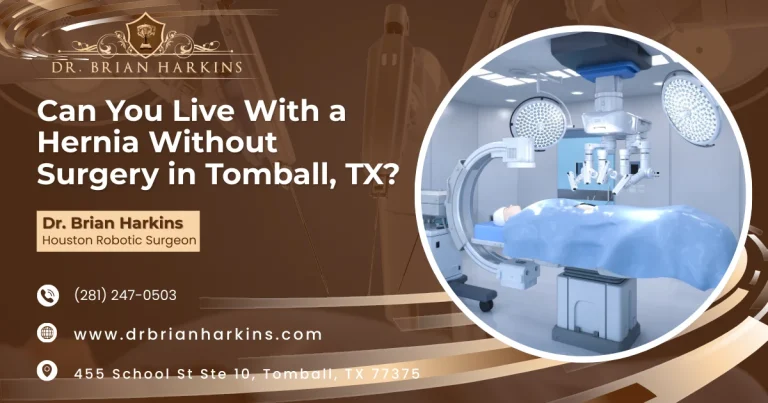
Yes, many people live with a hernia without immediate surgery, but doing so safely requires regular monitoring by a qualified hernia specialist. A hernia occurs when tissue pushes through a weak spot in the abdominal wall, and while watchful waiting works for some patients, an untreated hernia may enlarge over time, cause increasing pain, or require emergency intervention if it becomes incarcerated or strangulated.
Receiving a hernia diagnosis often raises immediate questions about treatment timing. Some patients feel pressure to schedule surgery right away, while others wonder if they can safely postpone or avoid the operating room entirely. The answer depends on several factors, including hernia type, size, symptoms, and overall health status.
Working with aT omball hernia surgeon provides the guidance needed to make an informed decision. Regular monitoring, lifestyle modifications, and clear action plans allow many patients to manage their condition effectively while understanding exactly when surgical intervention becomes the best choice.
Before deciding between watchful waiting and surgical repair, understanding which type of hernia you have helps clarify the specific risks involved.
Inguinal hernias occur in the groin area when tissue protrudes through the inguinal canal, representing the most common type. Umbilical hernias appear at or near the belly button and occur frequently in infants and pregnant women. Hiatal hernias develop when part of the stomach pushes through the diaphragm, often causing acid reflux and heartburn.
Femoral hernias appear below the groin crease and carry higher strangulation risk due to the narrow femoral canal. Incisional hernias develop at previous surgical sites where the abdominal wall failed to heal completely.
| Hernia Type | Location | Most Affected | Strangulation Risk |
| Inguinal | Groin area | Men | Moderate |
| Umbilical | Belly button | Women, infants | Low to moderate |
| Hiatal | Diaphragm | Adults over 50 | Low |
| Femoral | Below groin | Women | High |
| Incisional | Surgical scars | Prior surgery patients | Moderate to high |
Weak connective tissue combined with increased abdominal pressure creates conditions where hernias naturally enlarge over time. Genetics play a significant role, with some individuals inheriting naturally weaker collagen structures. Age, chronic coughing, constipation, heavy lifting, pregnancy, and obesity all contribute to the pressure that widens existing defects.
Most hernias present as a visible bulge that appears when standing, coughing, or straining and flattens when lying down. Discomfort ranges from no sensation to a dull ache or burning feeling during activity. Warning signs requiring immediate attention include a hard bulge that cannot be pushed back in, severe pain, nausea, vomiting, and skin discoloration over the hernia site.
Not every hernia requires immediate surgery. For carefully selected patients, observation with regular monitoring provides a reasonable management approach.
Watchful waiting works best for hernias smaller than two centimeters that reduce easily when you lie down. The hernia should cause minimal pain and not interfere with daily activities. Regular follow-up appointments every six to twelve months ensure any changes receive prompt attention, and patients must understand emergency warning signs requiring immediate evaluation.
| Factor | Safe for Monitoring | Consider Surgery |
| Bulge size | Less than 2 cm, stable | Growing or larger than 3 cm |
| Pain level | Minimal or none | Moderate to severe |
| Activity impact | No limitations | Daily activities affected |
| Reducibility | Easily pushed back | Difficult or impossible to reduce |
| Symptoms during monitoring | Stable | Progressive worsening |
While lifestyle changes cannot repair a hernia, they help reduce strain on the defect and may slow progression during monitoring.
Excess body weight increases intra-abdominal pressure and can accelerate hernia enlargement. Fiber-rich foods including vegetables, whole grains, and fruits promote regular bowel movements and reduce constipation that strains the abdominal wall. For hiatal hernia patients, limiting caffeine, alcohol, and acidic foods reduces reflux symptoms.
Using correct lifting technique protects the abdominal wall. Bend at the knees rather than the waist, keep objects close to your body, and avoid sudden jerking movements. Tobacco use damages connective tissue and impairs healing, while chronic coughing from smoking repeatedly stresses the abdominal wall.
Understanding potential complications helps patients make informed decisions about treatment timing.
Incarceration occurs when tissue becomes trapped outside the abdominal wall and cannot be pushed back into place. The bulge feels firm and may cause pain, nausea, and constipation. Strangulated hernias represent true surgical emergencies where blood supply becomes cut off, leading to tissue death within hours.
Even without acute complications, untreated hernias often progressively limit activities. Patients may avoid exercise, social activities, or work due to discomfort or fear of worsening the condition.
| Complication | Warning Signs | Time to Seek Care |
| Incarceration | Firm bulge that won't reduce, pain, nausea | Same day |
| Strangulation | Severe pain, vomiting, fever, skin changes | Immediately |
| Obstruction | No bowel movements, severe bloating | Same day |
| Enlargement | Growing bulge, increasing discomfort | Next available appointment |
Several tools and techniques help manage hernia symptoms during the watchful waiting period.
Trusses and hernia belts apply gentle pressure to keep the hernia reduced during physical activity. Proper fitting by a medical professional ensures effectiveness. These devices work particularly well for inguinal and femoral hernias but do not provide permanent solutions.
Targeted core strengthening exercises can help stabilize the abdominal area without placing excessive strain on the hernia. Physical therapists experienced with hernia patients design programs that improve support while avoiding harmful movements. Over-the-counter pain relievers and ice application after aggravating activities may also help manage mild discomfort.
Certain situations clearly indicate that surgical repair provides the best outcome.
Seek immediate medical care if you experience sudden severe abdominal or groin pain, a bulge that becomes hard or discolored, inability to push the hernia back in, nausea and vomiting, or fever with chills. These symptoms suggest incarceration or strangulation requiring emergency surgery.
Hernias that progressively enlarge, cause increasing pain, or limit daily activities benefit from planned surgical repair. Patients whose work involves heavy lifting may choose earlier intervention, and those traveling to areas with limited medical access might prefer definitive repair.
Modern robotic hernia surgery offers significant advantages over traditional open procedures. Smaller incisions result in less post-operative pain, reduced scarring, and faster recovery. Most patients walk the same day as surgery, return to driving within one week, and resume normal activities within two to four weeks. Laparoscopic and robotic techniques use mesh reinforcement to strengthen the abdominal wall, reducing recurrence rates compared to tissue repair alone.
Living with a hernia without immediate surgery remains possible for many patients, but this decision requires active management rather than simple avoidance. Regular monitoring by a qualified surgeon, consistent lifestyle modifications, and immediate attention to warning signs keep you safe during the observation period.
When symptoms progress or complications threaten, minimally invasive surgical techniques make repair faster and recovery simpler than ever before. Understanding your options allows you to make confident decisions about your health timeline.
Ready for personalized guidance about your hernia? Contact Dr. Brian Harkins to schedule a consultation and discuss whether watchful waiting or surgical repair best fits your situation.
No, hernias cannot heal without surgery. The abdominal wall defect remains permanent once it forms. Lifestyle measures may slow progression, but approximately 70 percent of patients eventually require surgical repair as the hernia enlarges over time.
Most low-impact activities including walking, swimming, and cycling remain safe with proper precautions. Wear a supportive hernia belt during exercise and avoid heavy lifting. Consult your surgeon before starting new workout routines.
Indirect inguinal hernias follow the inguinal canal from birth, while direct hernias push through a weak spot in the abdominal floor. Both occur in the groin region and require similar surgical repair techniques.
Some patients live years with small, painless hernias under careful monitoring. However, studies show most eventually require surgery. Regular check-ups remain essential because complications can develop suddenly and unexpectedly.
Jobs involving repetitive heavy lifting increase intra-abdominal pressure and typically accelerate hernia enlargement. Proper lifting mechanics and supportive devices help, but most surgeons recommend planned repair for workers in labor-intensive occupations.
Yes, primary tissue repair uses your own muscle to close the defect without mesh. However, recurrence rates run higher, particularly for hernias larger than two centimeters. Discuss both options with your surgeon to match your preferences.
Absolutely. Hiatal hernias allow stomach acid to reflux into the esophagus, causing burning chest sensations. Over-the-counter antacids provide temporary relief, but persistent symptoms warrant surgical evaluation for definitive treatment.
No, properly fitted trusses provide external support during high-pressure activities without causing muscle weakness. Combining truss use with guided physical therapy actually helps strengthen underlying muscles while protecting the hernia.
Robotic platforms offer enhanced 3D visualization and instrument dexterity, proving especially valuable for complex or recurrent hernias. Outcomes for straightforward cases remain similar to standard laparoscopy, with surgeon experience often mattering more than technology choice.
Most patients resume driving within five to seven days once they stop taking narcotic pain medication and can move comfortably. Test gentle braking motions in a safe location before driving on public roads.


Dr. Brian Harkins is a renowned surgeon specializing in advanced, minimally invasive, and robotic surgical techniques. With a dedication to innovation and personalized patient care, he has transformed countless lives by delivering exceptional outcomes.
I want a website like this, where do i start?