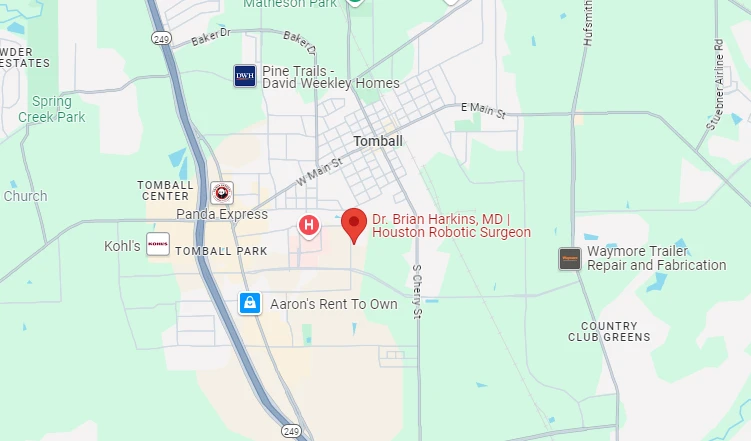
455 School St. Bldg. 1, Suite 10 Tomball, Texas 77375
Mon-Thu: 9:00 am – 5:00 pm | Fri: 9:00 am – 2:00 pm


A gallbladder attack typically feels like intense cramping or pressure in the upper right abdomen that starts suddenly — often 30 to 60 minutes after eating, especially a fatty meal — and lasts anywhere from 15 minutes to several hours before easing. If you've had one, you'll recognize the pattern immediately. If you've had more than one, it's time to call a surgeon.
That upper right quadrant pain that woke you up at 2am, or hit you halfway through dinner, or sent you to urgent care convinced something was seriously wrong — that's what a gallbladder attack feels like. Most patients have several before they connect the dots and realize the gallbladder is the source. By the time they reach Dr. Brian Harkins at Surgical Advanced Specialty Center in Tomball, the story is usually the same: recurring attacks they'd been tolerating far longer than they needed to.
The good news is that gallbladder surgery is one of the most common, well-tolerated procedures in general surgery. Robotic cholecystectomy removes the problem entirely — and for most patients, it's an outpatient procedure that sends them home the same day.

Biliary colic — the medical term for a gallbladder attack — is caused by a gallstone temporarily blocking the cystic duct, creating intense pressure inside the gallbladder as it contracts against the obstruction. The pain is characteristically crampy or pressure-like, located in the right upper quadrant or epigastric area, and may radiate to the right shoulder blade or back. Biliary colic typically lasts 15 minutes to a few hours and subsides when the stone shifts — a pattern that distinguishes it from the constant pain of acute cholecystitis.
A lot of patients initially mistake a gallbladder attack for heartburn, a pulled muscle, or a stomach bug. The distinguishing features that point toward the gallbladder:
What it typically doesn't feel like: sharp stabbing pain, pain that worsens continuously over many hours without any relief, or pain in the lower abdomen. Those patterns point elsewhere.
| Symptom | Gallbladder Attack | Acid Reflux/GERD | Kidney Stone |
| Location | Right upper quadrant | Behind sternum, throat | Flank, radiates to groin |
| Timing | After fatty meals, often at night | After any meal, lying down | Unpredictable onset |
| Duration | 15 min – 5 hours | Chronic, variable | Minutes to hours |
| Nausea | Common | Occasional | Common |
| Relieved by antacids | No | Often yes | No |
| Back/shoulder radiation | Yes (right side) | Occasional | Yes (ipsilateral flank) |
A gallbladder attack (biliary colic) and acute cholecystitis both cause right upper quadrant pain, but they're meaningfully different in severity and urgency. Biliary colic is episodic and self-limiting — it eases when the stone dislodges. Acute cholecystitis is inflammation of the gallbladder wall itself, producing constant pain that doesn't resolve on its own and requires prompt surgical treatment.
This distinction matters because the management is different. Biliary colic can be addressed with elective scheduled surgery. Acute cholecystitis is an urgent condition — current surgical guidelines recommend cholecystectomy within 24–72 hours of diagnosis for best outcomes. Acute cholecystitis is inflammation of the gallbladder wall itself, most commonly triggered by a gallstone blocking the cystic duct, and differs meaningfully from uncomplicated biliary colic in both severity and the urgency of treatment.
How to tell the difference:
Signs pointing toward acute cholecystitis rather than simple biliary colic:
And beyond cholecystitis, gallstone complications can escalate further:
| Condition | Key Features | Urgency |
| Biliary colic | Episodic RUQ pain, resolves on own | Elective surgery — schedule soon |
| Acute cholecystitis | Constant RUQ pain, fever, tenderness | Urgent — surgery within 24–72 hrs |
| Choledocholithiasis | Stone in common bile duct, possible jaundice | Semi-urgent — ERCP + surgery |
| Cholangitis | Fever, jaundice, RUQ pain (Charcot's triad) | Emergency |
| Gangrenous gallbladder | Severe toxicity, high fever, sepsis | Emergency surgery |
| Gallstone pancreatitis | Severe epigastric pain, elevated amylase | Emergency hospitalization |
The decision point is straightforward: if your symptoms resolve within a few hours and you don't have fever, jaundice, or escalating pain, call the office for a consultation appointment. If your symptoms don't resolve, or you develop fever, yellowing of the skin or eyes, or severe worsening pain — go to the emergency room at HCA Houston Healthcare Tomball.
For the "call the office" category — you've had one or more gallbladder attacks, symptoms resolve on their own, no fever, no jaundice — here's what to expect:
For the "go to the ER" category — constant pain not resolving, fever, jaundice, or escalating intensity — you need immediate evaluation. Acute cholecystitis and its complications are treated aggressively. Dr. Harkins operates at HCA Houston Healthcare Tomball and has a track record of seeing and operating on urgent presentations quickly — patient testimonials describe emergency surgery within 24 hours of arrival.

Your consultation at Surgical Advanced Specialty Center is structured to give you clarity quickly. Dr. Harkins reviews your symptom history, examines you, and evaluates your imaging. Most patients who've already had an ultrasound showing gallstones leave the consultation with a surgery date scheduled.
The conversation covers:
Patients who've been managing attacks for months — taking antacids, avoiding fried food, and hoping the pain stays manageable — consistently say the same thing afterward: they wish they'd made the appointment sooner.
Gallbladder attack symptoms are your body's way of telling you something is wrong with predictable reliability. The pattern repeats. The attacks escalate. And the window between an elective procedure and an emergency one is the time you have right now. Robotic surgery with Dr. Brian Harkins is a same-day outpatient procedure — the recovery is manageable, the results are permanent, and the attacks stop.
Take that step. Contact Dr. Harkins' office for a same-week consultation and find out exactly what your gallbladder is doing and what it will take to fix it.
Gallbladder pain typically occurs in the right upper quadrant or center of the upper abdomen, starts 30–90 minutes after eating (especially fatty foods), lasts 15 minutes to a few hours, and may radiate to the right shoulder or back. Nausea is common. An ultrasound can confirm gallstones.
Yes. Biliary dyskinesia — a condition where the gallbladder doesn't empty properly — causes gallbladder-type pain without gallstones. It's diagnosed with a HIDA scan showing a low ejection fraction and is treated with cholecystectomy with excellent results.
Fatty or fried foods are the most common triggers — pizza, fried chicken, cheeseburgers, and rich sauces. High-fat dairy and large portion sizes can also trigger attacks. Avoiding these foods may reduce attack frequency but doesn't resolve the underlying problem.
Biliary colic typically lasts 15 minutes to 4–5 hours and then eases as the gallstone shifts. Pain that lasts more than 6 hours without improvement may indicate acute cholecystitis and warrants urgent medical evaluation.
Gallbladder pain can radiate to the chest and left shoulder in some cases, mimicking cardiac symptoms. If you're uncertain whether your pain is cardiac or abdominal — especially if you have heart disease risk factors — go to the emergency room for evaluation.
If pain is severe, have someone drive you or call an ambulance. Severe pain impairs judgment and reaction time. For a manageable attack that's resolving, driving carefully to urgent care or the ER is generally acceptable — but prioritize safety.
Dietary changes can reduce the frequency of attacks but won't eliminate gallstones or resolve the underlying condition. Once you're having symptomatic gallstones, the recurrence rate is high without surgical treatment.
No. Asymptomatic gallstones found incidentally on imaging often don't require immediate surgery, though monitoring is appropriate. Once gallstones produce symptoms, the recommendation typically shifts to elective removal before complications develop.
Jaundice — yellowing of the skin or whites of the eyes — indicates that a gallstone has migrated into the common bile duct and is obstructing bile flow. This requires urgent evaluation and is often treated with ERCP (endoscopic stone removal) before or alongside cholecystectomy.
For uncomplicated biliary colic, surgery is typically scheduled within one to four weeks of consultation. For acute cholecystitis, surgery within 24–72 hours is recommended. Call 281-351-5409 to discuss your specific situation and timeline.

Dr. Brian Harkins is a renowned surgeon specializing in advanced, minimally invasive, and robotic surgical techniques. With a dedication to innovation and personalized patient care, he has transformed countless lives by delivering exceptional outcomes.
I want a website like this, where do i start?