455 School St. Bldg. 1, Suite 10 Tomball, Texas 77375
Mon-Thu: 9:00 am – 5:00 pm | Fri: 9:00 am – 2:00 pm


Most patients recovering from robotic or laparoscopic gallbladder removal in Tomball are walking around the house on the day of surgery, returning to desk work within 5 to 7 days, and back to full activity within 2 to 3 weeks. Same-day discharge is standard under ERAS protocols. Warning signs that warrant a phone call include fever above 101°F, severe or worsening abdominal pain, persistent vomiting, jaundice, or expanding incision redness. Call 281-351-5409 for any concerning symptom; the on-call line is staffed 24/7.
Recovery from minimally invasive gallbladder surgery, whether robotic-assisted or traditional laparoscopic, usually goes smoothly. Most patients in the Tomball, Magnolia, Cypress, Spring, and The Woodlands area arrive at the hospital in the morning, have surgery, and are home by mid-afternoon. By the next morning they are walking around the house. Within a week, most are back to desk work, and within two to three weeks, they are back to full activity.
That is the average. Yours will depend on your age, your overall health, the complexity of your robotic gallbladder surgery, and how carefully you follow your post-operative instructions. The day-by-day timeline below is the same one Dr. Harkins' practice uses with patients before they go home. It tells you what is typical so you can plan around it, and what is not typical so you know when to pick up the phone.

Most robotic and laparoscopic cholecystectomies are performed as outpatient procedures under Enhanced Recovery After Surgery (ERAS) protocols. You arrive in the morning, have surgery mid-morning or early afternoon, and are home the same day, usually within 4 to 6 hours of surgery end. The day flows in three phases: hospital arrival and surgery, recovery in the post-anesthesia care unit, and your first hours at home.
At the hospital, surgery itself runs 45 to 90 minutes of operative time, followed by 1 to 2 hours in the post-anesthesia care unit (PACU) waking up. Before discharge, you will stand, walk a short distance, and drink clear liquids while a nurse reviews your discharge instructions with you and your driver. Once home, expect mild to moderate abdominal soreness around the incisions, some shoulder discomfort from residual carbon dioxide gas (which usually resolves in 24 to 48 hours), fatigue and grogginess from anesthesia, and mild nausea controlled with medication.
What to do at home on Day 0: rest but get up to walk every 1 to 2 hours, drink clear fluids, eat lightly if hungry, and take pain medication as prescribed. Most patients need a combination of acetaminophen, ibuprofen, and a short course of a low-dose opioid for the first 1 to 2 days.
Table 1: Day 0 hospital and home timeline (typical)
| Time | Location | What happens |
| 6:00 to 7:00 AM | Pre-op holding | Arrival, IV placement, anesthesia consult |
| 8:00 to 9:30 AM | Operating room | Surgery (45 to 90 minutes operative time) |
| 9:30 to 11:30 AM | PACU | Anesthesia wake-up, vital signs monitoring |
| 11:30 AM to 1:00 PM | Discharge prep | Stand, walk, drink, review instructions |
| 1:00 to 3:00 PM | Travel home | Driver brings patient home |
| 3:00 PM onward | Home | Rest, walk every 1 to 2 hours, light fluids and food |
The first full day home is usually the most uncomfortable. Your body is processing anesthesia, dealing with inflammation at the surgical sites, and adjusting to life without a gallbladder. Pain typically peaks during this period before steadily improving over the next 48 hours. Knowing this in advance helps because the discomfort feels less alarming when you know it is the expected curve.
Expect moderate incision pain in the 3 to 5 range on a 10-point scale, controlled with oral medication, plus continued shoulder soreness for some patients, swelling or bruising around the incisions, abdominal bloating, and low energy that means most patients sleep a lot. The day's tasks are simple but matter: walk every 1 to 2 hours even if just around the room, continue clear liquids and advance to a light diet (soup, plain toast, rice, bananas) as tolerated, keep incisions clean and dry, and take pain medication on schedule.
Most surgeons close incisions with tissue adhesive (skin glue) or absorbable sutures, so you can shower on Day 1 but should not soak or scrub the incisions. The table below distinguishes expected discomfort from symptoms that mean the practice should be called.
Table 2: Day 1 expected vs warning signs
| Symptom or experience | Expected on Day 1 | Call the practice |
| Pain level | Moderate (3 to 5/10), controlled with medication | Severe or worsening pain |
| Shoulder pain | Common from residual CO₂ gas | Sharp chest pain or shortness of breath |
| Incision appearance | Some bruising, slight swelling | Expanding redness, warmth, or pus |
| Temperature | Up to 100.4°F can be normal | Fever above 101°F |
| Nausea | Mild, settles with medication | Persistent vomiting, can't keep fluids down |
| Skin or eye color | Normal | Yellowing (jaundice) |
By Day 2 or Day 3, most patients notice meaningful improvement. The worst of the soreness lifts, energy starts to return in short bursts, and the picture shifts from minute-to-minute discomfort management to a slower pace closer to recovery rather than crisis. Most patients describe Day 2 as the first day they feel like themselves again.
Expect incision pain decreasing to the 2 to 4 range, shoulder pain largely gone, bowel function returning (passing gas, then stooling), appetite beginning to return, and the ability to taper prescription pain medication. Most patients switch to acetaminophen and ibuprofen alone by Day 3. Continue walking with several short walks per day, building to 10 to 15 minutes at a time. Transition to a low-fat diet for the first 1 to 2 weeks because without a gallbladder to store and concentrate bile, your body now sends bile directly from the liver into the intestine; large fatty meals can cause loose stools or cramping until your digestive system adjusts.
Sleep on your back or slightly inclined since side sleeping may still be uncomfortable. Begin light household tasks if they do not cause pain, but no lifting over 10 pounds. Watch for warning signs such as increasing redness, warmth, or drainage at incisions, expanding swelling, clay-colored stools or dark urine, or persistent abdominal cramping unrelated to bowel movements.
Table 3: Days 2-3 milestones and self-care
| Category | Day 2 to 3 milestone | What to do |
| Pain | Down to 2 to 4/10 | Taper opioids; continue scheduled acetaminophen and ibuprofen |
| Activity | 10 to 15 minute walks several times per day | Build duration gradually; no lifting over 10 lbs |
| Diet | Bowel function returning | Low-fat foods; avoid large fatty meals |
| Sleep | Side sleeping still uncomfortable | Sleep on back, slightly inclined |
| Incisions | Healing, slight redness only at edges | Keep clean and dry; pat after showering |
| Bowel function | Gas first, then stool | Stay hydrated; gentle walking helps |
By the end of Week 1, most patients feel distinctly better. You may still tire easily, but you can usually handle a desk-work day, light errands, and most self-care without needing to nap. This is the stretch where many patients return to remote desk work, drive locally for the first time, and start to feel that the surgery is genuinely behind them.
Expect incision pain down to mild, occasional discomfort, bruising fading to yellow-green, normal bowel function (though some patients notice occasional loose stools, which is common after gallbladder removal and usually resolves over weeks to months), and most prescription pain medication no longer needed. You can return to desk work if you work from home or have a short commute, with many patients returning around Day 5 to 7. Drive only when off prescription pain medication and able to react quickly, typically Day 3 to Day 5.
Continue walking and start adding gentle stretching, but keep the lifting limit at 10 pounds. Attend your first post-operative visit, typically scheduled 7 to 14 days after surgery. Symptoms warranting a call at one week: persistent or worsening pain, incision redness extending outward or discharge with an odor, new jaundice, or severe abdominal bloating with inability to pass gas.
Week 2 is when most patients feel close to normal, especially those who had straightforward procedures. The day-to-day rhythm starts to look like life before surgery, with most restrictions lifting and energy steadily returning. This is the week where most patients realize they are no longer thinking about their recovery moment-to-moment.
Expect minimal to no incision pain, normal energy for most daily tasks, and resolution of most bowel changes (occasional loose stools after fatty meals may continue for a few more weeks). Incisions are well-healed and scars beginning to mature. With surgeon clearance, you can return to work including most moderate-physical-demand jobs, gradually resume walking, stationary cycling, and light yoga, and begin a broader diet by introducing fats gradually.
Still restricted in Week 2: lifting more than 15 to 20 pounds, crunches or core-intensive workouts, running or high-impact sports, and swimming or soaking (bathtub, hot tub, pool) until incisions are fully sealed, typically around Day 14.
By Weeks 3 and 4, most patients are cleared for unrestricted activity. Specific clearance depends on your procedure, your healing, and any complications encountered along the way. The follow-up visit at the four-week mark is typically a final check-in to confirm full recovery and answer any lingering questions.
Expect essentially normal energy, scars continuing to mature (they will flatten and fade over the next 6 to 12 months), full return of appetite and bowel function, and clearance for most exercise including core work and lifting. Attend your final post-operative visit if scheduled, and pay attention to how your body handles high-fat meals. Some patients find certain foods still cause mild discomfort and adjust their diet accordingly.
Beyond the four-week mark, the vast majority of patients feel fully recovered. For most, life continues without a gallbladder exactly as it did with one. A minority notice some lasting changes in how they tolerate high-fat meals, and this typically settles over months. Long-term complications of cholecystectomy are uncommon and usually appear within weeks of surgery rather than years later.
Long-term considerations: most patients digest normally after gallbladder removal, with some adjusting to smaller, more frequent meals. Scars continue to fade and become less noticeable over the first year, full core strength typically returns by 6 to 8 weeks with appropriate conditioning, and any persistent digestive symptoms beyond a few months should be evaluated.

The table below summarizes the milestones at a glance, providing a quick reference you can share with caregivers or post on the fridge during the recovery period. Use it to set expectations rather than as a strict schedule, since individual recovery varies based on age, overall health, and the complexity of the surgery.
Table 4: Robotic and laparoscopic gallbladder surgery recovery (typical timeline)
| Time after surgery | Typical pain (0-10) | Activity level | Diet | Driving | Work |
| Day 0 | 4 to 6 (controlled) | Short walks, rest | Clear liquids to light foods | No | No |
| Day 1 | 3 to 5 | Walk every 1 to 2 hours | Light, low-fat | No | No |
| Days 2-3 | 2 to 4 | Light household activity | Low-fat | Off opioids only | No |
| Days 4-7 | 1 to 3 | Walking, gentle stretching | Low-fat, advancing | Yes (off opioids) | Desk work OK |
| Week 2 | 0 to 2 | Most daily activities | Broader diet | Yes | Most jobs OK |
| Weeks 3-4 | 0 to 1 | Resume exercise | Normal | Yes | All jobs OK |
| Weeks 5-6+ | 0 | Unrestricted | Normal (some adjust fats) | Yes | All jobs |
At any point during recovery, certain symptoms should prompt a phone call to 281-351-5409 rather than waiting until the next office visit. These do not always mean something is seriously wrong, but they do mean a clinician should evaluate you. Calling early is always better than waiting.
Specific symptoms that warrant a call include fever above 101°F, severe or worsening abdominal pain, persistent vomiting, yellowing of skin or eyes (jaundice), clay-colored stools or dark urine, expanding redness or pus at incision sites, shortness of breath or chest pain, calf pain or swelling that could indicate a blood clot, and inability to keep down fluids for more than 24 hours. After-hours calls are answered through the on-call system, so do not wait for business hours if a symptom is urgent. The same standard applies for symptoms that feel uncertain. If something seems off, the practice would rather hear from you and reassure you than have you wait through a problem that needs attention.
Your first post-operative visit is typically 7 to 14 days after surgery, scheduled before you leave the hospital. This visit is used to check your incisions, review pathology from the removed gallbladder, confirm normal recovery, and answer questions that came up in your first week home. A second visit may be scheduled 4 to 6 weeks out for final clearance, with telemedicine an option for either visit when clinically appropriate.
Patients living in Tomball, Magnolia, Cypress, Spring, and The Woodlands often appreciate how close the office is for these visits. The short drive matters in the first two weeks when you may not yet be cleared to drive, and a 15-minute door-to-door follow-up is meaningfully different from a 90-minute round trip across the metro.
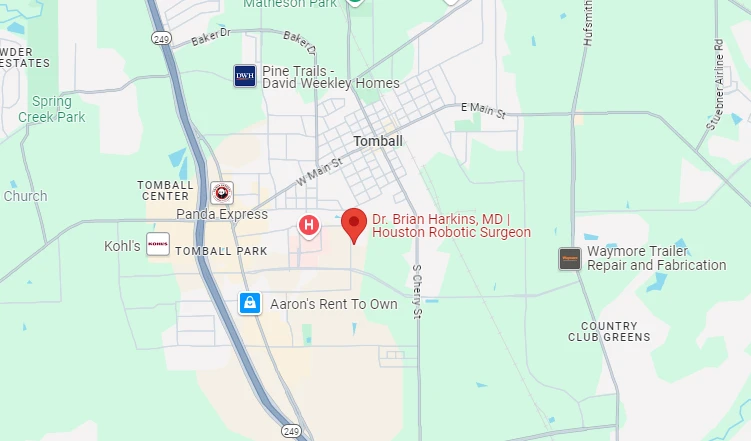
The Tomball office is at 455 School Street, Building 1, Suite 10. Surgeries are performed at HCA Houston Healthcare Tomball, a Center of Excellence in Robotic Surgery, just minutes from the office. Patients can call the practice during business hours or use the on-call line for urgent concerns between scheduled visits, and the broader robotic surgery program supporting recovery is reviewed during the first follow-up visit.
Recovery is easier when someone is with you on Day 0 and Day 1. Have a driver lined up, someone available to help with meals and medication reminders, and a plan for getting through the first 48 hours. By Day 3, most patients are managing on their own.
If you have questions about what to expect before or after your gallbladder surgery in the Tomball area, the practice is available at 281-351-5409 or through our contact form. Most concerns can be answered by phone, and the team prefers an early call to a delayed one when something feels uncertain.
Most patients return to normal activity within 2 to 3 weeks after robotic or laparoscopic cholecystectomy. Desk workers often return in 5 to 7 days; patients with physically demanding jobs usually need 2 to 4 weeks. Full core strength typically returns by 6 to 8 weeks.
No strict bed rest is required after minimally invasive gallbladder surgery. Walking on Day 0 is encouraged because early mobility reduces the risk of blood clots and helps post-operative gas dissipate. Most patients alternate short walks with rest throughout the first 48 hours rather than staying in bed.
Most patients can drive once they are off prescription opioid pain medication and can react quickly and safely, typically Day 3 to Day 5. Your surgeon will give you specific guidance based on your recovery and the demands of your typical drive.
For most patients, Day 1 (the day after surgery) is the most uncomfortable. Anesthesia is wearing off, surgical inflammation is at its peak, and shoulder pain from residual carbon dioxide gas is most pronounced. By Day 2 or 3, most patients feel meaningfully better.
Start with clear liquids on the day of surgery, advance to a light, low-fat diet over the first few days, and gradually reintroduce foods over the first 1 to 2 weeks. Most patients tolerate a normal diet by Week 2. Smaller, more frequent meals may help during the adjustment period.
Loose stools or occasional diarrhea after fatty meals is common in the first few weeks and sometimes months. This usually resolves as the digestive system adjusts. Persistent or severe diarrhea should be discussed with your surgeon or primary care doctor.
Ibuprofen is commonly used as part of multimodal post-operative pain control after cholecystectomy and is usually safe for patients without contraindications such as kidney disease, peptic ulcer disease, or anticoagulant use. Always confirm dosing and timing with your surgical team.
Most patients can shower 24 hours after surgery. Avoid soaking the incisions with no baths, hot tubs, or swimming pools until cleared at your follow-up visit, typically around two weeks. Pat incisions dry rather than rubbing.
Most patients find back sleeping with a slight incline most comfortable for the first several days. Side sleeping is usually tolerable by Days 4 to 7, while stomach sleeping may take 2 weeks or longer. Comfort is the guide once incisions are healing well.
Yes. The first post-operative visit at 7 to 14 days reviews incision healing, pathology results from the removed gallbladder, and any questions from the first week home. Skipping it means missing important information even when recovery feels straightforward, including pathology findings that can affect long-term care.

Dr. Brian Harkins is a renowned surgeon specializing in advanced, minimally invasive, and robotic surgical techniques. With a dedication to innovation and personalized patient care, he has transformed countless lives by delivering exceptional outcomes.
I want a website like this, where do i start?