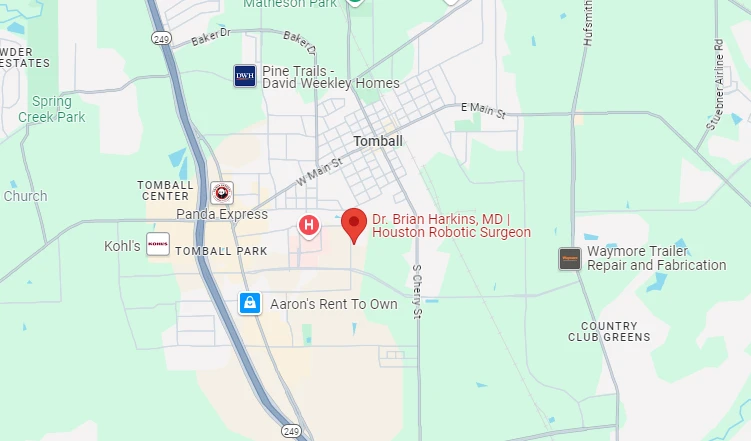
455 School St. Bldg. 1, Suite 10 Tomball, Texas 77375
Mon-Thu: 9:00 am – 5:00 pm | Fri: 9:00 am – 2:00 pm

Reflux and gallbladder disease can both cause upper abdominal pain, nausea and discomfort after meals, yet they come from different organs and need different treatment. A careful evaluation with the right imaging is what tells them apart, and that answer should come before any decision about surgery.
That burning sensation after meals, the pressure under your ribs, the nausea that keeps coming back? Those symptoms could point to acid reflux, or they could be your gallbladder, and knowing the difference is exactly why robotic anti-reflux surgery in Houston begins with a thorough diagnostic evaluation rather than assumptions about what is going on inside your body.
Living with recurring digestive discomfort slowly reshapes your days. You change what you eat, skip dinners out, sleep propped up on pillows, and keep antacids within reach, even though they only help for a few hours. Because GERD and gallbladder disease share enough symptoms to confuse patients and even experienced clinicians, getting the right answer early is what protects you from treatment aimed at the wrong problem.
Reflux and gallbladder disease both cause upper belly discomfort and nausea after eating, but reflux tends to burn behind the breastbone while gallbladder pain usually sits under the right ribs and can spread to the back or shoulder.
Both conditions can leave you with upper abdominal discomfort, queasiness after meals and a general feeling that your digestion is not working the way it should. Because the sensations land in roughly the same part of the body, many people assume they simply have "bad heartburn" and keep treating it that way for months, even when the pattern does not quite fit.
The mechanisms behind the two conditions, however, are completely different:
Noticing when and where the discomfort shows up gives your surgeon useful clues before any testing begins. The comparison below shows the patterns that most often separate the two conditions, although every patient is different and some people have both at the same time.
| Feature | Acid Reflux (GERD) | Gallbladder Disease |
| Main location | Burning behind the breastbone, upper middle abdomen | Upper right abdomen, under the ribs |
| Where pain may spread | Throat, chest, sour taste in the mouth | Right shoulder blade or back |
| Typical timing | Shortly after meals, worse lying down or at night | Often 30 minutes to a few hours after fatty meals |
| Pattern | Frequent, ongoing discomfort | Sudden attacks that can last hours |
| Response to antacids | Usually some relief | Little or no relief |
| Other common signs | Regurgitation, hoarseness, chronic cough | Nausea, vomiting, bloating, sometimes fever |
Treating one condition when you actually have the other does more than fail to help; it delays the care your body needs while the real problem continues to progress in the background.
Untreated reflux can inflame and scar the esophagus, while untreated gallstones can lead to repeated attacks, infection, or blocked bile ducts, so both deserve a timely evaluation rather than years of guesswork.
GERD usually develops gradually as the valve between the esophagus and stomach weakens or as a hiatal hernia allows part of the stomach to slide upward into the chest. Over time, repeated acid exposure can inflame the esophageal lining, narrow the passage and, in some people, cause cellular changes that require regular monitoring by a specialist.
Common contributors to reflux include:
Gallbladder disease follows a different path. Gallstones form when bile contains too much cholesterol or bilirubin, and many people carry stones for years without noticing anything. Trouble starts when a stone blocks the outflow of bile, which triggers sudden pain and can lead to inflammation, infection or, in more serious cases, involvement of the bile ducts or pancreas.
Factors linked to gallstones include:
Understanding these patterns helps explain why two people with similar complaints can end up on very different treatment plans once the facts are in.
A detailed history, a physical exam, and targeted tests such as an ultrasound or upper endoscopy show which organ is causing your symptoms, and that answer decides which surgery, if any, makes sense.
A careful clinical evaluation, combined with the right imaging, draws a clear line between these two conditions. An upper endoscopy, for instance, lets the physician look directly at the esophagus and stomach to check for inflammation, a hiatal hernia, or other changes- something no online symptom checklist can replicate however detailed it may be.
During an evaluation, your surgeon will typically want to know:
Each test answers a specific question, and your surgeon chooses them based on your history rather than ordering everything at once. The table below outlines the studies most often used to sort out reflux and gallbladder problems.
| Test | What It Looks For | Most Useful For |
| Abdominal ultrasound | Gallstones, gallbladder wall thickening, bile duct size | Gallbladder disease |
| HIDA scan | How well the gallbladder fills and empties | Gallbladder function problems |
| Upper endoscopy | Inflammation, hiatal hernia, changes in the esophageal lining | GERD and related conditions |
| pH monitoring | How often acid reaches the esophagus over 24 to 96 hours | Confirming GERD |
| Esophageal manometry | Strength and coordination of esophageal muscles | Planning anti-reflux surgery |
| Blood tests | Liver enzymes, infection markers, pancreatic enzymes | Gallbladder complications |
When gallstones or gallbladder inflammation are confirmed, gallbladder surgery in Houston addresses the source directly through a minimally invasive cholecystectomy. When GERD or a hiatal hernia is the culprit, the surgical path, the preparation and the recovery plan look very different, which is exactly why that distinction shapes the entire treatment conversation from the first visit onward.
SSevere or lasting abdominal pain, fever, yellow skin or eyes, trouble swallowing, vomiting blood or unexplained weight loss need prompt medical attention instead of another round of antacids.
Most reflux and gallbladder symptoms build gradually, which makes it tempting to keep putting off an appointment until the next bad week passes. Some signs, however, suggest that a condition has moved beyond simple discomfort and needs to be checked quickly so that a manageable problem does not become an emergency.
Seek care promptly if you notice:
These warning signs don't automatically mean surgery is needed, but they do mean you should be evaluated soon. A timely diagnosis often keeps treatment simpler and recovery smoother, because conditions caught early usually leave more options open for both you and your surgeon.
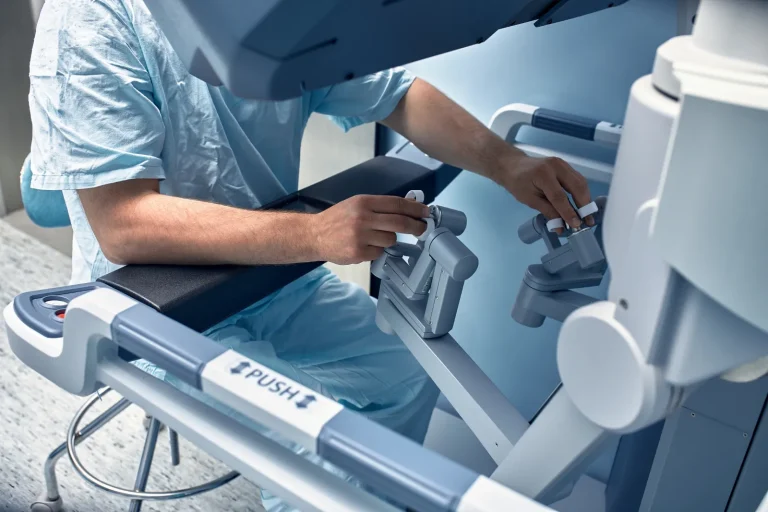
Once the diagnosis is clear, robotic surgery lets the surgeon work through small incisions with magnified 3D vision and precise instruments, which supports less tissue disruption and a quicker return to daily life.
Once a clear diagnosis exists, robotic-assisted techniques offer real advantages over traditional open surgery for both conditions. Smaller incisions mean less disruption to surrounding tissue, less discomfort after the operation and a faster return to normal activity. The magnified view also improves visualization of delicate structures, such as the bile ducts during gallbladder removal.
For patients with confirmed GERD or a hiatal hernia, robotic anti-reflux surgery in Houston often involves a Nissen fundoplication procedure, in which the upper part of the stomach is wrapped around the lower esophagus to rebuild a working valve. This approach restores the lower esophageal sphincter and can provide durable relief that medication alone often cannot.
Key benefits patients often notice include:
The two procedures solve different problems, so the goals, steps and recovery expectations differ even though both use the same robotic platform. The comparison below summarizes how they line up in general terms.
| Factor | Robotic Anti-reflux Surgery | Robotic Gallbladder Surgery |
| Condition treated | GERD, hiatal hernia | Gallstones, cholecystitis, poor gallbladder function |
| What the surgeon does | Repairs the hiatus and reinforces the valve with a wrap | Removes the gallbladder |
| Main goal | Stop acid from rising into the esophagus | Remove the source of pain and inflammation |
| Typical hospital stay | Often one night | Often same day |
| Early diet after surgery | Soft foods for a few weeks | Gradual return to a regular diet |
Your own recovery depends on your health, the findings during surgery and how closely you follow your post-operative plan, so your surgeon will tailor these general expectations to your situation.
Bring a symptom diary, a list of medications and any prior test results, and come ready with questions so your first visit moves quickly toward a clear answer.
A little preparation helps your consultation focus on what matters most. Because reflux and gallbladder symptoms can overlap so closely, the details you share about timing, triggers and past treatments often guide which tests come next and how quickly a plan takes shape.
Helpful items to bring include:
It also helps to write your questions down beforehand so nothing slips your mind in the moment. Many patients ask whether surgery is truly necessary, what other options exist, how long recovery will take and when they can return to work, and a good surgeon will welcome every one of those questions.
If you keep managing symptoms without answers, a consultation with an experienced robotic surgeon is the fastest way to learn what is really behind them.
Dr. Brian Harkins is a board-certified surgeon who brings over a decade of robotic surgical expertise to patients across the greater Houston area and Tomball, Texas, offering advanced, minimally invasive care for both reflux and gallbladder conditions. His practice is built on precise diagnosis, clear communication and surgical outcomes that hold up over time.
What you can expect from a visit:
If you have been tolerating symptoms and wondering what is actually behind them, it is time to get that answered. Reach the office at 281-351-5409 to schedule your consultation, because the right diagnosis changes everything that comes next.
Reflux usually causes burning behind the breastbone that worsens when lying down, while gallbladder pain tends to strike the upper right abdomen after fatty meals and may spread to the back or shoulder. Testing is the only reliable way to confirm which one you have.
Yes. Both conditions are common, and some patients have both. That is one reason a thorough evaluation matters, because treating only one problem may leave lingering symptoms that point back to the other.
Usually not. Antacids neutralize stomach acid, which can ease reflux, but gallbladder pain comes from blocked or inflamed bile flow. If antacids give you little or no relief, it is worth asking your doctor about a gallbladder evaluation.
An abdominal ultrasound is the most common first test for gallstones because it is quick, painless and accurate. If the ultrasound is unclear, your surgeon may order a HIDA scan to check how well the gallbladder fills and empties.
An upper endoscopy shows inflammation or a hiatal hernia, and pH monitoring measures how often acid reaches the esophagus. Doctors often add esophageal manometry before anti-reflux surgery to check how well the esophageal muscles work.
Good candidates usually have confirmed GERD or a hiatal hernia, symptoms that persist despite medication, or complications such as esophageal inflammation. Some patients also choose surgery to avoid lifelong medication. A full evaluation determines whether surgery fits your situation.
Robotic gallbladder removal is a well-established, minimally invasive procedure. The magnified 3D view helps the surgeon identify the bile ducts clearly, and as with any surgery, your surgeon will review the specific risks and benefits with you before you decide.
Many patients go home within a day and return to light activity within one to two weeks. A soft diet is usually recommended for a few weeks while swelling settles. Your surgeon will give you a recovery plan based on your health and procedure.
Yes. Bile still flows from the liver directly into the intestine after the gallbladder is removed. Most people return to a normal diet, although some notice that very rich or fatty meals take a little time to tolerate again.
Consider a surgical consultation if symptoms keep returning despite treatment, if tests show gallstones or a hiatal hernia, or if you have warning signs like fever, jaundice or trouble swallowing. Your primary care doctor can also refer you.
Burning after meals, pressure under the ribs and recurring nausea can come from reflux, from the gallbladder or occasionally from both, and the only reliable way to know is a careful evaluation backed by the right tests. Once the cause is clear, treatment becomes far more focused, whether that means robotic anti-reflux surgery in Houston, gallbladder removal or a nonsurgical plan.
Living with uncertainty takes a toll on your meals, your sleep and your peace of mind, and there is no reason to keep guessing. An experienced robotic surgeon can sort out what is happening, explain every option in plain language and help you move toward lasting relief with a recovery that fits your life.
Get answers for your reflux or gallbladder pain.

Dr. Brian Harkins is a renowned surgeon specializing in advanced, minimally invasive, and robotic surgical techniques. With a dedication to innovation and personalized patient care, he has transformed countless lives by delivering exceptional outcomes.
I want a website like this, where do i start?