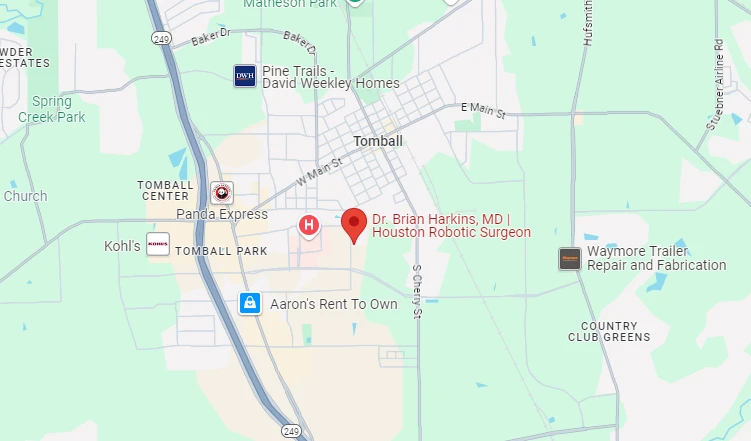
455 School St. Suite 10 Tomball, Texas 77375
Mon-Thu: 9:00 am – 5:00 pm | Fri: 9:00 am – 2:00 pm

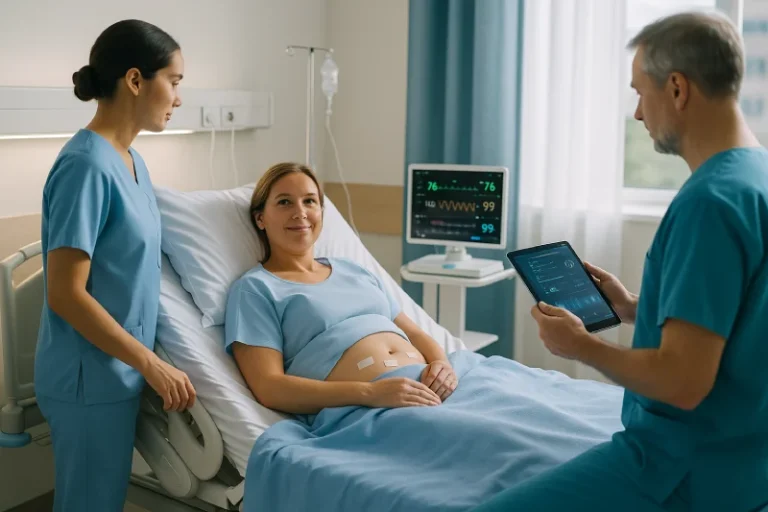
Low-pressure insufflation means inflating the abdomen to about 6 to 10 mmHg of carbon dioxide during laparoscopic or robotic surgery, instead of the usual 12 to 15 mmHg. The aim is to reduce pain after surgery while keeping a working space that is safe for the operation. I teach it to other surgeons because, whether an operation is robotic or done with traditional laparoscopy, gas pressure is one of the few settings that affects every patient.
Low-pressure insufflation is the practice of inflating the abdomen to roughly 6 to 10 mmHg of carbon dioxide during minimally invasive surgery, instead of the routine 12 to 15 mmHg.
Every laparoscopic and robotic abdominal operation starts by filling the abdomen with carbon dioxide, which lifts the abdominal wall away from the organs so the camera and instruments have room to work. That inflated space is called a pneumoperitoneum, and the insufflator holds it at a set pressure for the whole case.
| Pressure setting | Typical range | What it means in practice |
|---|---|---|
| Routine (standard) pressure | 12 to 15 mmHg | The long-time default in most operating rooms |
| Low pressure | 6 to 10 mmHg | The range most published studies use to define low pressure |
| Guideline approach | Lowest pressure that gives adequate exposure | European Association for Endoscopic Surgery (EAES) recommendation, rather than one fixed routine number |
Pressure matters because the gas stretches the abdominal lining and pushes on the diaphragm, and lower pressure is linked in the research to less pain and less shoulder pain after surgery. Flow rates, pressures by procedure, and when standard pressure is the better choice are covered in my article on pressure settings and trade-offs.
The best current evidence shows less pain, less nausea and fewer mild complications at low pressure, a small or uncertain effect on hospital stay, and a slightly harder view for the surgeon.
That is the summary I give surgeons when I present on this topic: the benefit is consistent across many trials, modest in size, and comes with a trade-off that has to be managed.
The largest review to date is a 2023 systematic review and meta-analysis in the International Journal of Surgery by Reijnders-Boerboom and colleagues. It pooled 85 randomized trials and 7,349 patients, comparing pressures under 10 mmHg with standard pressure. Pain scores were lower by about seven-tenths of a point on average through the first 72 hours, and the authors gave a moderate to strong recommendation in favor of low pressure.
Shoulder pain, which patients often find worse than the incisions, comes from leftover gas irritating the diaphragm. A 2016 systematic review by Özdemir-van Brunschot and colleagues in Surgical Endoscopy found shoulder pain was lower in low-pressure groups on the first and third days after surgery, with a difference large enough to matter clinically by day three.
A large share of these trials were in gallbladder surgery, which is also the operation the 2014 Cochrane review below focuses on.
In the 2023 review, nausea and vomiting after surgery was about a third less common at low pressure, and mild complications (minor problems that need no more than medication) were less frequent.
Hospital stay is where I am most careful with my words. The 2023 review found stays about 0.3 days shorter, which is real but small. The 2014 Cochrane review of gallbladder surgery by Gurusamy and colleagues (21 trials, 1,092 patients) rated the evidence low to very low quality, found no clear difference in stay, and concluded there was not yet evidence to support routine low pressure in low-risk patients.
| Outcome | 2023 meta-analysis (85 trials) | Caution worth knowing |
|---|---|---|
| Pain scores | Lower, by about 0.7 points on average | The difference is modest and most visible in the first days |
| Nausea and vomiting | About a third less common | Nausea also depends on anesthesia and opioid use |
| Mild complications | Less frequent | Major complications were not the measured benefit |
| Complications during surgery | No increase | The surgeon's view is slightly tighter, so pressure is raised when needed |
| Hospital stay | About 0.3 days shorter | The 2014 Cochrane gallbladder review found no clear difference |
| Surgeon's view | Rated slightly lower | The main trade-off to manage |
Less gas means less room. In the 2023 review, surgeons rated the surgical field slightly lower at low pressure, by a little over half a point on a five-point scale, even though complications during surgery did not rise. A tighter view only stays safe when the rest of the setup supports it.
The European Association for Endoscopic Surgery set the principle in its 2002 guideline: use the lowest pressure that allows adequate exposure of the operative field, rather than a routine pressure. In practice, that means raising the pressure whenever the view or the patient's safety calls for it.
A valveless insufflation system holds abdominal pressure steady during instrument changes and suction, and clears surgical smoke continuously, which is what makes a low setting workable in practice.
With conventional ports, every instrument exchange, burst of suction and small leak lets gas escape. At 15 mmHg there is enough reserve that the view barely changes, but at low pressure the same loss can collapse the working space while the team waits for it to re-inflate. A valveless system replaces the mechanical seal with a pressure barrier of recirculating gas, so the abdomen stays at the set pressure and smoke is cleared without venting it. That stability is what turns low pressure from an idea into a routine.
The manufacturer of one valveless system publishes study summaries reporting shorter operating time, including a bariatric study reporting about 12 minutes saved per case. Those figures are manufacturer-reported rather than independent findings.
Low-pressure insufflation is one intraoperative step inside Enhanced Recovery After Surgery (ERAS), not a recovery program on its own.
ERAS is a bundle of evidence-based steps before, during and after surgery, set out for colorectal surgery in the ERAS Society guideline by Gustafsson and colleagues (World Journal of Surgery, 2019). Lower insufflation pressure sits alongside multimodal, opioid-sparing pain control, careful fluid management, and early eating and walking, and each step makes the others easier, since a patient with less pain needs fewer opioids and gets up sooner. The full program is described in my article on ERAS, multimodal pain control and AI-guided recovery.
In my view, the biggest gains come from making low pressure, the insufflation platform and the ERAS order sets the same in every room, so results do not depend on which room or team a patient lands in.
When one room runs 15 mmHg on standard ports and the next runs low pressure on a valveless system, patients get two different operations under the same name, and the team never learns which details matter. Standardizing removes that guesswork, speeds up training, and gives cleaner data on what is working. In my role as Medical Director of Robotics, HCA Gulf Coast Division, this is the part of the work I spend the most time on.
| What gets standardized | What that looks like | Why I think it matters |
|---|---|---|
| Pressure targets | A default low-pressure starting point, raised when the view requires it | Patients get the same plan in every room |
| Insufflation platform | The same stable system across robotic and laparoscopic rooms | Teams learn one setup and troubleshoot it faster |
| ERAS order sets | Shared pre-op, anesthesia and recovery orders | Pain control and early walking do not depend on who is on call |
| Room flow and scheduling | Predictable turnover and recovery planning | Fewer delays for patients and staff |
I believe consistency also reduces waste and delays. The scheduling and patient-flow side of this is covered in my article on operating room efficiency with Qventus.
I teach low-pressure insufflation and ERAS because the technique only delivers its benefit when the whole team, from surgeon to anesthesia to nursing, runs it the same way.
I present on low-pressure insufflation and Enhanced Recovery After Surgery to surgical teams, including a November 19, 2026 dinner program hosted by CONMED in Fayetteville, New York, on reducing pain and improving efficiency with low-pressure valveless insufflation, advancing ERAS protocols, and standardizing the minimally invasive operating room. I also lead robotic training for surgeons.
Teaching has long been part of my work: after moving to Tomball in 1997, I introduced laparoscopic techniques to the area through lectures and seminars, and later brought the da Vinci robotic platform into my practice. My current roles are:
What I bring to other surgeons is the practical side papers leave out: how to set up the room, what to ask of anesthesia, and when to raise the pressure. The same approach shapes the care my own patients receive through robotic surgery in Tomball.
It depends on the procedure and the patient, so the best next step is to ask your surgeon what pressure they plan to use and why.
Whether low pressure suits you depends on the procedure you need and on your own health, and it is worth raising with your surgeon before operations such as robotic hernia repair or robotic gallbladder removal. Whatever the starting point, the pressure can change during the operation, because completing the surgery safely always comes first.
Low-pressure insufflation is the practice of inflating the abdomen to about 6 to 10 mmHg of carbon dioxide during laparoscopic or robotic surgery, instead of the usual 12 to 15 mmHg. Research links the lower pressure to less pain after surgery.
Low pressure is generally defined as about 6 to 10 mmHg, while routine pressure is 12 to 15 mmHg. A pressure of 15 mmHg is standard pressure, not low pressure, and guidelines recommend using the lowest pressure that still gives the surgeon an adequate view.
Yes, research shows lower pain scores with low pressure, although the difference is modest. A 2016 review also found less shoulder pain in the first days after surgery.
In the 2023 review of 85 trials, low pressure did not increase complications during surgery and was linked to fewer mild complications afterward. The main trade-off is a slightly tighter view, so the surgeon raises the pressure whenever safety or visibility requires it.
Valveless insufflation is a system that keeps abdominal pressure steady with a barrier of recirculating gas instead of a mechanical valve in the port. It holds pressure during instrument changes and suction and removes surgical smoke continuously, which makes low pressure easier to maintain.
Low-pressure insufflation is one step during surgery within an Enhanced Recovery After Surgery (ERAS) pathway. It works alongside opioid-sparing pain control and early eating and walking.
Yes, it is a reasonable question before any hernia or gallbladder operation. Ask what pressure is planned and why, or call my Tomball office at 281-351-5409 to discuss your surgery.
Low-pressure insufflation is a small setting with a measurable effect, and the evidence supports it as long as we describe it honestly. The research links it to less pain and nausea in the first days after surgery, and I teach it because it works best when every team runs it the same way. If you would like to talk about whether it fits your operation, call my Tomball office at 281-351-5409.
Dr. Brian Harkins, MD, FACS is a general and robotic surgeon in Tomball, Texas, and Medical Director of Robotics, HCA Gulf Coast Division, who presents on low-pressure insufflation and ERAS to surgical teams.
Last updated November 19, 2026
This article is educational and is not a substitute for medical advice. Insufflation pressure is decided by the surgical and anesthesia teams for each patient and can change during an operation. Study results describe groups of patients, and individual experience varies.

Dr. Brian Harkins is a renowned surgeon specializing in advanced, minimally invasive, and robotic surgical techniques. With a dedication to innovation and personalized patient care, he has transformed countless lives by delivering exceptional outcomes.
I want a website like this, where do i start?