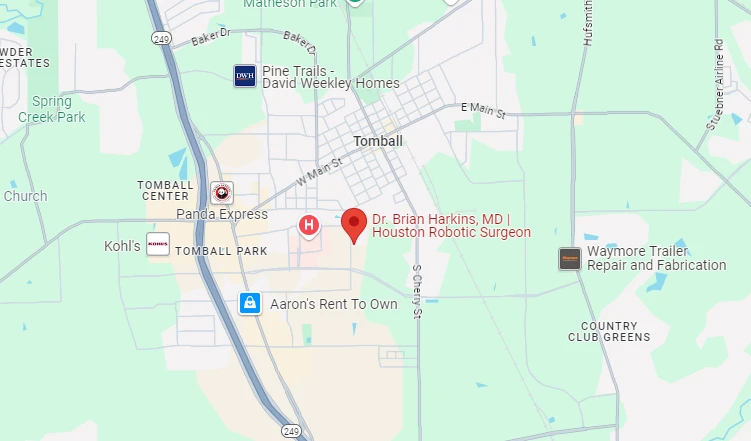
455 School St. Suite 10 Tomball, Texas 77375
Mon-Thu: 9:00 am – 5:00 pm | Fri: 9:00 am – 2:00 pm

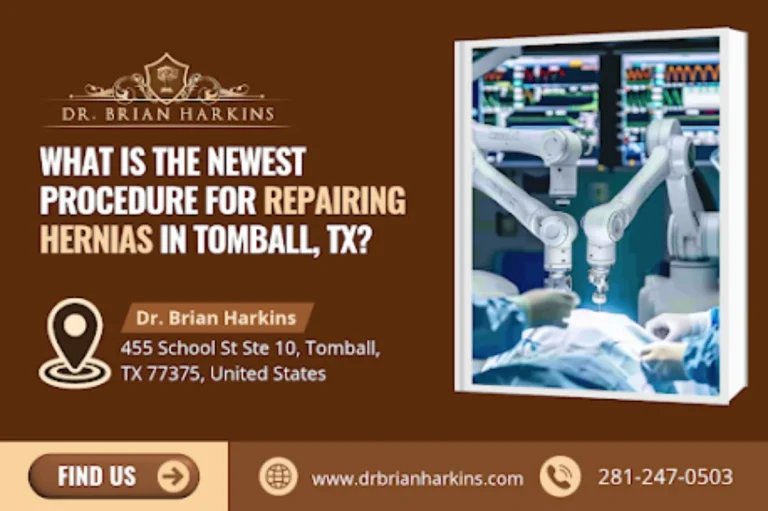
The newest hernia repair approaches in use include robotic-assisted repair, in which the surgeon controls a robotic system from a console. Published studies also describe newer robotic variants such as eTEP (enhanced-view totally extraperitoneal) repair. Open and laparoscopic repair remain in use, the sources reviewed do not show robotic repair is better, and the surgeon usually chooses the approach.
You may have been told you have a hernia, started reading about repair, and found that the same operation can be described in several different ways, from open repair to laparoscopic repair to repair with a robotic system. If you live in Tomball, Northwest Houston or elsewhere in the greater Houston area, it is natural to wonder which of those approaches is the newest and what "newer" would mean for your own repair.
A clear picture of the approaches, and of what the evidence does and does not show about them, may help you ask sharper questions, whether you are reading about general surgery in Tomball or preparing to talk with any surgeon about your hernia.
In this guide, you'll learn where robotic-assisted repair sits among today's hernia repair approaches, how it relates to open and laparoscopic repair, what a newer robotic variant called eTEP adds, what newer techniques have and have not been shown to do, how a surgeon chooses between approaches, and what Dr. Brian Harkins provides for hernia patients in Tomball.
Robotic-assisted repair is among the newer hernia repair approaches named in the sources reviewed for this guide, alongside open repair and laparoscopic repair. No medical body in those sources issues an official ranking of hernia procedures, so this guide reads "newest" as the most recent of the approaches in use rather than as a single named operation.
Robotic surgery, sometimes called robot-assisted surgery, is any type of surgical procedure that is performed with the use of robotic systems. In hernia repair, robotic-assisted repair means the surgeon controls a robotic system from a console.
The table below names the three approaches and what the sources reviewed for this guide say about each one.
| Approach | What it is | What the sources reviewed say |
|---|---|---|
| Open repair | A hernia repair approach within general surgery | Remains one of the approaches in use |
| Laparoscopic repair | A hernia repair approach based on laparoscopic surgery | Remains in use, and reference sources on laparoscopic surgery include a section on robotic assistance |
| Robotic-assisted repair | A hernia repair approach in which the surgeon controls a robotic system from a console | Among the newer approaches, with no evidence in these sources that it outperforms the other two |
All three approaches are hernia repairs carried out by a surgeon. Which one fits a particular hernia is a decision your surgeon makes with you.
Robotic-assisted repair can be read as a development of laparoscopic repair, and reference sources on laparoscopic surgery include a section on robotic assistance within that field. The robotic system adds features for the surgeon, and the surgeon controls the system throughout.
At Dr. Harkins' practice, robotic surgery is described in specific terms. The surgeon operates from a console with a magnified 3D view, the system filters tremor, and the instruments are wristed. The robot never operates on its own, and robotic surgery uses smaller incisions than open surgery.
| Feature of robotic-assisted surgery | What it means, in the practice's own description |
|---|---|
| Surgeon console | The surgeon operates from a console and controls the robotic system |
| Magnified 3D view | The surgeon sees the operating field in a magnified, three-dimensional view |
| Tremor filtration | The system filters tremor |
| Wristed instruments | The surgeon works with wristed instruments |
| Incisions | Smaller incisions than open surgery |
| Who operates | The surgeon. The robot never operates on its own |
The incision row compares robotic surgery with open surgery in the words of the practice's own description, and the table describes the tools rather than any outcome.
Robotic eTEP, short for enhanced-view totally extraperitoneal repair, is one of the newer robotic variants of hernia repair described in published studies. Most of what is known about robotic eTEP has been published in case series, according to the research reviewed for this guide, and the review described below draws mostly on small studies.
A systematic review of studies on robotic eTEP reported a shorter median hospital stay than laparoscopic eTEP, although follow-up in those studies was short and their safety and effectiveness depended heavily on surgeon experience. The studies in that review were mostly small, single-centre or retrospective studies, and the review covered nine studies in all.
That finding is about hospital stay in eTEP studies only, and the sources reviewed for this guide carry no recurrence data for robotic repair.
If you read about eTEP or other named robotic variants, the useful question for your surgeon is whether that variant applies to your type of hernia, and how much experience the surgical team has with it.
Newer hernia repair techniques have been described and studied, but nothing in the evidence gathered for this guide puts robotic repair ahead of laparoscopic or open repair. Newness on its own is not evidence of a better result, and a claim about a newer technique is worth reading against what the studies behind it actually measured.
The table below separates what the sources reviewed show from what they leave open, so you can read claims about newer techniques with the right weight.
| Claim you may read | What the sources reviewed show | What they do not show |
|---|---|---|
| Robotic repair is the newer approach | Robotic-assisted repair is among the newer approaches | An official ranking of hernia procedures |
| Robotic repair is better | No source reviewed ranks it ahead of the other approaches | That robotic repair gives better results than laparoscopic or open repair |
| Robotic eTEP shortens the hospital stay | One review of eTEP studies reported a shorter median stay than laparoscopic eTEP | Long-term results, since follow-up in those studies was short |
| Robotic repair suits everyone | Robotic surgery is not right for every patient | A table matching each hernia type to an approach |
The gaps in that table are not reasons to avoid a newer approach, and they are not reasons to choose one. They are reasons to ask your surgeon how the options compare for your own hernia, your health and your goals.
A surgeon chooses a hernia repair approach by weighing the type of hernia and the patient in front of them, and the decision is the surgeon's to make with you. Robotic surgery is not right for every patient, and the choice between open, laparoscopic and robotic-assisted repair rests on your own situation.
Even when a repair begins with a robotic system, conversion to open surgery may be needed during the operation. Surgery carries real risks whichever approach is used, and your surgeon can explain how those risks apply to you.
The questions below are general ones you may want to bring to any surgeon who is discussing hernia repair with you. They do not describe what happens at any particular visit.
| Question for your surgeon | Why it matters |
|---|---|
| Which repair approaches are options for my type of hernia? | Open, laparoscopic and robotic-assisted repair are all in use, and not every approach suits every hernia |
| Is robotic-assisted repair right for me? | Robotic surgery is not right for every patient |
| Could my operation change to open surgery? | Conversion to open surgery may be needed |
| How much experience do you have with the approach you recommend? | Results in robotic eTEP studies depended heavily on surgeon experience |
| What are the risks of the approach you recommend? | Surgery carries real risks with any approach |
Writing your questions down before an appointment may help you leave with the answers you came for, and it keeps the focus on your own hernia rather than on which approach is newest.
Dr. Brian Harkins, MD, FACS (Fellow of the American College of Surgeons), is a board-certified general surgeon through the American Board of Surgery and has practised in the Northwest Houston area since 1997. You can read more about this robotic surgeon in Houston and a practice built on safety, efficacy, and minimally invasive surgery, with personalized treatment plans.
Hernia surgery. Dr. Harkins treats ventral, incisional and inguinal hernias. If you are weighing your options, you can read about robotic-assisted hernia repair at the practice, along with the other approaches your surgeon may discuss.
Robotic surgery in practice. Dr. Harkins performs robotic hernia surgery using the console-based approach described earlier in this guide.
Hospital affiliation in Tomball. Dr. Harkins is affiliated with HCA Houston Healthcare Tomball, formerly known as Tomball Regional Medical Center, and sees patients from Tomball, Northwest Houston and the greater Houston area.
If you would like a general surgeon's view of which repair approaches may apply to your hernia, you can contact Dr. Harkins' office about hernia repair options.
The sources reviewed for this guide do not show that robotic hernia repair is better than laparoscopic repair. Both approaches are in use, and your surgeon can explain which one fits your hernia.
Robotic-assisted hernia repair is a hernia operation in which the surgeon controls a robotic system from a console. The surgeon has a magnified 3D view and wristed instruments, and the robot never operates on its own.
eTEP stands for enhanced-view totally extraperitoneal repair. Robotic eTEP is a newer robotic variant of hernia repair, and most of what is known about it comes from small case series with short follow-up.
Yes. Open repair remains one of the hernia repair approaches in use, alongside laparoscopic and robotic-assisted repair. Your surgeon can tell you whether it is an option for your hernia.
No. The surgeon operates from a console and controls the robotic system throughout the repair. The robot never operates on its own.
No. Robotic surgery is not right for every patient. Your surgeon weighs your type of hernia and your health before recommending an approach.
Yes. Conversion to open surgery may be needed during a robotic operation. Your surgeon can explain when that might happen and what it would mean for you.
Robotic surgery uses smaller incisions than open surgery, according to the practice's description of the approach. Your surgeon can explain what that means for your own repair.
A review of robotic eTEP studies found that safety and effectiveness depended heavily on surgeon experience. Asking about your surgeon's experience with a recommended approach is a reasonable question.
Yes. Dr. Brian Harkins is a board-certified general surgeon in Tomball who treats ventral, incisional and inguinal hernias, performs robotic hernia surgery, and is affiliated with HCA Houston Healthcare Tomball.
The newest hernia repair approaches in use include robotic-assisted repair, in which the surgeon controls a robotic system from a console, and newer robotic variants such as eTEP are described in published studies. Open and laparoscopic repair remain in use, and no source reviewed for this guide ranks one procedure as the official newest.
Newer does not mean proven better: the sources reviewed do not show that robotic repair is better than laparoscopic or open repair, and the eTEP studies had short follow-up. Robotic surgery is not right for every patient, so the right approach for your hernia is a decision for your surgeon and you.
Questions about which hernia repair approach suits you?
Call 281-247-0503 to discuss hernia repair options.
This information is educational and is not a substitute for professional medical advice. Every patient is different. Dr. Brian Harkins will discuss whether robotic-assisted surgery is right for your specific situation based on your anatomy, health, and goals.


Dr. Brian Harkins is a renowned surgeon specializing in advanced, minimally invasive, and robotic surgical techniques. With a dedication to innovation and personalized patient care, he has transformed countless lives by delivering exceptional outcomes.
I want a website like this, where do i start?