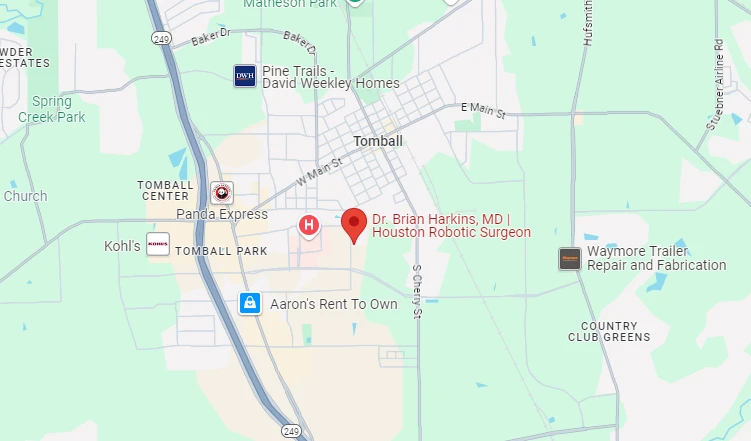
455 School St. Suite 10 Tomball, Texas 77375
Mon-Thu: 9:00 am – 5:00 pm | Fri: 9:00 am – 2:00 pm


To sleep after gallbladder surgery, it is often advised to lie on your back if you can, or on your left side if you need to turn. Stomach and right-side sleeping are usually avoided early on, because incisions are often on the right. A light evening meal and water within reach can help, and your surgeon sets your plan.
You are home after gallbladder surgery, the day has been long, and lying down suddenly feels like a puzzle because the small incisions on your abdomen make every position feel uncertain. You may be wondering which way to lie, how to set up your bed, and whether a restless night is part of normal healing for people recovering in Tomball and the greater Houston area.
Sleeping after this operation comes down to a few practical choices you can make before you turn out the light, and planning them ahead may help you rest more easily, whether you are preparing for robotic surgery in Tomball or already recovering at home.
In this guide, you'll learn which sleeping positions are often advised after gallbladder removal, which are usually avoided early on, a simple bedtime routine, how sleep fits the wider recovery timeline, and which signs mean a call to your surgeon.
The position most often advised after gallbladder surgery is lying on your back, and if you need to sleep on your side, the left side is the one usually suggested. Sleeping on your left side keeps your weight off the right side of your abdomen, where the incisions for gallbladder removal are often placed.
Researchers who study sleep position describe three main ways people lie at night: lateral, which means on the side, supine, which means on the back, and prone, which means face down. After gallbladder surgery, those three positions are not equal in the first nights of recovery.
Sleeping on your back is often advised as the first choice after gallbladder removal, if you are able to settle that way.
Sleeping on your left side is the usual fallback when lying on your back is not comfortable for you. Because the incisions are often on the right side of the abdomen, turning to the left keeps your body weight off those areas while you sleep. Your surgeon knows exactly where your own incisions sit, so ask which side to avoid if you are unsure.
| Position | How it usually suits early recovery | What to watch |
|---|---|---|
| Back (supine) | Often advised as the first choice, if you can settle this way | Ask your surgeon which position suits you |
| Left side (lateral) | The side usually suggested when you need to turn | Ask your surgeon which side to avoid for your own incisions |
| Right side (lateral) | Usually avoided early on, because incisions are often on the right | Pressure on the incision area |
| Stomach (prone) | Usually avoided early on | Your full weight rests on the front of your abdomen |
The two positions usually avoided in the early days after gallbladder removal are sleeping on your stomach and sleeping on your right side. Both put pressure on the parts of your abdomen where the incisions for this operation are often placed.
Sleeping on your stomach places your full body weight on the front of your abdomen, right where the small incisions from keyhole gallbladder surgery sit. General guidance lists stomach sleeping among the positions to avoid, and because no source sets a date for returning to it, your surgeon is the one to ask.
Sleeping on your right side may press on the incisions, because those incisions are often on the right side of the abdomen after gallbladder removal. Turning to your left side, or staying on your back, keeps that pressure away, and your surgeon can tell you which side to avoid, and for how long, after your own surgery.
A simple bedtime routine after gallbladder surgery covers five steps: a light evening meal, pain relief as your surgeon advises, essentials within reach, a dark and quiet room, and your planned sleeping position.
| Bedtime step | What to do | Why it can help |
|---|---|---|
| Light evening meal | Choose a small, light meal and avoid a heavy one before bed | Guidance after gallbladder surgery advises against heavy meals before bed |
| Pain relief | Take it only as your surgeon advises | Wounds are usually painful for a few days, and painkillers taken as advised can ease that |
| Water and essentials | Keep water, a phone charger and other needs on a surface near the bed | Fewer reasons to stretch, twist or get up during the night |
| Dark and quiet room | Use blackout curtains, an eye mask or earplugs | Simple aids that can make it easier to settle |
| Planned position | Back first, left side second | Keeps your weight off the right side, where incisions are often placed |
Sleep after gallbladder surgery fits inside a wider recovery timeline, and a few published milestones help you see where you are, though they describe recovery in general rather than a fixed schedule for your sleep.
Returning to work often takes 1 to 2 weeks, depending on your work and the type of surgery, and light activity is built up gradually. Most patients return to light activity within 2 to 3 weeks after minimally invasive gallbladder surgery, compared with 6 to 8 weeks after open surgery, and full recovery takes longer than that.
| Recovery milestone | General timing | What it means for your nights |
|---|---|---|
| Wound pain | A few days | Pain relief as your surgeon advises may help you settle in the first nights |
| Return to work | Often 1 to 2 weeks, depending on your work and surgery type | Your days start to look more normal, while you keep building up activity gradually |
| Ongoing sleep problems | Beyond about 2 weeks | Sleep problems lasting this long are a reason to contact your surgeon |
| Light activity | Most patients within 2 to 3 weeks after minimally invasive surgery | Full recovery still takes longer, so keep following your surgeon's plan |
Poor sleep after gallbladder surgery is a reason to call your surgeon when it lasts beyond about 2 weeks, or when it comes with fever, unusual drainage, foul-smelling incisions, or persistent nausea, vomiting or dizziness. These signs are listed in general guidance as reasons to contact your doctor, and your own surgeon may give you others.
The table below sets out each sign in the words the guidance uses. It is not a way to diagnose yourself, and if you are worried about any symptom, contact your surgeon's office rather than waiting for it to pass.
| Sign | What it may point to | What to do |
|---|---|---|
| Sleep problems lasting beyond about 2 weeks | Trouble sleeping that has not eased with time | Contact your surgeon |
| Fever above 100.4 F (38 C) | A sign the guidance lists as needing attention | Contact your surgeon |
| Green, gray or yellow drainage | A change at an incision that should be checked | Contact your surgeon |
| Foul-smelling incisions | A change at an incision that should be checked | Contact your surgeon |
| Persistent nausea, vomiting or dizziness | Symptoms that should not be left to settle on their own | Contact your surgeon |
Before you go home, it can help to ask your surgical team which side to avoid for your own incisions, which pain relief suits night time, and when you can return to your usual sleeping position. If something about sleeping after surgery is worrying you, or you want help planning your nights during recovery, you can contact Dr. Harkins' office with questions about night-time recovery.
Dr. Brian Harkins, MD, FACS, is a board-certified general surgeon through the American Board of Surgery and has practised in the Northwest Houston area since 1997. Patients can read more about Tomball surgeon Dr. Harkins and a practice built on safety, efficacy, and minimally invasive surgery, with personalized treatment plans for each patient.
Robotic gallbladder surgery. Dr. Harkins performs robot assisted gallbladder surgery, also called robotic cholecystectomy, for patients who need their gallbladder removed. For uncomplicated gallbladder removal, robotic and laparoscopic approaches are both excellent options, and like any operation, gallbladder surgery carries real risks that your surgeon will explain.
Hospital affiliation in Tomball. Dr. Harkins is affiliated with HCA Houston Healthcare Tomball, formerly known as Tomball Regional Medical Center, and sees patients from Tomball, Northwest Houston and the greater Houston area. If you have questions about sleeping after your own operation, ask your surgeon how your recovery is going.
Stomach sleeping is usually avoided in the early days, because it puts your full weight on the front of your abdomen where the incisions sit. No source sets a date for returning to it, so ask your surgeon when it suits your recovery.
The right side is usually avoided early on, because incisions are often on the right side of the abdomen. If you need to sleep on your side, the left side is the one usually suggested, and your surgeon can confirm which side suits you.
Yes, sleeping on your back is the position most often advised after gallbladder surgery, if you are able to settle that way. Ask your surgeon if you are unsure which position suits you.
No source sets a date for normal sleep after this operation. Guidance is to contact your doctor if sleep problems last beyond about 2 weeks after the procedure, and most patients return to light activity within 2 to 3 weeks.
Guidance suggests avoiding heavy meals before bed and sticking to small, light meals. If you are unsure what to eat in the evening, ask your surgeon.
Your wounds are usually painful for a few days after the operation, and painkillers taken as advised can ease that pain. If pain does not ease, or comes with fever or unusual drainage, contact your surgeon.
The guidance behind this article does not give sourced advice on pillows after gallbladder surgery, so this guide does not set a rule. Ask your surgeon how to support yourself in bed during your recovery.
The sources behind this article describe gallbladder removal in general and do not separate robotic surgery from other approaches. Your surgeon's instructions for your own operation come first, including which side to avoid.
Contact your surgeon if sleep problems last beyond about 2 weeks after the procedure. Call sooner if poor sleep comes with fever above 100.4 F (38 C), unusual drainage, foul-smelling incisions or persistent nausea, vomiting or dizziness.
Ask your surgeon, because general guidance cannot account for where your incisions sit, the medicines you take or how your recovery is going. Your surgeon can tell you which positions and pain relief suit you.
Sleeping after gallbladder surgery usually starts with your position: lie on your back if you can, turn to your left side if you need to, and avoid your stomach and right side in the early days, because the incisions are often on the right. A light evening meal, pain relief as your surgeon advises, essentials within reach and a dark, quiet room can make each night easier to settle into.
Poor sleep that lasts beyond about 2 weeks, or that comes with fever, unusual drainage, foul-smelling incisions or persistent nausea, vomiting or dizziness, is a reason to contact your surgeon, whose instructions for your own operation always come first.
Questions about sleeping after your gallbladder surgery?
Call 281-247-0503 to ask about your recovery.
This information is educational and is not a substitute for professional medical advice. Every patient is different. Dr. Brian Harkins will discuss whether robotic-assisted surgery is right for your specific situation based on your anatomy, health, and goals.


Dr. Brian Harkins is a renowned surgeon specializing in advanced, minimally invasive, and robotic surgical techniques. With a dedication to innovation and personalized patient care, he has transformed countless lives by delivering exceptional outcomes.
I want a website like this, where do i start?