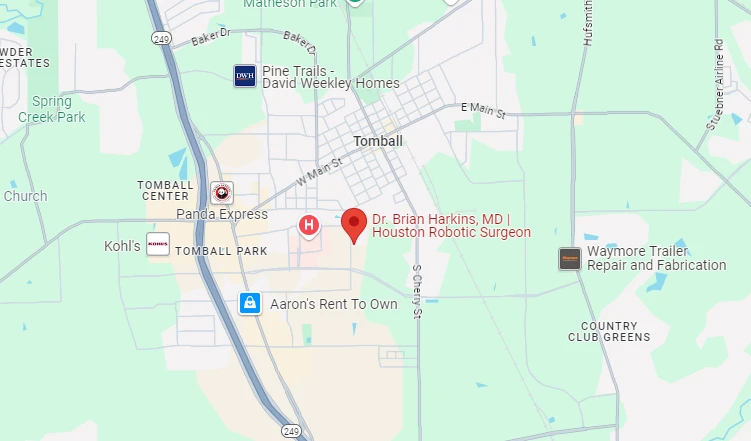
455 School St. Suite 10 Tomball, Texas 77375
Mon-Thu: 9:00 am – 5:00 pm | Fri: 9:00 am – 2:00 pm


Da Vinci surgery is used for minimally invasive operations in which a surgeon controls robotic instruments from a console, and it is most often chosen for operations on the abdomen. In general surgery, that usually includes hernia repair, gallbladder removal, colon and rectal surgery, and reflux surgery, depending on the patient.
Many adults in Tomball and the greater Houston area first hear the words "da Vinci" when a surgeon suggests robotic surgery for a hernia, a gallbladder, or a problem in the colon. The name sounds like a machine that does the work by itself, so patients often ask what the system is actually used for and whether it applies to their own condition. Those are fair questions to bring to a consultation.
This guide explains the uses of the da Vinci system in plain language, drawing on patient information from MedlinePlus, the health information service of the National Library of Medicine, and on the facts the manufacturer, Intuitive, publishes about its technology. It describes what is true for patients in general, and it cannot tell you whether surgery or a robotic approach is right for you, because only a surgeon who has examined you and reviewed your history can decide that.
In this guide, you'll learn what the da Vinci system is, which general surgeries it is used for, how it compares with open and laparoscopic surgery, what recovery usually looks like, and when another approach may fit better.
The da Vinci system is a robotic-assisted surgical platform that lets a surgeon operate through a few small incisions while sitting at a console beside the patient.
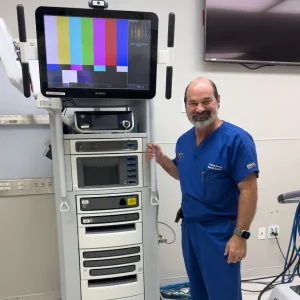
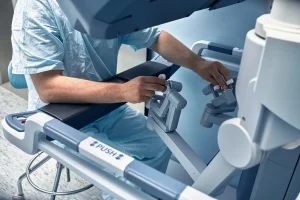
According to MedlinePlus, robotic surgery is a method of performing surgery with very small tools attached to a robotic arm, and the surgeon controls the arm from a computer station. The surgeon makes small cuts to insert the instruments, and a thin tube with a camera called a laparoscope gives an enlarged 3D view of the area being treated. At the practice of Dr. Brian Harkins, the standard platform is the da Vinci Xi surgical system, which the surgeon operates from a console with a magnified 3D view, instruments that filter hand tremor, and wristed instruments that move with seven degrees of freedom.
The most important point is that the system never operates on its own. It follows the hand movements of the surgeon, so every step of the surgery is a decision made by a person, and the technology exists to give that person a steadier view and finer control inside a small space. Intuitive reports that more than 14 million da Vinci procedures have been performed worldwide and that more than 7,000 systems are installed, and those figures describe the technology as a whole rather than any single practice.
In general surgery, the da Vinci system is used for hernia repair, gallbladder removal, colon and rectal surgery, and reflux surgery, and the choice for each patient depends on the condition and the findings.

MedlinePlus notes that robotic surgery may be used for many different operations and names gallbladder removal among them, and that the list also reaches into other specialties outside general surgery. Dr. Harkins is a board-certified general surgeon, so the surgeries that matter most to his patients are the ones below, which cover hernias, gallbladder disease, colon and rectal disease, and reflux.
A hernia forms when tissue pushes through a weak spot in the muscle wall of the abdomen. The da Vinci system can be used for inguinal hernias in the groin, umbilical hernias at the belly button, ventral and incisional hernias on the front of the abdomen, and hiatal hernias near the diaphragm, and the surgeon decides which approach suits the size and location of the hernia. Learn more about robotic general surgery at the practice.
Gallbladder removal, also called cholecystectomy, treats problems such as gallstones and an inflamed gallbladder called cholecystitis. For an uncomplicated gallbladder in an otherwise healthy patient, robotic surgery and laparoscopy are both excellent options, so the choice often comes down to the surgeon's judgment and the specifics of the case.
Colon and rectal operations treat conditions such as colon and rectal cancer, diverticulitis, polyps, and colitis. These operations take place deep in the abdomen and pelvis, where a magnified view and wristed instruments can be useful, although some patients need an operation that is converted to open surgery for safety.
Anti-reflux surgery treats gastroesophageal reflux disease, known as GERD, when symptoms continue despite other treatment, and it often goes together with repair of a hiatal hernia. The surgeon uses the robotic system to work near the lower esophagus and the top of the stomach through small incisions.
| Surgery area | Conditions it may treat | What the robotic approach involves |
|---|---|---|
| Hernia repair | Inguinal, umbilical, ventral, incisional, and hiatal hernias | Repair through small incisions with a magnified 3D view |
| Gallbladder removal | Gallstones and cholecystitis | Removal of the gallbladder through a few small incisions |
| Colon and rectal surgery | Colon and rectal cancer, diverticulitis, polyps, colitis | Removal of the affected section of bowel, with open conversion possible if needed |
| Anti-reflux surgery | GERD and hiatal hernia | Surgery near the lower esophagus and stomach to support the valve that keeps acid down |
Compared with open surgery, da Vinci surgery uses smaller incisions and typically causes less tissue trauma, while compared with laparoscopy it adds a 3D view and wristed instruments, though laparoscopy can do as well for many patients.
MedlinePlus explains that robotic surgery is similar to laparoscopic surgery and can be performed through smaller cuts than open surgery. It adds that the small, precise movements possible with the robotic system can let a surgeon do through a small cut what once could be done only with open surgery. The same page is candid about the trade-offs: robotic surgery can take longer because of the time needed to set up the robot, and some hospitals do not have access to the method. It also says that robotic surgery carries as many risks as open and laparoscopic surgery, although the risks are different.
Laparoscopy, which uses a camera and long straight instruments through small incisions, remains an excellent choice for many operations, and the best approach is the one that fits the patient and the surgery.
| Approach | Incision size | What the surgeon uses | Points to weigh |
|---|---|---|---|
| Open surgery | One larger incision | Direct view and hand-held instruments | Typically more tissue trauma and a longer recovery |
| Laparoscopy | Several small incisions | Camera and long straight instruments | Excellent for many operations, with a flat 2D or 3D view depending on the system |
| da Vinci surgery | Several small incisions | Console, magnified 3D view, wristed instruments | Setup can add time, and it is not right for every patient |
Most patients return to light activity within 2 to 3 weeks after da Vinci surgery, compared with 6 to 8 weeks after open surgery, and full recovery takes longer than that.
Because the incisions are smaller than in open surgery, robotic surgery typically means less tissue trauma and a faster recovery. That is a general pattern, not a promise, and the real timeline depends on the surgery performed, the health of the patient, and how the body heals. A patient who has a hernia repaired will not recover on the same schedule as a patient who has a section of colon removed, and the surgeon gives the specific instructions for each operation.
| Time after surgery | What is common | What shapes the timeline |
|---|---|---|
| First days | Rest, mild soreness, and short walks | The type of surgery and the use of an enhanced recovery plan |
| 2 to 3 weeks | Most patients return to light activity | The surgery performed and each patient's health |
| 6 to 8 weeks | The usual point of return to light activity after open surgery | The size of the incision and the tissue involved |
| Beyond that | Full recovery continues and takes longer | Healing, activity level, and the surgeon's guidance |
Robotic surgery is not right for every patient or every condition, and a surgeon may recommend laparoscopy, open surgery, or no surgery after reviewing the case.

Every surgery carries real risks, including the risks of anesthesia, bleeding, and infection, and an operation that starts as a minimally invasive one may need to be converted to open surgery if the surgeon finds that open surgery is safer. Conversion to open surgery means making a larger incision during the same operation, and it is a safety decision rather than a failure. Scar tissue from earlier operations, the location of a problem, and the overall health of the patient can all change which approach makes sense.
Some conditions are better treated without surgery at first, and a good consultation covers the alternatives as well as the robotic option.
Tomball general surgeon Dr. Brian Harkins performs robotic and minimally invasive surgery for hernias, gallbladder disease, colon and rectal conditions, and reflux in Tomball.
Credentials and experience: Dr. Harkins is a board-certified general surgeon with MD and FACS credentials, certified by the American Board of Surgery. He has practiced in the Northwest Houston area since 1997, chairs the Robotics Committee at HCA Houston Healthcare Tomball, a Center of Excellence in Robotic Surgery, and sees patients who travel from across the United States and abroad.
Robotic hernia repair: The surgeon repairs inguinal, umbilical, ventral, incisional, and hiatal hernias with the da Vinci Xi system, working from a console with a magnified 3D view and wristed instruments.
Robotic gallbladder surgery: Dr. Harkins removes the gallbladder for gallstones and cholecystitis, and he is honest that laparoscopy can do as well for some patients.
Robotic colon and rectal surgery: The practice treats colon and rectal cancer, diverticulitis, polyps, and colitis, and some operations need to be converted to open surgery for safety.
Anti-reflux surgery: The surgeon treats GERD and hiatal hernia, and the consultation is where he reviews your history and explains whether surgery makes sense.
No. The surgeon operates the da Vinci system from a console, and the instruments move only as the surgeon directs. The system does not make decisions or act on its own.
It is used for hernias, gallbladder disease, colon and rectal conditions, and reflux. Which surgery is right depends on your condition, your health, and what the surgeon finds.
They are similar, since both use small incisions and a camera. Robotic surgery adds a console, a magnified 3D view, and wristed instruments, and laparoscopy can do as well for some patients.
MedlinePlus says patients are often given general anesthesia so they are asleep. Your anesthesia team explains the plan for your own surgery.
Most patients return to light activity within 2 to 3 weeks, compared with 6 to 8 weeks after open surgery. Full recovery takes longer, and it varies by surgery.
No. It is not right for every patient or condition, and some operations are converted to open surgery for safety. A surgeon decides after reviewing your case.
MedlinePlus notes that robotic surgery can take longer because of the time needed to set up the robot. The surgeon weighs that against the expected benefits.
Yes, it can be used for inguinal, umbilical, ventral, incisional, and hiatal hernias. The surgeon chooses the approach based on the size and location of the hernia.
Yes. For an uncomplicated gallbladder in a healthy patient, robotic and laparoscopic surgery are both excellent options, and the surgeon helps you choose.
A consultation with a board-certified surgeon is the place to start. Dr. Harkins sees patients in Tomball and reviews your history, imaging, and goals.
Da Vinci surgery is used for minimally invasive operations controlled by a surgeon at a console, and in general surgery that includes hernia repair, gallbladder removal, colon and rectal surgery, and reflux surgery. The approach typically means smaller incisions and a faster recovery than open surgery, with honest limits, real risks, and the possibility of conversion to open surgery.
If you are wondering whether this applies to you, you can schedule a consultation about da Vinci surgery options with a board-certified surgeon who can review your history and imaging. Patients across the area look for robotic surgeons when surgery is on the table, and the right answer always depends on your condition, your health, and your goals.
Ask about robotic surgery for your condition.
Call (281) 351-5409 to schedule your consultation.
This information is educational and is not a substitute for professional medical advice. Every patient is different. Dr. Brian Harkins will discuss whether robotic-assisted surgery is right for your specific situation based on your anatomy, health, and goals.

Dr. Brian Harkins is a renowned surgeon specializing in advanced, minimally invasive, and robotic surgical techniques. With a dedication to innovation and personalized patient care, he has transformed countless lives by delivering exceptional outcomes.
I want a website like this, where do i start?