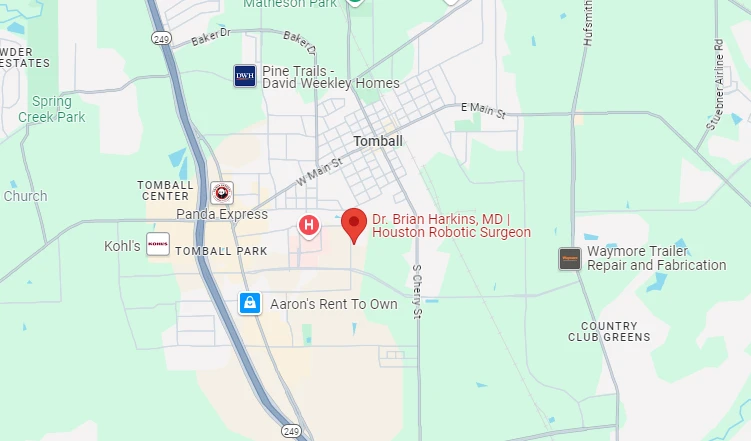
455 School St. Bldg. 1, Suite 10 Tomball, Texas 77375
Mon-Thu: 9:00 am – 5:00 pm | Fri: 9:00 am – 2:00 pm


Robotic colon surgery typically causes much less pain than traditional open surgery. Most patients rate discomfort at just 3-4 out of 10 during the first week and 1-2 out of 10 by week two. Hospital stays average 1-2 days, return to desk work happens around 3-4 weeks, and many patients describe the pain as similar to post-workout muscle soreness rather than typical surgical pain.
If you are considering robotic surgery for colorectal cancer or another colon condition, you are probably wondering how much pain you will experience during recovery. Many patients worry about severe postoperative discomfort and how long they will need strong pain medications before returning to their daily routines.
The good news is that robotic-assisted colon surgery typically causes significantly less pain than traditional open surgery. This article walks you through realistic pain levels, how robotic surgery compares to other approaches, and what your recovery timeline might look like. Dr. Brian Harkins runs a Tomball robotic surgery practice at HCA Houston Healthcare Tomball, a Center of Excellence in Robotic Surgery.
One of the most common concerns before colorectal surgery is how much pain you will experience. Robotic surgery uses multiple small incisions of 5-12 mm versus large open incisions, which dramatically reduces tissue trauma and postoperative pain.
The enhanced visualization that robotic systems provide allows surgeons to perform more delicate tissue handling. Surgeons grab and pull on tissue less frequently compared to laparoscopic approaches, which reduces inflammatory responses and contributes to lower discomfort levels.
Patients typically report pain ratings of approximately 3-4 out of 10 during the first postoperative week, declining to 1-2 out of 10 by the end of the second week. This is significantly lower than traditional open surgery.
One patient described the sensation as comparable to post-workout muscle soreness rather than typical surgery-related pain. Most patients leave the hospital within 1-2 days following robotic colorectal surgery.
Table 1: Pain Score Timeline After Robotic Colon Surgery
| Recovery Phase | Typical Pain Score (0-10) | Pain Management |
| Day 0-2 (hospital) | 3-5 | IV multimodal, regional blocks |
| Week 1 (home) | 3-4 | Oral multimodal, occasional opioid |
| Week 2 | 1-2 | Acetaminophen, NSAIDs |
| Week 3-4 | 0-1 | As needed only |
| Week 4+ | Minimal | Typically none required |
By 3-4 weeks postoperatively, many patients report sufficient pain control to return to desk work, with most returning to full normal activities by 4-6 weeks. This accelerated recovery timeline is one of the major advantages of minimally invasive robotic procedures.
ERAS (Enhanced Recovery After Surgery) guidelines recommend reducing opioid use and adopting multimodal approaches that combine two or more methods for pain control. The ASCRS/SAGES Clinical Practice Guidelines for Enhanced Recovery After Colon and Rectal Surgery recommend implementing a multimodal, opioid-sparing pain management plan before the induction of anesthesia.
Modern pain management for robotic colon surgery includes:
This combination approach provides better relief with fewer side effects than relying on opioids alone.
A prospective randomized trial comparing robotic versus laparoscopic rectal resection found no significant differences in pain scores or postoperative morphine consumption between groups. Both minimally invasive approaches deliver substantially superior pain outcomes compared to open surgery.
For right-sided procedures, robotic approaches demonstrated lower conversion to laparotomy rates and shorter hospital stays compared with laparoscopic techniques. Fewer patients need to be switched to open surgery mid-procedure, which would otherwise increase pain and recovery time.
Table 2: Pain Profile by Surgical Approach
| Approach | Typical Pain Score Week 1 | Hospital Stay | Return to Desk Work |
| Robotic | 3-4 | 1-2 days | 3-4 weeks |
| Laparoscopic | 3-4 | 2-3 days | 3-4 weeks |
| Open | 6-8 | 5-7 days | 6-8 weeks |
Several factors can affect how much discomfort you experience after robotic colon surgery.
While robotic surgery is generally well-tolerated, certain complications can increase discomfort and require attention.
Incidence rates vary from 2.8 to 30 percent depending on procedure type. This complication manifests with severe postoperative pain, fever, and systemic infection signs. It requires immediate medical attention and typically additional intervention.
Prolonged ileus lasting beyond 72 hours occurs in 5-30 percent of patients, substantially increasing pain. Minimally invasive approaches reduce bowel manipulation and allow earlier mobilization, which lowers ileus risk.
These occur at similar rates between robotic and laparoscopic approaches. Risk factors include preoperative diabetes, intraoperative blood loss of 100 mL or more, and longer incision lengths.
Studies report overall complication rates of approximately 12 percent, with severe complications in 2.4 percent, local complications in 8.8 percent, and systemic complications in 3.5 percent. These rates are generally lower than traditional open surgery.
ERAS protocols reshape the postoperative experience through standardized evidence-based interventions. These protocols are designed to get you back on your feet faster while managing pain effectively.
You will typically be ready to go home when you can:
Research found 14.8 percent of patients met discharge criteria within 48 hours, with these early-discharge patients experiencing fewer postoperative complications than those requiring longer hospitalizations.
Houston offers several excellent options for robotic colorectal surgery, with multiple advanced facilities within driving distance for most patients.
Choosing an experienced surgeon and facility makes a significant difference in your pain experience and overall outcomes. Volume-outcome relationships are well documented in colorectal surgery.
Table 3: What to Look for in a Houston Robotic Colon Surgeon
| Factor | Why It Matters |
| Annual robotic case volume | Volume correlates with shorter operative time and fewer complications |
| Center of Excellence designation | Indicates institutional commitment to robotic surgery infrastructure |
| ERAS protocol implementation | Drives faster recovery and lower opioid use |
| Multimodal pain management | Reduces opioid reliance and improves comfort |
| Multidisciplinary team support | Enables comprehensive perioperative planning |
| Documented conversion rates | Lower conversion rates correlate with better pain outcomes |
Most patients are pleasantly surprised at how manageable the discomfort is, especially compared to what they imagined. Practical preparation tips:
Robotic surgery's small incisions, advanced pain management, and ERAS protocols combine to make recovery substantially more comfortable than traditional open procedures.
If you are considering robotic colon surgery and want to minimize pain while maximizing your recovery, Dr. Brian Harkins in Tomball, Texas can help you explore your options. With advanced techniques and personalized care, you can feel confident about your surgical experience.
Call 281-351-5409 to schedule your visit online and learn how robotic surgery can work for you.
Robotic colon surgery is significantly less painful than open surgery. Most patients rate pain at 3-4 out of 10 in the first week and 1-2 out of 10 by week two. Many describe it as similar to post-workout muscle soreness.
Acute pain typically resolves within the first week. By week two, most patients have minimal discomfort manageable with acetaminophen or NSAIDs. By week 3-4, many patients require no pain medication at all.
Modern pain management uses multimodal approaches including regional blocks (TAP blocks), NSAIDs, acetaminophen, gabapentinoids, and limited opioids only for breakthrough pain. This minimizes opioid use while maintaining good comfort levels.
Studies show similar pain scores and morphine consumption between robotic and laparoscopic approaches. Both deliver substantially better pain outcomes than open surgery, with hospital stays of 1-3 days versus 5-7 for open.
Most patients use minimal opioids thanks to multimodal management. Some may take opioids for the first 3-7 days for breakthrough pain, then transition to acetaminophen and NSAIDs for the remaining recovery.
Anastomotic leakage, prolonged ileus beyond 72 hours, surgical site infections, and overall complications affecting about 12 percent of patients can increase pain. Severe pain combined with fever requires immediate medical attention.
Most patients leave the hospital within 1-2 days after robotic colon surgery. About 14.8 percent meet discharge criteria within 48 hours, and these patients also tend to have fewer complications.
Most patients return to desk work around 3-4 weeks. Physical labor jobs require 6 weeks or longer. Your surgeon will give specific guidance based on your procedure and job demands.
Obese patients see longer operative times and higher conversion rates, but blood loss, complications, hospital stay, and pain levels do not significantly differ from non-obese patients with experienced surgeons.
Contact your surgeon immediately for severe abdominal pain, fever over 101°F, inability to pass gas beyond 72 hours, persistent nausea or vomiting, or redness, warmth, or drainage from incision sites.
Discuss your robotic colon surgery options.
Plan your recovery with confidence today.


Dr. Brian Harkins is a renowned surgeon specializing in advanced, minimally invasive, and robotic surgical techniques. With a dedication to innovation and personalized patient care, he has transformed countless lives by delivering exceptional outcomes.
I want a website like this, where do i start?