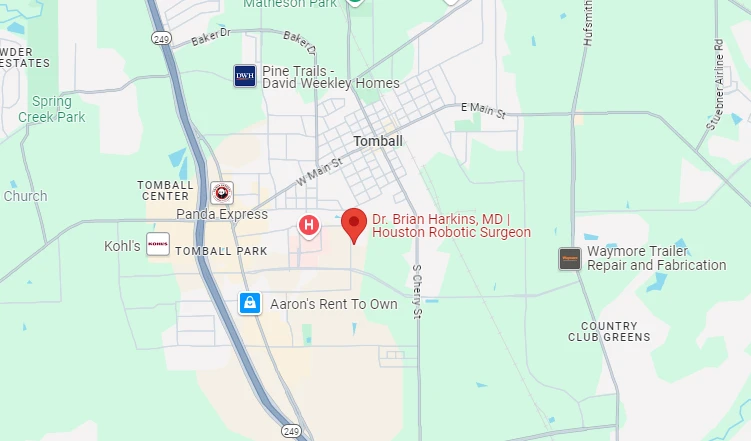
455 School St. Bldg. 1, Suite 10 Tomball, Texas 77375
Mon-Thu: 9:00 am – 5:00 pm | Fri: 9:00 am – 2:00 pm


Two things have to combine. A structural weakness in the abdominal wall, from age, genetics, or anatomy, meets increased internal pressure from heavy lifting, chronic coughing, obesity, or pregnancy. Neither alone typically produces a hernia. That combination explains why occupational lifting matters most for those who already have a vulnerable inguinal canal, and why the controllable half of the equation is worth addressing.
A hernia occurs when an internal organ or tissue pushes through a weak area in muscle or connective tissue, creating a bulge that ranges from barely noticeable to prominently visible.
If you lift heavy equipment at work, are managing your weight, or have a family history, you are right to wonder what is actually putting you at risk. This guide covers the anatomical vulnerabilities that make hernias possible, the pressures that trigger them, which groups face elevated risk, and the prevention strategies that genuinely reduce it.
Hernias require both a weak point and a force pushing against it. Understanding that pairing is what makes prevention make sense, because you can rarely change the first factor but frequently can change the second.
Some risk factors are built into your anatomy:
Think of the abdominal wall as a multilayered structure of muscle, fascia, and connective tissue holding everything in place. Where those layers thin or fail, internal tissue finds a way through.
The second factor is what pushes against those vulnerable areas:
None of these causes a hernia in a wall with no weak point. Combined with one, they are what determines whether and when herniation occurs.
The Global Burden of Disease Study 2021 reported 1.72 million new cases of inguinal, femoral, and abdominal wall hernias among individuals aged 45 and older worldwide, with men experiencing approximately 7.3 times higher incidence than women in peak age groups.
In the United States, roughly one million hernia repairs occur annually, making it one of the most common surgical procedures performed nationwide.
Those figures matter less as statistics than as context: this is a common condition with well-understood causes, and a meaningful share of cases trace to factors within individual control.
Different populations face different hernia types, and knowing which applies to you sharpens what to watch for.
| Hernia type | Highest-risk group | Key driver |
| Inguinal | Men 50 to 70, especially in physical work | Anatomical weakness at the inguinal canal |
| Umbilical | Pregnant and postpartum women | Stretching around the navel during gestation |
| Femoral | Women | Wider femoral canal, higher complication risk |
| Incisional | Anyone with prior abdominal surgery | Permanent weak point at the surgical site |
| Epigastric | General adult population | Naturally thinner linea alba tissue |
The most prevalent type overall, occurring seven to eight times more frequently in men. The male inguinal canal contains a small opening for the spermatic cord and blood vessels, creating a natural weak point.
For men aged 50 to 70 working in manufacturing, warehouse operations, or logistics, this represents the highest-risk combination of anatomy and occupational exposure.
An estimated 15 to 20 percent of pregnancies develop hernias, most commonly umbilical, as the growing uterus stretches abdominal wall tissue around the navel.
Three mechanisms operate simultaneously. The expanding uterus physically stretches and thins the abdominal muscles. Hormonal changes, particularly increased relaxin, soften connective tissue and reduce elasticity in preparation for childbirth. And the weight of the developing baby, amniotic fluid, and placental tissue creates sustained pressure through pregnancy and into the postpartum period.
Risk compounds with multiple pregnancies as recovery capacity progressively diminishes. Many women also develop rectus diastasis, separation of the left and right abdominal muscles along the linea alba, which creates lasting weakness after delivery.
Cesarean delivery adds incisional hernia risk at the surgical site, which can remain vulnerable years afterward.
Less common overall but occurring more frequently in women due to a wider femoral canal. Despite their smaller size, femoral hernias carry substantially elevated risk of incarceration and strangulation, making prompt evaluation important rather than optional.
The manufacturing, warehouse, and logistics work concentrated around Tomball's industrial corridors exposes workers to elevated hernia risk through daily physical demands that raise intra-abdominal pressure.
Heavy lifting and repetitive straining create chronic pressure inside the abdominal cavity, gradually stretching and weakening the wall until herniation occurs. Construction, manufacturing, and warehouse roles carry higher risk than sedentary occupations.
Proper technique substantially reduces occupational risk:
Core strengthening supports this, though anyone who suspects an existing hernia should consult a physician before beginning vigorous core work, since certain exercises increase abdominal pressure and can worsen the problem.
The modifiable factors deserve emphasis because they are where prevention actually happens.
Weight. Obesity affects more than 40 percent of Americans, and Texas rates match or exceed that. Excess weight creates sustained mechanical stress while degrading muscle quality. Even 5 to 10 percent weight loss meaningfully reduces intra-abdominal pressure.
Smoking. Tobacco weakens connective tissue throughout the body including abdominal fascia, while chronic coughing creates repeated pressure spikes. Smokers develop hernias more frequently and have worse surgical outcomes including higher recurrence.
Lifting technique. The single most controllable occupational factor, and one that costs nothing to change.
Chronic cough and constipation. Both create repeated pressure spikes. Treating the underlying cause addresses hernia risk alongside the primary complaint.
Age, genetics, and anatomy cannot be changed. That makes the controllable half of the equation more important rather than less, particularly for anyone already carrying an anatomical predisposition.
Recognizing a hernia in its early stages gives you the widest range of options, since elective repair on a small defect is considerably simpler than repair after enlargement.
The first sign is frequently a bulge that appears with straining, coughing, or standing and recedes when lying down. It may be painless initially, which is why many are noticed incidentally rather than because of discomfort.
Aching or dragging discomfort in the groin or at the site often follows, typically worse at the end of a day spent on your feet and better after rest.
Some people describe a heaviness or pressure rather than pain. In the groin, discomfort may extend into the upper thigh or, in men, toward the scrotum.
Hernias generally enlarge because the defect widens under repeated pressure and more tissue moves through it. That progression is gradual and easy to normalize.
A larger defect is not automatically more dangerous, and in some respects a small tight defect carries higher incarceration risk because trapped tissue has less room. Size alone is not the measure of urgency.
What matters more is change: a hernia that becomes harder to reduce, more consistently uncomfortable, or newly tender warrants evaluation regardless of size.
A visible bulge, particularly one that appears with straining and disappears when lying down, warrants evaluation. So does groin or abdominal discomfort that worsens with activity.
Prior abdominal surgery raises incisional hernia risk at the old site, and any bulge near a previous incision should be assessed. Women noticing a bulge in the upper inner thigh or lower groin should seek prompt evaluation given femoral hernia complication risk.
Most hernias do not resolve on their own and gradually enlarge. Surgical repair performed electively is considerably simpler than emergency repair after incarceration.
Consulting a Tomball general surgeon about a bulge you have noticed establishes whether it needs repair now or can be monitored, and patients uncertain about their risk profile can schedule an evaluation to discuss which factors apply to them.
Prevention is worth separating into what has evidence behind it and what is simply reasonable advice.
Weight reduction lowers baseline intra-abdominal pressure continuously rather than situationally, which is why it appears in every serious discussion of modifiable risk. The effect begins well before reaching an ideal weight.
Smoking cessation works through multiple mechanisms simultaneously: connective tissue strength improves, chronic cough resolves, and healing capacity recovers. For anyone facing eventual repair, it also improves surgical outcomes and lowers recurrence.
Treating chronic cough and constipation removes recurring pressure spikes. Both are frequently tolerated as background annoyances when addressing them would reduce a genuine structural risk.
Core strengthening is sensible for general abdominal wall support, though the evidence that it prevents hernias specifically is thinner than the evidence for weight and smoking.
Avoiding heavy lifting entirely is impractical for most people and unnecessary. Technique matters more than avoidance, and deconditioning carries its own risks.
Support garments and belts may provide symptomatic comfort for an existing hernia but do not prevent formation or repair a defect. They are not a substitute for evaluation.
Two factors combining: a structural weakness in the abdominal wall from age, genetics, or anatomy, and increased internal pressure from heavy lifting, chronic coughing, obesity, or pregnancy. Neither alone typically produces a hernia.
Because the male inguinal canal contains a small opening for the spermatic cord and blood vessels, creating a natural weak point. This produces roughly seven to eight times higher inguinal hernia risk in men.
Rarely without an existing weakness. Lifting generates the pressure, but it typically needs a vulnerable area to push against. That said, repetitive lifting gradually weakens the wall itself, which creates the vulnerability over time.
It actively contributes. Excess weight raises intra-abdominal pressure continuously while degrading muscle quality through fat infiltration and impairing healing. Even 5 to 10 percent weight loss reduces that pressure meaningfully.
Yes, through three mechanisms: weakening connective tissue including abdominal fascia, causing chronic cough that creates repeated pressure spikes, and impairing wound healing. Smokers also have higher recurrence rates after repair.
Through the uterus stretching abdominal muscles, hormonal changes softening connective tissue, and sustained weight creating pressure. Roughly 15 to 20 percent of pregnancies develop hernias, most commonly umbilical, with risk compounding across multiple pregnancies.
No. Genetic predisposition raises risk but does not determine outcome. Weight management, proper lifting technique, core strengthening, and treating chronic cough or constipation all reduce the likelihood substantially.
One developing at a previous surgical site, including cesarean incisions. The incision creates a permanent weak point that can remain vulnerable years later, and these tend to be more challenging to repair with higher recurrence rates.
Core strengthening helps, but consult a physician first if you suspect you already have one. Certain core exercises increase intra-abdominal pressure and can worsen an existing hernia rather than protecting against a new one.
When you notice a bulge, particularly one appearing with straining and receding when lying down, or discomfort worsening with activity. Women noticing a groin or inner thigh bulge should seek prompt evaluation given femoral hernia risk.
The most useful way to think about hernia causes is as an equation with two sides. One side is the wall itself, which thins with age, varies by genetics, and carries built-in weak points like the male inguinal canal and the linea alba. The other side is pressure, from lifting, coughing, excess weight, or pregnancy. A hernia happens where those two meet, which is why the same warehouse job produces one in some workers and not others.
That framing points directly at what to do. You cannot change your anatomy or your age, and family history is fixed. What remains is genuinely worth acting on: technique that keeps loads close and off the lower back, weight reduction that lowers baseline abdominal pressure, smoking cessation that both strengthens tissue and stops the coughing, and treating a chronic cough or constipation rather than living with it. Combine those with early evaluation of any bulge you notice, and a great many hernias never progress to the point of needing emergency attention.
Understand which hernia risk factors you can actually change.
Schedule an evaluation with Dr. Brian Harkins in Tomball.


Dr. Brian Harkins is a renowned surgeon specializing in advanced, minimally invasive, and robotic surgical techniques. With a dedication to innovation and personalized patient care, he has transformed countless lives by delivering exceptional outcomes.
I want a website like this, where do i start?