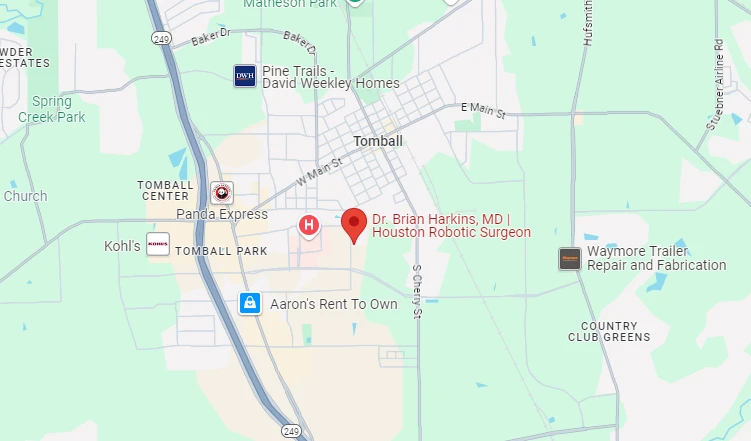
455 School St. Suite 10 Tomball, Texas 77375
Mon-Thu: 9:00 am – 5:00 pm | Fri: 9:00 am – 2:00 pm

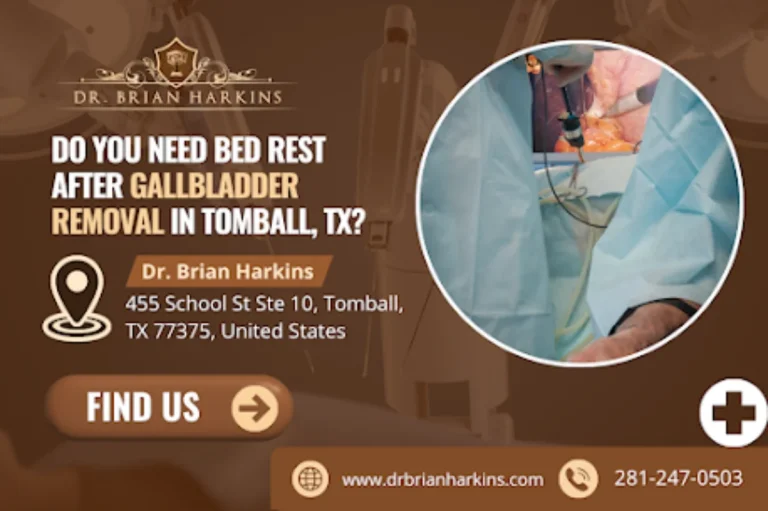
Usually, no. After keyhole (laparoscopic or robotic) gallbladder removal, recovery guidance advises starting to walk and adding light activity gradually, while avoiding strenuous activity and heavy lifting for at least a couple of weeks. Pain is a guide too: the advice is to stop any activity that hurts. Your surgeon's own instructions always come first.
You may have just had your gallbladder removed, or you may have a date for the operation, and one practical question keeps coming back: should the first days at home be spent lying in bed, or should you be up and moving? If you live in Tomball, Northwest Houston or elsewhere in the greater Houston area, the answer shapes how you plan those first weeks, from who helps around the house to when you might expect to return to work.
Clear, sourced guidance on rest and activity may help you plan your recovery with more confidence and prepare better questions for your own surgeon, whether you are reading about Dr. Brian Harkins' surgical practice in Tomball, Texas or getting ready for an operation somewhere else in the area.
In this guide, you'll learn what recovery guidance says about walking and gentle movement after keyhole gallbladder removal, what bed rest actually means and what long periods in bed can do, which activities to hold back on and for how long, what general guidance says about work and driving, which signs mean calling your surgeon, and what Dr. Brian Harkins provides for gallbladder patients in Tomball.
After keyhole gallbladder removal, recovery guidance points you toward gentle movement rather than bed rest: the advice is to start walking after surgery and then to add light activity gradually. This guide assumes an adult recovering from keyhole removal, meaning laparoscopic or robotic surgery, and it does not cover open surgery or give advice for any one person's recovery.
If you are reading ahead before a robotic lap cholecystectomy, this general guidance is a starting point for planning, and your surgeon's instructions take priority wherever they differ.
General guidance encourages gentle movement in the first week at home, including walking and using the stairs. It also advises starting some light activity and building it up gradually, while avoiding strenuous exercise. Feeling tired is part of the picture as well: general guidance notes that energy returns over several weeks, and recovery from laparoscopic removal takes up to 6 weeks for most people.
The table below sets out what general recovery guidance says about common activities after keyhole gallbladder removal.
| Activity | What general guidance says | Timing or scope |
|---|---|---|
| Walking | Start walking after surgery | From the first week at home |
| Stairs | Gentle movement, including stairs, is encouraged | The first week at home |
| Light activity | Start some light activity and build up gradually | A gradual build-up, not all at once |
| Strenuous exercise | Avoid strenuous exercise and strenuous activity | At least a couple of weeks |
| Heavy lifting | Avoid heavy lifting | At least a couple of weeks |
| Any activity that hurts | Stop doing that activity | Throughout recovery |
Dr. Harkins' practice information gives a separate figure of its own: most patients return to light activity within 2 to 3 weeks after minimally invasive surgery, compared with 6 to 8 weeks after open surgery, and full recovery takes longer than that. The figure describes patients in general, not a target for your own recovery, and it measures something different from the advice to begin walking in the first week, so this guide keeps the two apart.
Bed rest means lying in bed for most of the time as a form of treatment. A 1999 systematic review of bed rest found no proven benefit for any of the 17 conditions it studied, and that finding is about the conditions in the review, not about recovery from gallbladder surgery.
In general, prolonged bed rest can lead to muscle wasting and loss of conditioning, faintness on standing and pressure ulcers, and it is associated with blood clots in the veins. These are described as general effects of long periods in bed, not as effects of gallbladder surgery itself.
General medical reference material also notes that recent surgery and long periods of immobility, such as bed rest or prolonged sitting, slow blood flow in the veins. In the same general reference material, walking improves blood flow in the leg veins, and early walking is preferred over bed rest.
Strenuous activity and heavy lifting are the two things general guidance asks you to hold back on after keyhole gallbladder removal, and the advice is to avoid both for at least a couple of weeks. Pain is the other guide, and it applies to every activity, including the gentle ones.
General guidance advises avoiding strenuous exercise while you build up light activity gradually. If you are used to the gym, running or sport, your surgeon is the right person to ask when it is reasonable to begin again in your own case, alongside the general advice to build up light activity gradually first.
Avoiding heavy lifting for at least a couple of weeks is part of the same general guidance. If your work or home life involves carrying heavy items, it is worth planning help in advance and asking your surgeon how long your own limit should last.
The advice on pain is direct: if it hurts when you do something, stop doing that activity. Pain that your pain medicines do not relieve is different, and it belongs on the list of reasons to call your surgeon later in this guide.
The table below brings these limits together with how long general guidance suggests keeping them.
| Limit | General guidance | How long |
|---|---|---|
| Strenuous activity and exercise | Avoid while building up light activity | At least a couple of weeks |
| Heavy lifting | Avoid | At least a couple of weeks |
| Activities that hurt | Stop that activity | Whenever it happens |
| Driving | Wait until you can do an emergency stop without pain or discomfort | No fixed date; depends on that test |
Return to work often takes 1 to 2 weeks after gallbladder removal, depending on your job and the type of surgery, and jobs that involve heavy lifting or long periods of standing may take longer. General guidance also notes that a desk job may be possible after about a week, depending on your pain and energy, and that a physical job calls for a conversation with your provider.
Driving follows a practical test rather than a calendar date. General guidance says not to drive until you can do an emergency stop without pain or discomfort, and your surgeon can tell you whether anything else in your own recovery affects that.
The table below sets each situation beside the typical guidance and a sensible next step.
| Situation | Typical guidance | What to do |
|---|---|---|
| Desk job | May be possible after about a week, depending on pain and energy | Ask your surgeon whether that timing fits your recovery |
| Work in general | Often 1 to 2 weeks, depending on the job and the type of surgery | Plan your return with your surgeon's advice |
| Physical job (heavy lifting or long standing) | May take longer; talk with your provider | Ask your surgeon before you return |
| Driving | Not until you can do an emergency stop without pain or discomfort | Check with your surgeon if you are unsure |
| Full recovery after laparoscopic removal | Up to 6 weeks for most people, with energy returning over several weeks | Expect tiredness to ease gradually rather than all at once |
Each figure measures something different, so read the rows as separate guides rather than one timeline, with your surgeon's instructions first in every row.
General recovery guidance lists specific signs that mean calling your surgeon, and knowing them in advance may help you act quickly if one appears while you are building up your activity at home.
| Sign | What to do |
|---|---|
| A temperature above 101 F (38.3 C) | Call your surgeon |
| Bleeding, redness or warmth at the wounds | Call your surgeon |
| Thick yellow or green drainage from the wounds | Call your surgeon |
| Pain that your pain medicines do not relieve | Call your surgeon |
| Trouble breathing, or a cough that will not go away | Call your surgeon |
| Being unable to eat or drink | Call your surgeon |
| Yellow skin or yellow eyes | Call your surgeon |
| Gray stools | Call your surgeon |
If you have a question about your activity plan that is not one of these signs, you can talk to Dr. Harkins' office about rest and activity after gallbladder removal and ask how the general guidance applies to you.
Dr. Brian Harkins, MD, FACS (Fellow of the American College of Surgeons), is a board-certified general surgeon through the American Board of Surgery and has practiced in the Northwest Houston area since 1997. You can read more about the background of Brian Harkins and a practice built on safety, efficacy, and minimally invasive surgery, with personalized treatment plans.
Robotic gallbladder surgery. Dr. Harkins performs robotic gallbladder surgery, also called robotic cholecystectomy. Robotic and laparoscopic surgery are both excellent options for uncomplicated gallbladder removal in a healthy patient, and surgery carries real risks whichever approach is used.
Hospital affiliation in Tomball. Dr. Harkins is affiliated with HCA Houston Healthcare Tomball, formerly known as Tomball Regional Medical Center, and sees patients from Tomball, Northwest Houston and the greater Houston area.
General guidance says to start walking after surgery, and it encourages gentle movement in the first week at home. Your surgeon or care team sets the timing for your own recovery.
General guidance encourages gentle movement, including stairs, in the first week at home. If climbing stairs hurts, the advice is to stop doing that activity, and pain your medicines do not relieve means calling your surgeon.
General guidance notes that energy returns over several weeks after laparoscopic gallbladder removal. If tiredness worries you, or it comes with any of the warning signs in this guide, call your surgeon.
Recovery from laparoscopic gallbladder removal takes up to 6 weeks for most people, with energy returning over several weeks. Your surgeon can tell you how your own timeline may differ.
General guidance says not to drive until you can do an emergency stop without pain or discomfort. Your surgeon can tell you whether anything else in your recovery affects when you drive.
A desk job may be possible after about a week, depending on your pain and energy. Return to work in general often takes 1 to 2 weeks, depending on the job and the type of surgery.
General guidance advises avoiding heavy lifting for at least a couple of weeks. Jobs that involve heavy lifting may take longer to return to, and a physical job calls for a talk with your surgeon.
The general recovery sources used for this guide do not separate robotic and laparoscopic removal. Your surgeon's instructions for your own operation come first.
Yes. The advice is that if it hurts when you do something, you should stop doing that activity. Pain that your pain medicines do not relieve is a reason to call your surgeon.
Your surgeon is the right person to set your activity plan, because the guidance in this article is general. Dr. Harkins' practice is built on personalized treatment plans.
Bed rest is usually not what recovery guidance asks for after keyhole gallbladder removal. The advice is to start walking after surgery, use gentle movement such as walking and stairs in the first week at home, build up light activity gradually, and avoid strenuous activity and heavy lifting for at least a couple of weeks, stopping anything that hurts.
Work, driving and full recovery each follow their own guide, from about a week for a desk job to up to 6 weeks for full recovery after laparoscopic removal, with driving waiting until an emergency stop causes no pain or discomfort. Keep the warning signs in mind, and let your own surgeon's instructions shape every step of your plan.
Ask about moving safely after gallbladder removal.
Call 281-247-0503 to schedule your consultation.
This information is educational and is not a substitute for professional medical advice. Every patient is different. Dr. Brian Harkins will discuss whether robotic-assisted surgery is right for your specific situation based on your anatomy, health, and goals.


Dr. Brian Harkins is a renowned surgeon specializing in advanced, minimally invasive, and robotic surgical techniques. With a dedication to innovation and personalized patient care, he has transformed countless lives by delivering exceptional outcomes.
I want a website like this, where do i start?