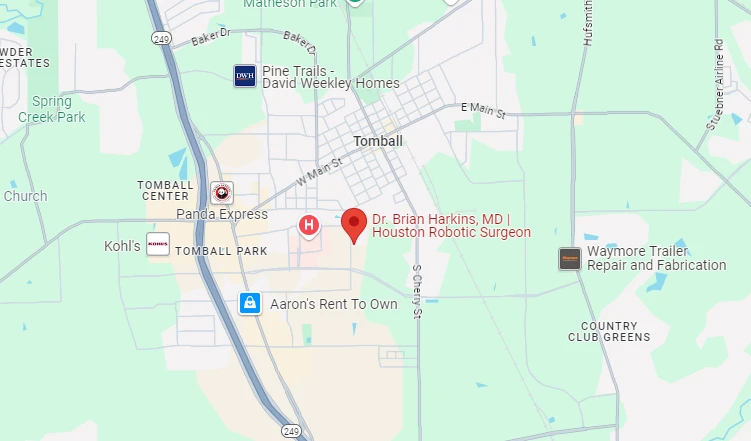
455 School St. Suite 10 Tomball, Texas 77375
Mon-Thu: 9:00 am – 5:00 pm | Fri: 9:00 am – 2:00 pm


For an inguinal hernia, a primary care doctor can usually do the first exam, and a general surgeon is the specialist who evaluates and repairs it. A surgeon is often consulted even when symptoms are mild. Sudden severe pain, or a groin bulge that will not go back in, is a reason to seek immediate care.
You have noticed a bulge in your groin, or a heavy, burning ache that seems worse when you lift something or stand for a long time, and you are not sure whose door to knock on first. You may be wondering whether this is a job for your family doctor, a specialist, or the emergency room, especially if you live in Tomball or elsewhere in the greater Houston area and want to understand the path before you pick up the phone.
The answer usually involves more than one type of doctor, each with a clear role, and knowing those roles ahead of time may help you ask sharper questions, whether you are reading about a Tomball general surgery practice or simply trying to make sense of a new symptom.
In this guide, you'll learn who can examine a groin bulge first, why a general surgeon is the specialist who treats an inguinal hernia, which signs mean seeking care right away, how surgeons repair an inguinal hernia with open, laparoscopic and robotic-assisted approaches, and what Dr. Brian Harkins provides for hernia patients in Tomball.
A primary care doctor can usually do the first exam for a suspected inguinal hernia, because the diagnosis typically starts with your medical history, your symptoms and a physical exam. During that exam, the doctor may check your groin while you cough or strain.
Typical symptoms of an inguinal hernia include a bulge in the groin and a feeling of pain, heaviness or burning in the area. Those symptoms often get worse with straining, lifting, coughing or standing, so it can help to note when your own symptoms appear before the exam.
Imaging is usually added only when the history and exam leave the diagnosis unclear. In that case, a doctor may order an ultrasound, a CT scan or an MRI to get a clearer picture of the groin before deciding on the next step.
The first exam for a confirmed inguinal hernia usually leads to a surgeon, because surgeons are the doctors who perform the repair. Your primary care doctor can examine the bulge and point you towards that next conversation, but the repair itself, and the discussion of whether and when to have it, belongs with a surgeon.
A general surgeon is the specialist who repairs an inguinal hernia, and general surgery is listed as the treating specialty for this condition. Reference sources on inguinal hernia place it within general surgery, and surgeons are the doctors who perform the repair, whether through open surgery or a laparoscopic approach.
Even when an inguinal hernia causes only mild symptoms, it is often advised that a surgeon assesses it, so the options can be discussed. Those options may include watchful waiting, which means monitoring the hernia instead of repairing it straight away, and the risk of a serious complication called strangulation is generally described as low in people whose symptoms are minimal.
Watchful waiting is described as an option for men whose inguinal hernia causes minimal symptoms, but most people with an inguinal hernia eventually need surgery. Published guidance notes that about 70 percent of men who delay surgery will need it within 5 years.
The table below sets out who does what along the usual path, from the first exam to the repair.
| Doctor or setting | Role for an inguinal hernia | When this role usually comes in |
|---|---|---|
| Primary care doctor | Takes your history, reviews your symptoms and examines your groin | First, when you notice a bulge or groin discomfort |
| Imaging (ultrasound, CT or MRI) | Gives a clearer picture of the groin | Only when the exam leaves the diagnosis unclear |
| General surgeon | Assesses the hernia, discusses options such as watchful waiting, and performs the repair | After the diagnosis, often even when symptoms are mild |
| Emergency care | Handles sudden severe pain, a bulge that will not go back in, or other urgent signs | Right away, whenever an urgent sign appears |
Some inguinal hernia signs mean seeking care right away rather than waiting for a routine appointment: a bulge that suddenly gets larger or will not go back in, sudden or severe pain or tenderness at the hernia, fever with redness, or abdominal pain, bloating, nausea or vomiting. General guidance lists these as reasons for immediate care.
Routine symptoms look different. A groin bulge with pain, heaviness or burning that gets worse with straining, lifting, coughing or standing is the usual picture of an inguinal hernia, and it is generally a reason to arrange an exam rather than an emergency visit, unless one of the urgent signs appears.
| Sign | Routine or urgent | What general guidance suggests |
|---|---|---|
| Groin bulge | Routine | Arrange an exam with your doctor |
| Pain, heaviness or burning that worsens with lifting, coughing or standing | Routine | Arrange an exam with your doctor |
| Bulge that suddenly gets larger or will not go back in | Urgent | Seek immediate care |
| Sudden or severe pain or tenderness at the hernia | Urgent | Seek immediate care |
| Fever and redness over the hernia | Urgent | Seek immediate care |
| Abdominal pain, bloating, nausea or vomiting | Urgent | Seek immediate care |
This table is not a way to diagnose yourself. Emergency surgery for an incarcerated or strangulated hernia carries much higher risk than a planned repair, so if any symptom worries you, contact a doctor rather than waiting for it to pass.
Surgeons repair an inguinal hernia with one of three main approaches, open repair, laparoscopic repair or robotic-assisted repair, and all three belong to general surgery. The approach used for a particular hernia is a decision for the surgeon, who can explain the options.
| Repair approach | Specialty |
|---|---|
| Open repair | General surgery |
| Laparoscopic repair | General surgery |
| Robotic-assisted repair | General surgery |
The sources behind this guide name these approaches without ranking them, so the table lists each approach and its specialty, not which one is better. If you are weighing a repair, ask your surgeon which approach would be used for your hernia and why.
Dr. Brian Harkins, MD, FACS, is a board-certified general surgeon through the American Board of Surgery and has practised in the Northwest Houston area since 1997. You can read more about board-certified general surgeon Brian Harkins and a practice built on safety, efficacy, and minimally invasive surgery, with personalized treatment plans for each patient.
Inguinal hernia surgery. Dr. Harkins treats ventral, incisional and inguinal hernias, and performs robotic inguinal hernia repair among the hernia surgery services offered in Tomball. Ask your surgeon about the options that apply to your own hernia.
Hospital affiliation in Tomball. Dr. Harkins is affiliated with HCA Houston Healthcare Tomball, formerly known as Tomball Regional Medical Center, and sees patients from Tomball, Northwest Houston and the greater Houston area.
If you have a groin bulge and want to talk to a general surgeon about it, you can contact Dr. Harkins' office about an inguinal hernia evaluation.
Yes, a primary care doctor can usually diagnose an inguinal hernia from your medical history, your symptoms and a physical exam. The repair itself is done by a surgeon.
Not always. Imaging such as an ultrasound, CT scan or MRI is usually added only when the history and physical exam leave the diagnosis unclear.
Most people with an inguinal hernia eventually need surgery. Watchful waiting is an option for some men with minimal symptoms, though about 70 percent of men who delay will need surgery within 5 years.
Watchful waiting means monitoring an inguinal hernia instead of repairing it straight away. It is described as an option for men with minimal symptoms, and a surgeon can explain whether it fits your situation.
A groin bulge on its own is usually a reason to arrange an exam. A bulge that suddenly gets larger or will not go back in, or one with severe pain, fever or vomiting, is a reason to seek immediate care.
Inguinal hernia symptoms such as a bulge, pain, heaviness or burning often get worse with straining, lifting, coughing or standing. Noting when your symptoms appear can help you describe them clearly at the exam.
Yes. One reference figure puts the lifetime prevalence of inguinal hernia at 27 percent in males and 3 percent in females, so men are affected far more often.
Emergency surgery for an incarcerated or strangulated hernia carries much higher risk than a planned repair.
You can ask whether watchful waiting is an option for you, which repair approach the surgeon would use and why, and which signs mean seeking care right away. Writing your symptoms down beforehand can help.
Yes. Dr. Brian Harkins is a board-certified general surgeon in Tomball who treats inguinal hernias and performs robotic hernia repair, and is affiliated with HCA Houston Healthcare Tomball.
For an inguinal hernia, a primary care doctor can usually do the first exam, using your history, your symptoms and a physical exam, and a general surgeon is the specialist who assesses and repairs the hernia. It is often advised that a surgeon sees the hernia even when symptoms are mild, so options such as watchful waiting or a planned open, laparoscopic or robotic-assisted repair can be discussed.
A bulge that suddenly gets larger or will not go back in, sudden or severe pain, fever with redness, or abdominal pain, bloating, nausea or vomiting are reasons to seek immediate care rather than wait, and your own surgeon's advice for your hernia always comes first.
Questions about seeing a surgeon for a hernia?
Call 281-247-0503 to ask about hernia care.
This information is educational and is not a substitute for professional medical advice. Every patient is different. Dr. Brian Harkins will discuss whether robotic-assisted surgery is right for your specific situation based on your anatomy, health, and goals.


Dr. Brian Harkins is a renowned surgeon specializing in advanced, minimally invasive, and robotic surgical techniques. With a dedication to innovation and personalized patient care, he has transformed countless lives by delivering exceptional outcomes.
I want a website like this, where do i start?