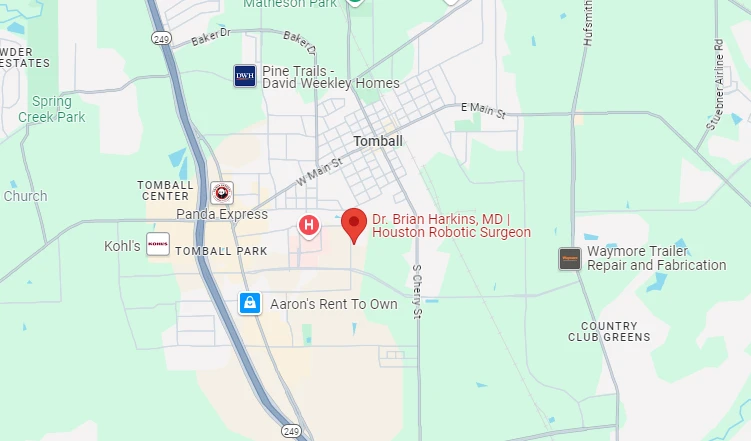
455 School St. Bldg. 1, Suite 10 Tomball, Texas 77375
Mon-Thu: 9:00 am – 5:00 pm | Fri: 9:00 am – 2:00 pm

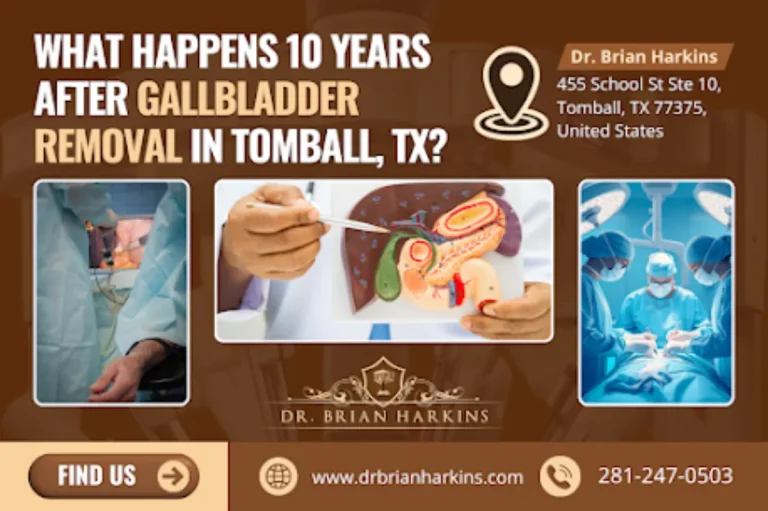
A decade after gallbladder removal, most people feel much better, but about one-third continue to deal with digestive symptoms like bloating, diarrhea, or abdominal pain. Long-term considerations include post-cholecystectomy syndrome, a modestly higher metabolic syndrome risk, possible weight gain, and a slightly elevated colorectal cancer risk concentrated in the first five years.
If you had your gallbladder removed a decade ago, you might be wondering whether the digestive changes you're experiencing are normal or if they'll ever go away. While most people feel much better after gallbladder removal, about one-third continue to deal with symptoms like bloating, diarrhea, or abdominal pain years later.
In this article, you'll learn what research shows about long-term outcomes after cholecystectomy, including how your body adapts to life without a gallbladder, what metabolic and nutritional changes to watch for, and practical steps you can take to manage ongoing symptoms in Tomball, TX and beyond.
The most fundamental change after robotic gallbladder surgery is the loss of the gallbladder's storage function. Instead of bile being stored and released in concentrated bursts when you eat, it now flows continuously from your liver directly into your small intestine in a steady trickle.
This continuous flow means that during meals, especially those high in fat, you may not have enough concentrated bile available to properly digest fats. At the same time, your distal small intestine and colon receive more chronic bile acid exposure throughout the day. This dual effect, less concentrated bile when you need it most and steady exposure when you do not, explains most of the digestive changes that persist over the long term.
Many patients find that high-fat meals, particularly those rich in saturated or trans fats, trigger loose stools, bloating, gas, or cramping. This happens because the liver's steady bile production cannot match the peak concentration that your gallbladder would have delivered during digestion. Over years, most people learn which meals their system handles comfortably and which reliably cause trouble, and they adjust their eating accordingly without much conscious effort.
Post-cholecystectomy syndrome (PCS) describes the persistence or return of pain and digestive symptoms similar to what you experienced before gallbladder removal. These symptoms can appear shortly after surgery or emerge months to years later.
The statistics are notable. In patients who had gallstones at the time of surgery, 10 percent to 25 percent will develop PCS. For those without gallstones, the rate climbs to approximately 30 percent.
In one long-term study following patients for twenty to thirty years after elective cholecystectomy, researchers found that approximately 39 percent reported ongoing abdominal symptoms. The breakdown appears below.
| Symptom | Percentage Reporting |
| Abdominal pain | 21 percent |
| Bloating or distention | 20 percent |
| Heartburn | 16 percent |
| Constipation | 14 percent |
| Diarrhea | 11 percent |
One particularly important cause of ongoing pain after gallbladder surgery is sphincter of Oddi dysfunction (SOD). The sphincter of Oddi is a muscular valve where bile and pancreatic ducts empty into your small intestine.
When this sphincter fails to open properly or contracts abnormally, it causes bile and pancreatic juice to back up. Researchers estimate that about 20 percent of individuals with ongoing pain after cholecystectomy have SOD. Because its symptoms so closely resemble the original gallbladder pain, it is easy to overlook, which is why persistent upper-right pain years after surgery warrants specific evaluation rather than reassurance alone.
Symptoms often mimic the original gallbladder pain: stabbing or intense aching in the upper right abdomen that may radiate to your right shoulder or back. These episodes typically last 30 to 60 minutes before resolving.
Bile acid diarrhea (BAD) is a common contributor to chronic watery diarrhea in long-term postoperative patients. When excessive bile acids reach the colon, they stimulate the intestinal lining to secrete water and electrolytes, resulting in frequent, urgent, watery stools.
Bile acid sequestrants, most commonly cholestyramine, are the first-line treatment for BAD. Many physicians will suggest a trial of these medications as an initial diagnostic and therapeutic step. If symptoms improve on the medication, that response itself helps confirm the diagnosis, which is useful given how rarely the condition is formally tested for.
Long-term metabolic changes after gallbladder removal are complex and sometimes contradictory. Research shows that patients may experience increased BMI and higher rates of metabolic syndrome in the years following surgery.
A recent prospective study found that while BMI and fasting blood sugar levels decreased, blood pressure readings significantly increased. Most notably, the analysis revealed that undergoing cholecystectomy was linked to a 9.63 times higher likelihood of developing metabolic syndrome.
Many patients gain 10 to 15 pounds within three to six months after surgery. This often happens because they can finally eat without pain and may overcompensate for the dietary restrictions they endured before the procedure. Being aware of this tendency in advance makes it easier to keep the return to normal eating from becoming an unintended weight gain.
Vitamins A, D, E, and K require bile for proper absorption. These fat-soluble vitamins depend on bile-mediated micelle formation in your intestine, and the disruption of normal bile storage and release may predispose you to deficiencies over time.
While not every patient develops vitamin deficiencies, it remains a recognized long-term consequence that may require monitoring and supplementation, particularly in patients who continue to experience fat malabsorption. Periodic bloodwork can catch a developing deficiency before it produces symptoms, which is worth discussing with your doctor if fatty foods still cause you problems years later.
One of the more discussed long-term findings involves an elevated risk of colorectal cancer (CRC). A comprehensive meta-analysis of 33 case-control studies found an association between gallbladder removal and CRC with a pooled relative risk of 1.34, indicating a modest but statistically significant elevation.
The risk is not uniform across the colon. When researchers looked specifically at proximal colon cancers, the relative risk increased to 1.88, showing a stronger association with right-sided colon lesions.
There is some reassurance here. Several cohort studies indicate that the increased incidence is most pronounced within the first five years after surgery, with little or no significant effect beyond that period. The modest size of the association and its concentration in a defined window make it a reason for diligent screening rather than for alarm. This suggests that appropriate colon and rectal cancer screening in the first five years post-surgery may be particularly important.
Dietary management remains a cornerstone of care both immediately after surgery and for years afterward. The focus is on helping your digestive system adapt to the continuous flow of bile rather than the concentrated bursts your gallbladder once provided.
Over the first month or two, a low-fat diet is generally recommended to avoid cramping and diarrhea. This means:
Patients are advised to eat smaller, more frequent meals rather than large portions. This approach helps prevent overwhelming your digestive system with more fat than the available bile can handle at any one time. Spreading fat intake across the day matches the steady bile flow far better than concentrating it in one or two large meals.
As you move beyond the initial recovery period, you can gradually reintroduce fatty foods to test your tolerance. Some patients find they can eventually eat a relatively normal diet, while others need to maintain stricter limitations. There is no single correct endpoint here, since the right long-term diet is simply the one that keeps your symptoms manageable while meeting your nutritional needs.
Effective long-term strategies emphasize:
Dietitians play a valuable role in educating patients on these strategies and helping them find a sustainable eating pattern that minimizes symptoms while meeting nutritional needs.
Health-related quality of life after gallbladder surgery follows a predictable pattern. Most patients experience marked early improvement in their symptoms, particularly if they had significant pain before surgery. This improvement then plateaus, with long-term outcomes depending heavily on your preoperative condition and whether chronic symptoms emerge.
Your clinical status before surgery is widely recognized as the strongest predictor of long-term satisfaction. Multiple studies have concluded that symptomatic patients benefit more from cholecystectomy than those undergoing elective surgery for minimal or atypical complaints. A decade out, this pattern holds as clearly as it does in the first year, underscoring how much the original decision to operate shapes long-term outcomes. National health resources such as MedlinePlus offer background on gallbladder removal and long-term recovery.
For patients in Tomball, TX and the greater Houston area, access to an experienced Tomball surgical practice and comprehensive follow-up care can make a significant difference in long-term outcomes. When complications do arise, whether digestive symptoms, metabolic changes, or other concerns, having local expertise available ensures timely intervention and management. Continuity of care matters here, since a provider familiar with your surgical history is better positioned to distinguish an expected adaptation from a problem that needs investigation.
Most patients who were significantly symptomatic before surgery report satisfaction with their decision ten years later, despite the dietary adjustments and occasional digestive challenges. For them, the trade of manageable long-term changes for freedom from recurrent gallbladder attacks is one they would make again. Those with minimal preoperative symptoms or who develop post-cholecystectomy syndrome may have more mixed feelings about the procedure's long-term impact on their quality of life.
Yes. About one-third of patients report ongoing bloating, diarrhea, or abdominal pain a decade later. These symptoms are usually manageable through dietary adjustments and targeted medical treatment when a specific cause is identified.
PCS is the persistence or return of pain and digestive symptoms similar to your original gallbladder problems. It affects 10 to 25 percent of patients who had gallstones and up to 30 percent of those who did not.
Bile acid diarrhea is a common cause, occurring when excess bile acids reach the colon and trigger fluid secretion. It responds well to bile acid sequestrants like cholestyramine, which are the first-line treatment.
SOD is a problem with the muscular valve where bile and pancreatic ducts enter the intestine. When it fails to open properly, fluids back up, causing upper-right abdominal pain lasting 30 to 60 minutes that mimics gallbladder pain.
Many patients gain 10 to 15 pounds within three to six months, often because they can finally eat without pain. Research also links cholecystectomy to a higher likelihood of metabolic syndrome, so monitoring weight and blood pressure matters.
It can. Vitamins A, D, E, and K need bile for absorption, and the change in bile flow may predispose some patients to deficiencies over time, particularly those with ongoing fat malabsorption. Monitoring and supplementation may be needed.
Studies show a modest increase, with a pooled relative risk of 1.34 and a stronger association for right-sided colon cancers. The elevated risk is concentrated in the first five years, making screening during that window important.
A low-fat diet with smaller, more frequent meals is the foundation. Over time you can test tolerance to fattier foods one at a time. A food diary helps identify personal triggers, which commonly include fatty foods, dairy, caffeine, and spicy dishes.
Many patients adapt within months and return to near-normal digestion. Others manage ongoing symptoms long term. When a specific cause like bile acid diarrhea or SOD is identified, targeted treatment often provides significant relief.
Patients who had significant, clearly gallbladder-related symptoms before surgery report the highest long-term satisfaction. Those with minimal preoperative symptoms or who develop PCS tend to have more mixed feelings about the procedure.
Ten years out, the typical picture is a good one: most people who had real gallbladder disease are glad they had it treated and have adapted to life without the organ. The digestive system is remarkably adaptable, and the continuous bile flow that feels disruptive early on becomes normal for the majority.
The long view also includes honest caveats worth monitoring. About a third of patients carry some ongoing digestive symptom, metabolic syndrome risk edges upward, weight gain is common, and colorectal cancer risk is modestly higher in the first five years. None of these is a reason for alarm, but each is a reason for attention: regular screening, weight and blood-pressure monitoring, and pursuing a specific diagnosis rather than assuming ongoing symptoms are simply permanent.
Get answers for symptoms that have lingered.
Schedule a consultation with a Tomball specialist today.


Dr. Brian Harkins is a renowned surgeon specializing in advanced, minimally invasive, and robotic surgical techniques. With a dedication to innovation and personalized patient care, he has transformed countless lives by delivering exceptional outcomes.
I want a website like this, where do i start?