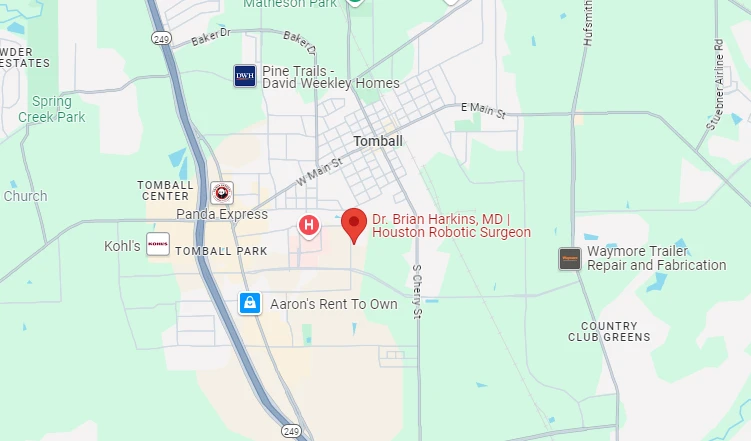
455 School St. Bldg. 1, Suite 10 Tomball, Texas 77375
Mon-Thu: 9:00 am – 5:00 pm | Fri: 9:00 am – 2:00 pm


Yes, most people can drink alcohol in moderation after gallbladder removal once they have recovered from surgery. It is best to wait until you have stopped prescription pain medication and are eating normally again, then start with one drink alongside a meal. The gallbladder does not process alcohol, so removing it does not change how your body breaks alcohol down.
It is one of the most common questions people ask as they get ready to go home after gallbladder surgery, and it is usually asked a little sheepishly, as if it were not a serious medical question. It is a fair and practical one. People want to know whether they can have a glass of wine at a birthday dinner, a beer while watching the game, or a cocktail at a wedding without paying for it afterward.
The short answer is reassuring, but the details matter, because the first few weeks after surgery are different from the months that follow. This guide explains what the gallbladder actually does, how long to wait before your first drink, why pain medication and alcohol do not mix, how alcohol can affect digestion without a gallbladder, and which symptoms mean it is time to call your surgeon.
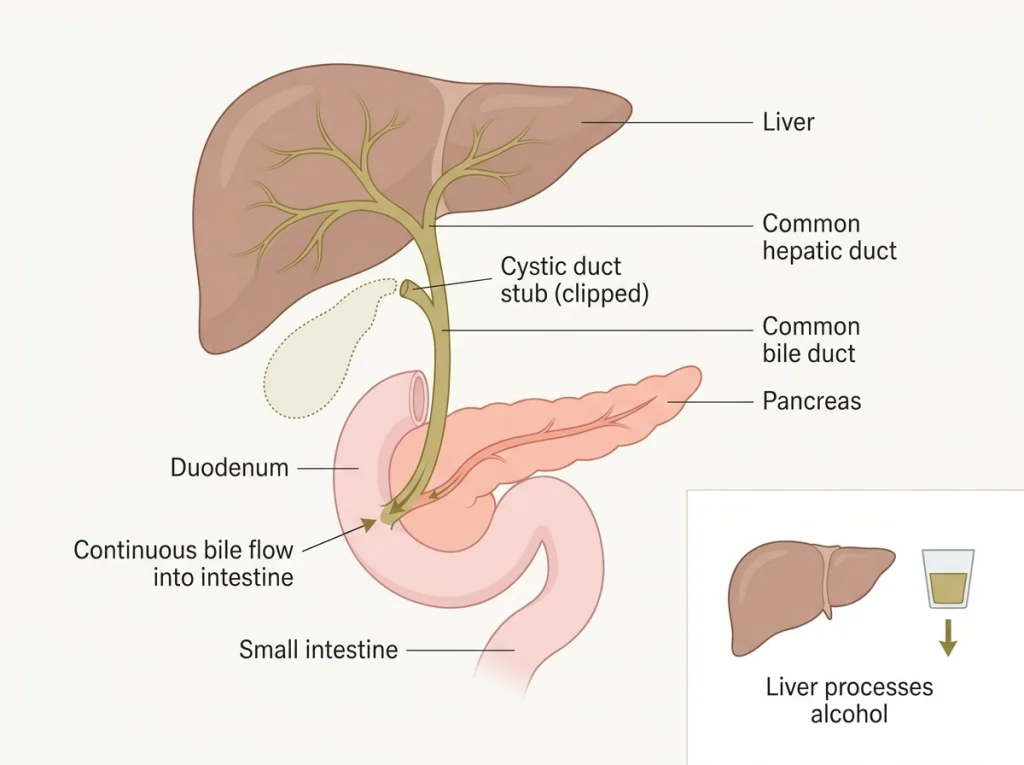
Your liver breaks down alcohol, not your gallbladder, so removing the gallbladder does not change how your body processes a drink.
The gallbladder is a small pouch tucked under the liver. Its only job is to store bile, a digestive fluid the liver makes to help break down fat, and to squeeze a larger dose of it into the small intestine when you eat a fatty meal. After a cholecystectomy, the liver keeps making the same bile, but instead of being stored, it drips steadily into the intestine through the bile duct.
Alcohol follows a completely different path. It is absorbed through the stomach and small intestine and then broken down almost entirely by the liver. None of that process involves the gallbladder, which is why people often ask whether the liver "works harder" afterward. It does not, because the liver was already doing all of the alcohol processing before surgery.
| Organ | Main job | Changed after gallbladder removal? |
| Liver | Makes bile and breaks down alcohol | No, it keeps making bile and processing alcohol as before |
| Gallbladder | Stores bile and releases it after fatty meals | Removed, so bile is no longer stored |
| Bile ducts | Carry bile from the liver to the intestine | Now carry bile continuously instead of in bursts |
| Small intestine | Absorbs nutrients and some alcohol | Receives a steady trickle of bile, which some people notice as looser stools |
| Pancreas | Makes digestive enzymes and insulin | Unchanged, but still sensitive to heavy drinking |
What does change is the rhythm of digestion. Without a storage pouch, a very rich or fatty meal can be harder to digest in one sitting, and the steady flow of bile into the intestine can loosen stools in some people. Alcohol can add to both of those effects, which is where most of the practical advice in this article comes from.
Most people can have a drink once they are off prescription pain medication and eating normally, which for many is around one to two weeks after surgery.
There is no single rule that fits everyone, and your surgeon's instructions always come first. The timeline below reflects the general approach most surgical teams use after a straightforward minimally invasive gallbladder removal.
| Time after surgery | What is happening | Alcohol guidance |
| First 24 to 48 hours | Anesthesia is still clearing and your stomach is settling | Avoid alcohol completely |
| While taking prescription pain medication | Opioids or combination pain pills are still in your system | Avoid alcohol completely |
| About one to two weeks | Incisions are healing and most people are back on a regular diet | Many people can try one drink with a meal if their surgeon agrees |
| Two to six weeks | Digestion is still adjusting to the steady flow of bile | Keep to small amounts and notice how your body responds |
| After the first month or two | Most people have settled into their long-term pattern | Moderate drinking is generally fine for healthy adults |
Recovery is faster than many people expect when the operation is done through small incisions. Our gallbladder surgery recovery day by day guide covers what the first two weeks usually look like, including diet, driving, and returning to work.
If your operation was more complicated, such as emergency surgery for an infected gallbladder, a bile duct stone, or a conversion to an open operation, it is sensible to wait longer and ask your surgeon directly before drinking.
The biggest risk of drinking soon after surgery comes from mixing alcohol with pain medication, not from the missing gallbladder.
Most people go home with a short course of pain relief, and each common type interacts badly with alcohol in a different way. This is the main reason surgeons ask patients to hold off in the first days after an operation:
A simple rule of thumb works well here. Wait until you have finished all prescription pain medication, and if you are still taking over-the-counter pain relief regularly, keep alcohol very light or skip it until you no longer need the medication.
Alcohol does not harm you because your gallbladder is gone, but it can make digestive side effects like diarrhea, bloating, and reflux more noticeable.
Loose stools are common after gallbladder removal, especially in the first few weeks, because bile reaches the intestine continuously and can act as a mild laxative. Mayo Clinic notes that diarrhea is a frequent change after this surgery, although it usually settles with time. Alcohol speeds up how quickly food moves through the bowel and can irritate the stomach, so drinking during this adjustment period may make symptoms worse.
The type of drink also makes a difference, often more than the alcohol itself:
| Type of drink | Why it may cause trouble | A gentler option |
| Beer and hard seltzer | Carbonation and volume can cause gas and bloating | A smaller pour, sipped slowly with food |
| Creamy cocktails and liqueurs | High fat content is harder to digest without stored bile | Clear spirits with a low-sugar mixer |
| Sugary mixed drinks and margaritas | Large amounts of sugar can loosen stools | Spirits with soda water and fresh citrus |
| Red wine | Can trigger reflux or loose stools in some people | White wine or a smaller glass of red with a meal |
| Several drinks in one sitting | Speeds the bowel and irritates the stomach | One drink, spaced out with water |
What you eat alongside a drink matters just as much. A plate of fried food with a round of beers is a much bigger digestive challenge than a glass of wine with grilled fish and vegetables. If you are still working out which foods agree with you, our guide to foods to avoid after gallbladder removal is a helpful companion to this one.
Have questions about your recovery or digestion after gallbladder surgery? Our team is happy to help you sort out what is normal and what needs a closer look. Call 281-351-5409 or contact us to schedule a visit.
Heavy drinking remains a leading cause of pancreatitis, and removing the gallbladder does not protect you from it.
Many people had their gallbladder removed because of gallstones, and gallstones are also a common trigger for pancreatitis, a painful inflammation of the pancreas. Taking out the gallbladder removes the main source of those stones, which is good news. It does not, however, protect the pancreas from alcohol. According to the National Institute of Diabetes and Digestive and Kidney Diseases, gallstones and heavy alcohol use are two of the most common causes of both acute and chronic pancreatitis.
In a small number of people, a stone can also form in or remain in the bile duct after surgery. That is uncommon, but it is worth knowing the warning signs, because heavy drinking can make it harder to tell what is causing abdominal pain. Seek medical care promptly if you notice:
Moderate drinking is very different from heavy drinking. For most healthy adults who have recovered from surgery, an occasional drink is not a concern for the pancreas, but regular heavy drinking carries the same risks it did before your operation.
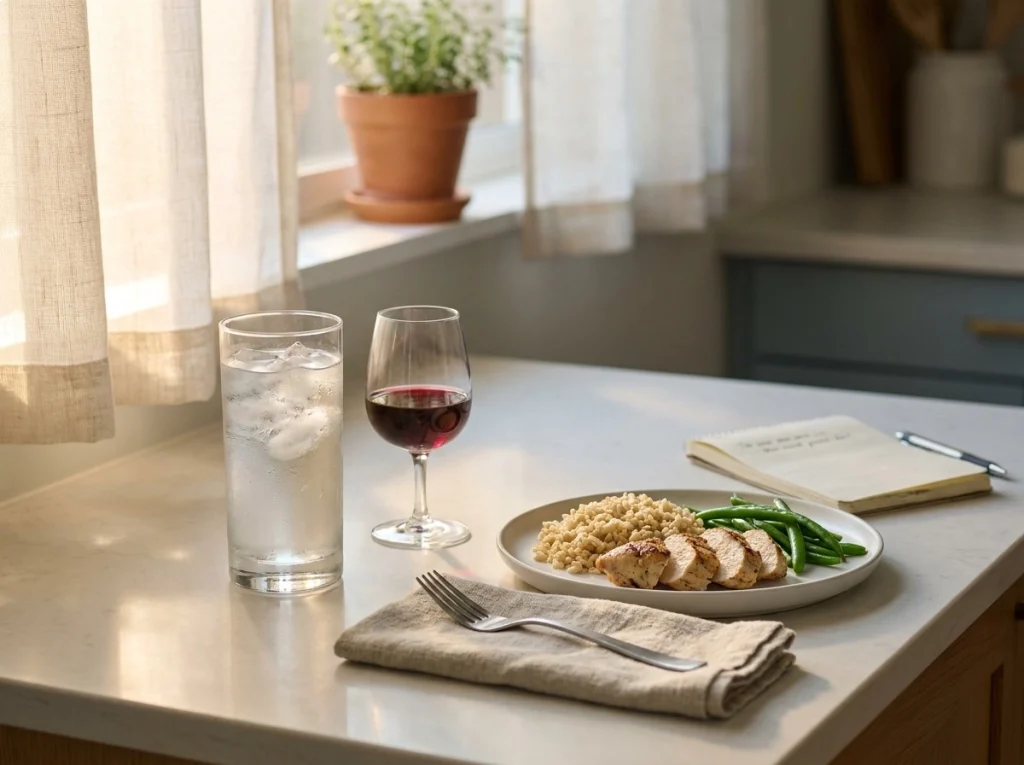
Start small, drink with food, and pay attention to how your body responds over the next day.
Your first drink after surgery is a small experiment, and treating it that way makes it easy to learn what your digestion tolerates. A few habits make the process smoother for most people:
Current federal dietary guidance, updated in January 2026, simply advises adults to drink less alcohol for better overall health, and many health agencies still use the familiar benchmark of no more than one drink a day for women and two for men. That guidance applies to everyone, with or without a gallbladder.
Some people also notice small changes in weight or appetite in the months after surgery. Our article on weight changes after gallbladder removal explains why this happens and how drinks and food choices can play a part.
Some situations call for skipping alcohol entirely, and a few symptoms after drinking are worth a phone call.
Most people return to their normal habits without any trouble, but moderate drinking is not the right choice for everyone after surgery. It makes sense to avoid alcohol completely, or to talk with your doctor before drinking, if any of the following apply:
It is also worth calling your surgeon if diarrhea lasts longer than about four weeks, wakes you at night, or comes with weight loss, fever, or blood. Those patterns are not a normal part of recovery and are usually easy to evaluate. For a longer view of how digestion tends to settle over the years, see our look at the long-term effects of gallbladder removal.
A smooth recovery starts with a well-planned operation and clear instructions for the weeks that follow.
Most gallbladder operations today are performed through a few small incisions, either laparoscopically or with robot assisted surgery, which usually means less pain and a quicker return to normal eating and drinking. Before surgery, it helps to ask your surgeon specifically when you can drink alcohol again, so the answer is part of your written discharge plan rather than a guess.
Dr. Brian Harkins is a board-certified general surgeon and robotic surgeon who performs robotic cholecystectomy at HCA Houston Healthcare Tomball. He treats the full range of gallbladder conditions, from gallstones and gallbladder attacks to inflammation, and sees patients from Tomball, Magnolia, Spring, Cypress, The Woodlands, and across the greater Houston area.
For most people, no. The gallbladder does not process alcohol, so your tolerance and the way your liver breaks alcohol down stay the same after surgery. Some people do notice more digestive side effects, such as loose stools or bloating, especially in the first weeks while the body adjusts to bile flowing continuously into the intestine instead of being stored.
Most people can have a drink once they have stopped prescription pain medication and are eating normally, which is often about one to two weeks after a minimally invasive operation. You should avoid alcohol entirely for the first 24 to 48 hours and for as long as you take opioid pain medication. Always follow the specific instructions your surgeon gives you.
No. Alcohol is absorbed through the stomach and small intestine and broken down mainly by the liver, and none of those steps rely on the gallbladder. What can change is how your digestive system reacts to a drink, because alcohol can speed up the bowel and add to the loose stools some people experience after surgery.
No. The liver makes the same amount of bile after surgery as it did before, and it simply releases it continuously rather than sending it to the gallbladder for storage. The liver also handled all of your alcohol processing before surgery, so removing the gallbladder does not add to its workload.
Creamy cocktails and liqueurs, very sugary mixed drinks, and large amounts of carbonated drinks such as beer tend to cause the most digestive trouble. Clear spirits with a low-sugar mixer, or a small glass of wine with a meal, are usually easier to tolerate. Everyone's digestion is a little different, so it helps to notice which drinks agree with you.
It can. Diarrhea is a common change after gallbladder surgery because bile flows steadily into the intestine and can act as a mild laxative. Alcohol speeds up the bowel and irritates the stomach, so drinking can make loose stools more likely, especially early in recovery or when combined with fatty or sugary foods.
Alcohol does not usually cause bile duct problems on its own. However, heavy drinking is a leading cause of pancreatitis, and a small number of people develop a stone in the bile duct after surgery. Seek care promptly for severe upper abdominal pain, yellowing of the skin or eyes, fever, or repeated vomiting.
It is best not to. Two days after surgery, most people are still recovering from anesthesia and taking pain medication, and alcohol can interact dangerously with opioids and add strain to the liver when combined with acetaminophen. Waiting until you are off prescription pain medication and eating normally is the safer approach.
Neither is clearly worse for everyone, but beer tends to cause more gas and bloating because of its carbonation and larger serving size. Some people find red wine triggers reflux or loose stools. Trying one small serving of either drink with a meal is the best way to learn what your own digestion tolerates.
Most healthy adults do not need to stop drinking entirely, and moderate drinking is generally fine once recovery is complete. However, you should avoid alcohol if you have had pancreatitis, have liver disease, had a complication after surgery, or take medicines that interact with alcohol. Your surgeon or primary care doctor can advise you based on your health history.
Having your gallbladder removed does not mean giving up the occasional drink. Because the liver, not the gallbladder, handles alcohol, most people can return to moderate drinking once they have recovered, stopped prescription pain medication, and settled back into normal meals. The main things to watch are how alcohol affects your digestion in the first few weeks and the long-term risks of heavy drinking, which stay the same with or without a gallbladder.
If you are planning gallbladder surgery or have questions about your recovery, schedule a consultation with Dr. Brian Harkins by calling 281-351-5409, and bring a list of the medicines you take so the advice you receive fits your situation.
Plan Your Recovery With Confidence. Book a Consultation.
Gallbladder Questions? Get Clear Answers From Dr. Harkins.
Sarah Chen is a healthcare communications specialist with 12+ years of experience in clinical environments. She writes about robotic and minimally invasive surgery for patients and families navigating surgical decisions. Her work is clinically reviewed by Dr. Brian Harkins, MD, FACS, ensuring medical accuracy and evidence-based information.
Based in: Tomball, TX | Serves: Greater Houston Area
This information is educational and is not a substitute for professional medical advice. When it is safe to drink alcohol after gallbladder surgery depends on the type of operation, any complications, the medicines you take, and your overall health, including any history of pancreatitis or liver disease.
The timelines in this article describe typical recovery after an uncomplicated minimally invasive operation, and individual recovery varies. If you have concerns about your drinking, or find it difficult to cut back, talk with your doctor.
Dr. Brian Harkins and his clinical team provide personalized guidance for each patient, and their instructions take priority over any general information here. This content has been reviewed for medical accuracy by Dr. Brian Harkins, MD, FACS.

Dr. Brian Harkins is a renowned surgeon specializing in advanced, minimally invasive, and robotic surgical techniques. With a dedication to innovation and personalized patient care, he has transformed countless lives by delivering exceptional outcomes.
I want a website like this, where do i start?