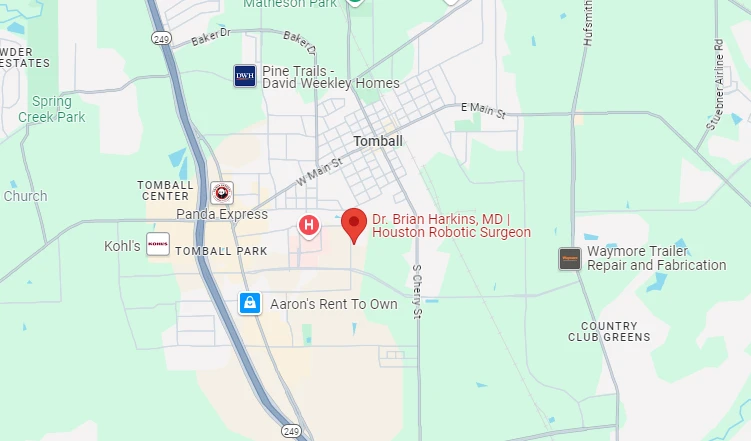
455 School St. Suite 10 Tomball, Texas 77375
Mon-Thu: 9:00 am – 5:00 pm | Fri: 9:00 am – 2:00 pm


A pediatric timing guideline based on age. Infants under six weeks should have repair within two days, six weeks to six months within two weeks, and over six months within two months. The graduated timeline reflects incarceration risk being highest in early infancy. It applies only to reducible hernias, since incarceration or strangulation is an emergency that overrides any schedule.
If your infant has been diagnosed with an inguinal hernia, you may have heard a surgeon mention the 6-2 rule and wondered what it means for your child's timeline.
It is a straightforward framework helping clinicians decide how quickly repair should happen based on age, ranging from two days for newborns to two months for infants past six months. This guide explains the reasoning behind it, when it does not apply, and how pediatric repair differs from the adult procedure.
The 6-2 rule is taught in emergency medicine and primary care as a simple timing mnemonic for pediatric inguinal hernia repair.
| Age at diagnosis | Repair should occur within |
| Birth to six weeks | Two days |
| Six weeks to six months | Two weeks |
| Older than six months | Two months |
The graduated timeline exists because incarceration risk is highest in early infancy and decreases as children grow. Younger infants face greater danger if herniated tissue becomes trapped, which makes faster intervention more important the younger the child.
The name comes from the pattern: six weeks and six months are the age thresholds, two days, two weeks, and two months are the corresponding windows.
The 6-2 rule governs reducible hernias only, meaning those that can be gently pushed back into place.
If a hernia becomes incarcerated, meaning trapped and unable to be reduced, or strangulated, meaning the blood supply has been cut off, the situation is a medical emergency that supersedes any timing guideline entirely.
Seek immediate medical attention if your child shows:
These signs mean the hernia needs attention now rather than within a scheduled window, and the emergency department is the correct destination.
Inguinal hernias occur when abdominal contents push through a weakness in the lower abdominal wall, producing a visible bulge in the groin.
In children they are almost always indirect hernias caused by a patent processus vaginalis, an embryonic structure that normally closes before or shortly after birth but remains open in some infants. This differs fundamentally from adult hernias, which typically result from acquired weakness rather than a developmental structure failing to close.
The concern with any inguinal hernia is complication risk. Incarceration happens when herniated tissue becomes trapped and cannot be manually reduced, often causing pain, irritability, and sometimes vomiting. Strangulation is more serious still, occurring when blood supply to trapped tissue is cut off, leading to tissue death.
Research shows that waiting more than fourteen days after diagnosis significantly increases incarceration risk in children with inguinal hernias.
Additionally, fifteen percent of reduced incarcerated hernias become trapped again within five days if not surgically repaired. That figure explains why a successfully reduced incarceration is treated as a reason to schedule prompt surgery rather than as a resolved problem.
Both findings support the principle underlying the 6-2 rule: earlier repair narrows the window during which a dangerous complication can develop.
Recent evidence has challenged the traditional application of the rule to preterm babies.
A randomized clinical trial compared early repair during NICU admission against delayed repair after discharge. The findings favored waiting: twenty-eight percent of infants in the early repair group experienced serious adverse events, compared with eighteen percent in the late repair group.
Current pediatric guidance now suggests repair in preterm infants can often be safely postponed until after NICU discharge. The reasoning involves anesthetic risk and physiologic fragility in very premature babies, which can outweigh the incarceration risk the rule was designed to address.
Decisions here should be individualized based on gestational age, overall health, and the experience of the surgical and anesthesia teams. This is a genuine exception rather than a minor caveat.
In children, surgeons typically use suture-based repair rather than mesh. The procedure involves high ligation of the hernia sac at the internal ring, essentially closing the developmental structure that failed to close on its own.
When performed by experienced pediatric surgeons, recurrence rates are very low, typically one to two percent or less. Many surgeons now use laparoscopic approaches allowing better visualization of the internal structures and assessment of the opposite side.
Adult hernia repair predominantly uses mesh, because adult hernias result from tissue weakness that requires reinforcement rather than a developmental opening that simply needs closing. European Hernia Society guidance recommends mesh-based techniques for primary inguinal hernias in adults, whether through open or endoscopic approaches.
Children recover remarkably quickly. Most resume normal activity within forty-eight hours, and the procedure is typically performed on an outpatient basis.
Adults generally need four to six weeks for full recovery, with gradual return to activity and lifting restrictions during healing. The difference reflects both the nature of the repair and the healing capacity of a young child.
Pediatric guidance recommends that children with inguinal hernias be treated by pediatric surgical specialists wherever possible, since they have specific training in managing these cases in small patients with different anatomy, different physiology, and different anesthetic considerations.
Families in the Tomball area are typically referred to pediatric surgeons at regional children's hospitals for this reason. That referral is appropriate rather than a limitation, and any adult general surgeon will direct pediatric cases accordingly.
Parents facing a scheduled procedure generally want to know what happens, and the answer is reassuringly straightforward for an uncomplicated repair.
The surgeon identifies the hernia sac, carefully separates it from the surrounding structures, and ties it off at the level of the internal ring. That high ligation effectively closes the developmental opening which failed to close on its own before birth.
No mesh is used and no muscle is divided during the procedure. The operation itself typically takes under an hour for a straightforward unilateral repair.
Many surgeons now use a laparoscopic approach, which offers the additional advantage of allowing inspection of the opposite side. A meaningful proportion of children have an open processus vaginalis on the opposite side as well, and identifying it during the same anesthetic avoids putting the child through a second operation months later.
General anesthesia is standard for this procedure. Anesthetic considerations in infants differ substantially from those in adults, which is a large part of why pediatric surgical specialists and pediatric anesthesiologists handle these cases together.
For premature infants in particular, anesthetic risk is the factor that has shifted guidance toward delaying repair until after NICU discharge.
Most children go home the same day as the procedure. Normal activity typically resumes within forty-eight hours, and children generally regulate their own activity level appropriately without needing formal restrictions imposed on them.
Watch the incision for redness, swelling, or drainage over the following days, and contact the surgical team promptly about any fever or unusual pain. Recurrence is uncommon at one to two percent or less in experienced hands, but any new bulge appearing at the site warrants evaluation rather than watchful waiting.
There is no direct adult equivalent of the 6-2 rule, and understanding why is useful for adults researching their own hernia types.
Adult timing depends on hernia type and symptoms rather than on age. Femoral hernias warrant prompt repair even when minimally symptomatic, given their high strangulation risk. Symptomatic inguinal hernias should be repaired rather than watched. Minimally symptomatic reducible inguinal hernias in men can reasonably be monitored.
The common thread with pediatric guidance is that incarceration and strangulation drive urgency in both populations. What differs is that a child's risk is highest at the youngest ages, while an adult's depends on anatomy and symptoms.
Adults noticing a groin bulge can schedule a consultation to establish whether their situation calls for prompt repair or reasonable monitoring.
Some private facilities use "6-2 rule" as marketing language for adult hernia services, which has no connection to the pediatric timing guideline.
If you encounter the phrase in the context of adult surgery, it is promotional rather than clinical. The legitimate use of the term is the pediatric mnemonic described here, taught in emergency medicine and primary care as a timing framework for infant inguinal hernia repair.
There is also no location-specific version of the rule. Surgeons follow nationally recognized guidelines and individualize timing based on each patient's circumstances.
Adults with small, minimally symptomatic reducible inguinal hernias can sometimes be monitored rather than operated on. That approach does not transfer to infants.
The reason is the difference in complication risk. A child's hernia carries meaningfully higher incarceration risk than an adult's, and small children tolerate the consequences of incarceration less well.
There is also no expectation that a pediatric inguinal hernia will resolve on its own. The patent processus vaginalis that caused it has already failed to close during the window when closure normally occurs, so waiting does not produce the outcome parents sometimes hope for.
Umbilical hernias in children are the notable exception and follow entirely different rules. Many close spontaneously during the first few years, and observation is frequently appropriate for those. The 6-2 rule does not apply to them, which is a common source of confusion when parents research a child's diagnosis.
If your child has been diagnosed with an umbilical rather than inguinal hernia, the timing conversation with your pediatrician will look very different from the one described here.
A pediatric timing guideline: repair within two days for infants under six weeks, within two weeks for six weeks to six months, and within two months for infants older than six months.
Because incarceration risk, meaning tissue becoming trapped in the hernia, is highest in early infancy and decreases as children grow. Younger infants also tolerate the resulting complications less well.
No, only to reducible hernias that can be gently pushed back. Incarceration or strangulation is a medical emergency requiring immediate surgery regardless of the child's age or any timing framework.
Severe pain or inconsolable crying, vomiting, abdominal distension, a firm tender bulge that will not reduce, skin discoloration over the site, or refusal to feed alongside any of these.
Recent trial evidence favors waiting. Early repair during NICU admission produced serious adverse events in twenty-eight percent of infants against eighteen percent with repair after discharge, so current guidance often supports postponing.
Almost always because of a patent processus vaginalis, an embryonic structure that normally closes before or shortly after birth but remains open. This differs from adult hernias caused by acquired tissue weakness.
No. Pediatric repair uses suture-based high ligation of the hernia sac at the internal ring, closing the developmental opening. Recurrence rates are very low, typically one to two percent or less.
Most resume normal activity within forty-eight hours, and the procedure is typically outpatient. Adults by comparison need four to six weeks for full recovery with lifting restrictions during healing.
A pediatric surgical specialist wherever possible, given the differences in anatomy, physiology, and anesthetic considerations in small patients. Families are commonly referred to regional children's hospitals for this reason.
No. Adult timing depends on hernia type and symptoms rather than age. Femoral hernias warrant prompt repair regardless of symptoms, symptomatic inguinal hernias should be repaired, and minimally symptomatic reducible ones can often be monitored.
The 6-2 rule is a straightforward timing framework: two days, two weeks, or two months depending on whether a baby is under six weeks, under six months, or older. Its logic is simply that incarceration risk falls as infants grow, so the youngest patients get the narrowest window. Evidence supports that reasoning, with waiting beyond fourteen days measurably raising incarceration risk and fifteen percent of reduced incarcerations recurring within five days.
Two things matter more than memorizing the schedule. The first is that it applies only to hernias that still reduce, so a firm bulge that will not go back, severe pain, vomiting, or any color change over the site means going to an emergency department rather than waiting for an appointment. The second is that premature infants are a real exception where current evidence favors delaying until after NICU discharge. Both are decisions for a pediatric surgical team, which is where these cases belong.
Know the timing framework and the signs that override it.
Schedule a consultation with Dr. Brian Harkins for adult hernia care.


Dr. Brian Harkins is a renowned surgeon specializing in advanced, minimally invasive, and robotic surgical techniques. With a dedication to innovation and personalized patient care, he has transformed countless lives by delivering exceptional outcomes.
I want a website like this, where do i start?