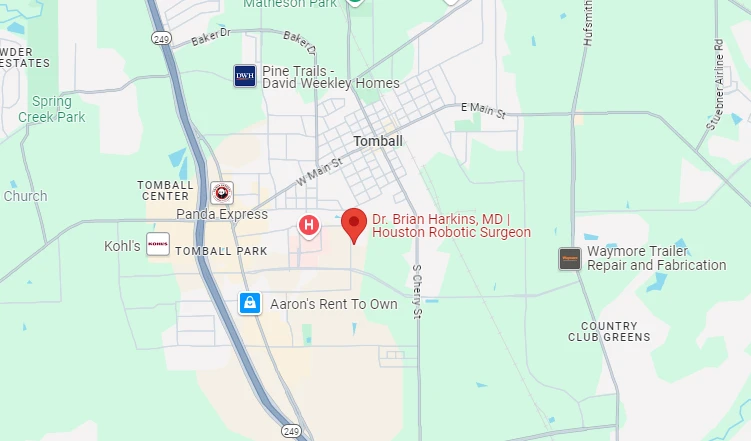
455 School St. Bldg. 1, Suite 10 Tomball, Texas 77375
Mon-Thu: 9:00 am – 5:00 pm | Fri: 9:00 am – 2:00 pm


Surgical mesh is used in the large majority of modern hernia repairs because it substantially reduces recurrence compared with tissue-only repair. Mesh comes in synthetic (permanent or absorbable) and biologic varieties, and it can be placed in several planes of the abdominal wall. For most patients, mesh repair is safe and durable, with serious complications uncommon. The right mesh type and placement depend on the hernia, the patient, and the surgical approach.
Few topics in hernia surgery cause more patient anxiety than surgical mesh. Between law-firm advertising and alarming stories online, many patients arrive at a consultation worried that mesh is inherently dangerous. The reality, grounded in decades of clinical evidence, is more reassuring. Surgical mesh is used in the large majority of modern hernia repairs precisely because it works: it substantially reduces the chance a hernia comes back. Serious complications exist but are uncommon, and mesh type and placement are deliberate decisions a good surgeon can explain clearly.
This guide covers what hernia mesh is, the types available, where it is placed and why that matters, what the safety data shows, and long-term outcomes. For patients in the Tomball area considering robotic hernia surgery, understanding mesh is one of the most useful things you can do before your consultation. Dr. Brian Harkins performs mesh-reinforced hernia repair as part of his broader robotic surgery practice at HCA Houston Healthcare Tomball.
Hernia mesh is a medical implant, usually a flexible sheet of woven or knitted material, used to reinforce the weakened area of the abdominal wall where a hernia has formed. Closing the fascial defect with sutures alone is often not enough, because the tissue that failed once can fail again under the same pressures. Mesh distributes tension across a broader area and provides a scaffold into which the body's own tissue grows, strengthening the repair over time.
The evidence is strong. Tissue-only repairs of hernias above roughly 2 centimeters have historically had high recurrence rates, in some studies exceeding 30 to 50 percent for incisional hernias. Mesh reinforcement reduces recurrence dramatically, often to single digits, which is why hernia societies recommend it for the vast majority of repairs. For very small hernias, particularly small umbilical hernias under 1 to 2 centimeters, tissue-only repair is sometimes appropriate, but these are the exception.
Hernia mesh falls into a few categories, and the differences matter for specific patients. The table below summarizes the main types.
| Mesh type | What it is | Typical use |
| Synthetic permanent | Polypropylene or polyester, durable, permanent | Standard for routine clean elective repairs |
| Absorbable synthetic | Dissolves over months to a few years | Contaminated fields or when a permanent implant is undesirable |
| Biologic | Processed human or animal tissue, remodeled by the body | Contaminated or infected fields, prior mesh infection |
| Coated / composite | Synthetic base with a barrier coating on one side | Intraperitoneal placement, to reduce bowel adhesions |
Modern synthetic meshes are typically lightweight with large pores, a design that improves flexibility, reduces the foreign-body sensation, and lowers the risk of chronic pain compared with the heavier meshes of decades past. For most clean, elective repairs, a lightweight synthetic mesh is the standard choice. Biologic mesh is considerably more expensive and does not outperform synthetic for routine repair, so it is reserved for specific situations.

Where mesh sits in the abdominal wall is as important as what it is made of, and it is where surgical technique matters most. There are four main planes:
Robotic techniques such as extended totally extraperitoneal (eTEP) repair and robotic transversus abdominis release (rTAR) are specifically designed to place mesh in the durable retromuscular plane through small incisions. A surgeon should be able to explain which plane they plan to use and why.
For the large majority of patients, mesh hernia repair is safe, and the benefit of dramatically lower recurrence outweighs the risks. Serious mesh-related complications are uncommon, and modern lightweight meshes have improved the safety profile over older heavyweight products.
That said, mesh is a medical implant and carries some risk. The most discussed complications are chronic pain, mesh infection, migration or shrinkage, adhesion formation (particularly with intraperitoneal placement), and, rarely, erosion into an adjacent structure. Chronic post-operative pain occurs in a minority of patients and is influenced more by surgical technique and fixation method than by the mesh itself; modern lightweight meshes and reduced-fixation techniques have lowered this risk. Mesh infection is uncommon in clean elective surgery, which is one reason minimally invasive approaches, with their lower infection rates, are attractive.
It is worth addressing the litigation advertising directly. Much of it relates to specific mesh products that were recalled or associated with higher complication rates, not to hernia mesh as a category. The recalls and lawsuits involved particular designs and materials that differ from the meshes used in current practice. A patient's best protection is a high-volume surgeon who selects an appropriate, well-studied mesh and places it correctly.

Long-term outcomes for modern mesh repair are strong, with recurrence rates substantially lower than tissue-only repair across every hernia type. For primary inguinal hernia repair with mesh, 5-year recurrence rates are typically under 5 percent in experienced hands. For ventral and incisional hernias, recurrence varies more with size and complexity but is consistently lower with mesh.
The body integrates synthetic mesh over the first several months as tissue grows into and around it, and by a year the repair is generally at full strength. Most patients return to unrestricted activity, including exercise and heavy lifting, by six to eight weeks and never think about their mesh again. The large majority of mesh hernia repairs are one-time, durable operations. When a complication does occur, options exist: chronic pain can often be managed conservatively, and mesh infection, while uncommon, is treatable and may in select cases require removal and later re-repair.
Dr. Harkins performs mesh-reinforced hernia repair, most often using lightweight synthetic mesh placed in the retromuscular or preperitoneal plane through robotic technique, at HCA Houston Healthcare Tomball's Center of Excellence in Robotic Surgery. Robotic and minimally invasive approaches allow precise mesh placement through small incisions with lower surgical site infection rates than open surgery, which matters because infection is one of the strongest drivers of mesh-related problems. For patients in Tomball, Magnolia, Spring, Cypress, and The Woodlands, this means access to modern mesh technique close to home.
For the large majority of patients, mesh hernia repair is safe, and the benefit of dramatically lower recurrence outweighs the risks. Serious complications are uncommon, and modern lightweight meshes have improved the safety profile over older products. Mesh carries some risk, including uncommon chronic pain, infection, or migration, but these are manageable and far less common than the recurrence tissue-only repair would risk.
Mesh reinforces the weakened abdominal wall, distributes tension across a broader area, and provides a scaffold for the body's tissue to grow into. Sutures alone often fail because the tissue that weakened once can fail again. Tissue-only repair of hernias above roughly 2 centimeters has historically had high recurrence rates, while mesh reduces recurrence substantially, which is why it is the standard of care.
The main types are synthetic permanent (polypropylene or polyester, the standard for routine repairs), absorbable synthetic (dissolves over time), biologic (processed human or animal tissue, reserved for contaminated fields or prior infection), and coated composite (with a barrier surface for placement inside the abdominal cavity). Lightweight, large-pore synthetic mesh is standard for most clean elective repairs.
Synthetic mesh is durable, well-studied, permanent, and the standard for routine clean repair. Biologic mesh is made from processed human or animal tissue that the body remodels and largely absorbs over time; it is considerably more expensive and reserved for contaminated fields, infected fields, or prior mesh infection. For routine clean repair, biologic mesh does not outperform synthetic and is not first-line.
Mesh can be placed in four planes: onlay (on top of the closed fascia), sublay or retromuscular (behind the muscle), preperitoneal (outside the peritoneum), and intraperitoneal (inside the abdominal cavity, requiring a coated mesh). Retromuscular placement is widely regarded as one of the most durable. Robotic eTEP and rTAR techniques are designed to place mesh in the retromuscular plane through small incisions.
Chronic post-operative pain occurs in a minority of patients and is influenced more by surgical technique and fixation method than by the mesh itself. Modern lightweight meshes and reduced-fixation techniques have lowered this risk. When chronic pain does occur, it can often be managed conservatively, and in select cases with nerve blocks or, rarely, mesh revision.
Much of the litigation advertising relates to specific mesh products that were recalled or associated with higher complication rates, not to hernia mesh as a category. Those recalls and lawsuits involved particular designs and materials that differ from meshes used in current practice. A patient's best protection is a high-volume surgeon who selects an appropriate, well-studied mesh and places it correctly.
Synthetic permanent mesh is designed to last a lifetime. The body integrates it over the first several months as tissue grows into and around it, and by about a year the repair is generally at full strength. Absorbable mesh, by contrast, dissolves over months to a few years, leaving the body's strengthened tissue behind. Most synthetic mesh repairs are one-time, durable operations.
Recurrence rates after modern mesh repair are substantially lower than tissue-only repair. For primary inguinal hernia repair with mesh, 5-year recurrence is typically under 5 percent in experienced hands. Ventral and incisional hernia recurrence varies more with size and complexity but is consistently lower with mesh. Surgeon volume, mesh choice, and placement technique influence outcomes significantly.
For most hernias above roughly 2 centimeters, mesh is strongly recommended because tissue-only repair has substantially higher recurrence rates. Very small hernias, particularly small umbilical hernias under 1 to 2 centimeters, are sometimes repaired without mesh. Whether mesh is appropriate for your specific hernia is an individualized decision your surgeon will discuss.
Surgical mesh has been one of the most important advances in hernia surgery, turning a frequently recurring problem into a usually one-time, durable repair. The anxiety many patients feel is understandable given what they encounter online, but the clinical evidence is reassuring: for most patients, mesh repair is safe, effective, and long-lasting. The keys are an appropriate mesh choice, correct placement, and an experienced surgeon who can explain the decision clearly.
If you would like to discuss mesh hernia repair for your situation, schedule a consultation with Dr. Brian Harkins, a robotic surgeon in Tomball, by calling 281-351-5409 or contact us online. We see patients from across the greater Houston area, with mesh-reinforced hernia repairs performed at HCA Houston Healthcare Tomball's Center of Excellence in Robotic Surgery.
Sarah Chen is a healthcare communications specialist with 12+ years of experience in clinical environments. She writes about robotic and minimally invasive surgery for patients and families navigating surgical decisions. Her work is clinically reviewed by Dr. Brian Harkins, MD, FACS, ensuring medical accuracy and evidence-based information.
Based in: Tomball, TX | Serves: Greater Houston Area
This information is educational and is not a substitute for professional medical advice. The decision to use surgical mesh, and which type and placement, is individualized based on the hernia, the surgical field, patient risk factors, and the surgical approach. Dr. Brian Harkins will discuss mesh options for your specific situation in consultation. Statistics cited reflect published research on aggregate patient populations, and individual outcomes vary. This content has been reviewed for medical accuracy by Dr. Brian Harkins, MD, FACS.

Dr. Brian Harkins is a renowned surgeon specializing in advanced, minimally invasive, and robotic surgical techniques. With a dedication to innovation and personalized patient care, he has transformed countless lives by delivering exceptional outcomes.
I want a website like this, where do i start?