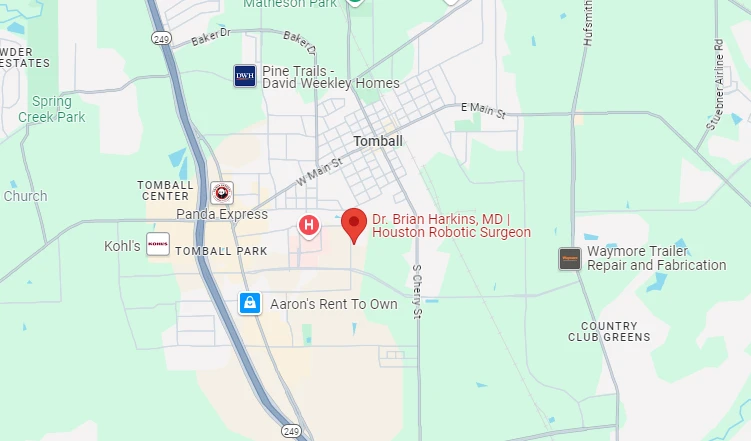
455 School St. Bldg. 1, Suite 10 Tomball, Texas 77375
Mon-Thu: 9:00 am – 5:00 pm | Fri: 9:00 am – 2:00 pm

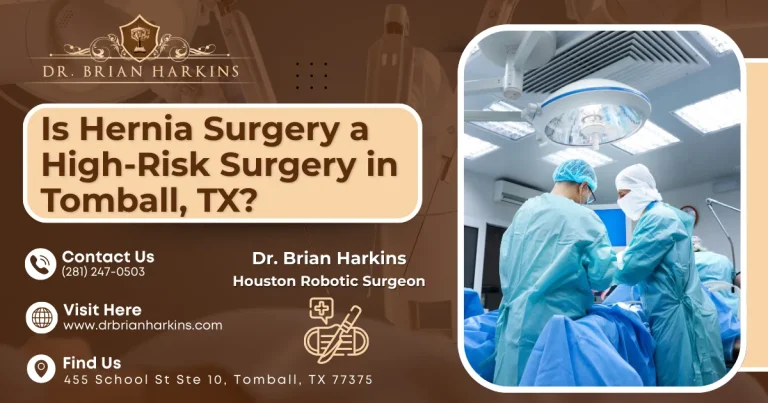
No, hernia surgery in Tomball is generally low-risk, routine, and highly successful when performed by a skilled surgeon. Minimally invasive laparoscopic and robotic techniques have dramatically reduced complications, recovery time, and recurrence rates compared to traditional open procedures.
Hernia treatment has evolved dramatically over recent decades. Traditional open surgery once meant large incisions and week-long hospital stays, but today minimally invasive techniques dominate surgical practice in Tomball, TX. This progress leaves many patients wondering whether hernia repair surgery remains risky or has become a routine procedure.
Working with an experienced robotic hernia surgeon ensures access to the safest, most advanced techniques available. While factors like hernia type, overall health, and surgical approach still influence outcomes, modern hernia repair ranks among the safest surgical procedures performed today.
A hernia occurs when an internal organ or fatty tissue pushes through a weakened area of the abdominal wall. The most frequent variants include inguinal hernia in the groin, umbilical hernia at the belly button, ventral or incisional hernia from prior surgery, and hiatal hernia affecting the diaphragm.
Each hernia type can progress over time, and an untreated hernia could become strangulated, cutting off blood supply to trapped tissue. Strangulated hernias require emergency surgery with significantly higher complication rates than planned elective repairs.
| Hernia Type | Location | Emergency Risk | Typical Repair Approach |
| Inguinal | Groin area | Moderate | Laparoscopic or robotic |
| Umbilical | Belly button | Low to moderate | Open or laparoscopic |
| Ventral/Incisional | Abdominal wall | Moderate to high | Robotic or open |
| Hiatal | Diaphragm | Low | Robotic or laparoscopic |
| Femoral | Below groin | High | Laparoscopic preferred |
Emergency repairs of strangulated hernias carry infection rates up to 10% and recurrence rates above 15%. Planned surgical hernia repair allows surgeons to use minimally invasive or robotic surgical techniques in controlled settings, lowering every risk metric substantially.
Patients who schedule elective repair before complications develop experience shorter operative times, less tissue damage, reduced anesthesia exposure, and faster recovery. The difference between emergency and elective outcomes represents one of the strongest arguments for timely surgical intervention.
Minimally invasive and robotic surgery have transformed hernia repair safety profiles. Smaller incisions reduce tissue trauma and bleeding while improving cosmetic outcomes. Three-dimensional visualization in robotic surgery helps surgeons avoid nerves and blood vessels with unprecedented precision.
Shorter operative times mean less anesthesia exposure, reducing risks associated with prolonged sedation. Faster recovery after hernia repair allows patients to return to daily activities within days rather than weeks, minimizing complications associated with extended immobility.
| Surgical Approach | Incision Size | Infection Rate | Recurrence Rate | Recovery to Work |
| Open Surgery | 4-6 cm | 2-4% | 3-6% | 2-4 weeks |
| Laparoscopic | 1-2 cm ports | 1-2% | 2-4% | 1-2 weeks |
| Robotic-Assisted | Under 1 cm ports | 0.5-1.5% | 1-3% | 3-7 days |
Anesthesiologists now use short-acting agents combined with nerve blocks, allowing patients to walk within hours and eat sooner after surgery. Enhanced Recovery After Surgery protocols cut nausea, pain, and overall hospitalization time significantly.
These advances mean most hernia patients go home the same day as surgery, sleep comfortably that night, and feel substantially better within 48 hours. The combination of surgical precision and optimized perioperative care has made hernia repair one of the safest procedures in modern surgery.
Several modifiable factors influence surgical outcomes. Addressing these before and after surgery significantly improves your chances of smooth recovery without complications.
Stop smoking at least four weeks before surgery to boost tissue healing capacity. Control diabetes with fasting glucose targets below 140 mg/dL. Lose 5-10 pounds if possible to lower abdominal pressure on the repair site. Discuss blood thinners and supplements that may increase bleeding risk with your surgical team.
Avoid lifting more than 10 pounds for two weeks following surgery. Begin gentle walking the day of surgery and add core exercises gradually as cleared by your surgeon. Stay hydrated and eat fiber-rich foods to prevent constipation strain that could stress the repair.
Adhere to all follow-up appointments to catch any developing issues early. Patients who follow post-operative instructions consistently experience better outcomes and faster return to full activity.
Experienced surgeons employ multiple strategies to prevent the most common complications after hernia repair.
Surgeons use precisely timed antibiotics, sterile mesh materials, and meticulous surgical technique to minimize infection risk. Patients should keep incisions clean, avoid pools or bathtubs for one week, and contact their surgical team immediately if redness, swelling, or fever develops.
Using appropriately sized mesh with secure fixation significantly reduces recurrence rates. Patient-specific strategies like component separation for large or complex hernias help achieve durable repairs. When performed by experienced surgeons following evidence-based protocols, recurrence rates remain under 3% for most hernia types.
| Complication | Risk Level | Prevention Strategy |
| Infection | 1-3% | Antibiotics, sterile technique, wound care |
| Recurrence | 1-5% | Proper mesh sizing, secure fixation |
| Chronic Pain | 3-5% | Nerve-sparing techniques, robotic precision |
| Seroma | 5-10% | Compression garments, activity modification |
| Urinary Retention | 1-2% | Early mobilization, proper anesthesia |
Look for a board-certified general surgeon experienced in robotic hernia repair, laparoscopic techniques, and traditional open surgery. The ability to select the optimal approach for your specific situation matters more than commitment to any single technique.
Ask about personal infection rates, recurrence statistics, and whether the practice follows enhanced recovery protocols. Quality facilities in Tomball often hold designations recognizing excellence in hernia repair and minimally invasive surgery.
Surgeons performing at least 50 hernia repairs annually maintain the technical proficiency and judgment that produce consistently excellent outcomes. Volume matters because complications are rare enough that lower-volume surgeons may not encounter them frequently enough to manage optimally.
Understanding the recovery timeline helps patients plan appropriately and recognize normal versus concerning symptoms.
The first 48 hours typically involve mild abdominal or groin soreness managed with acetaminophen and ibuprofen. Walking every hour prevents blood clots and reduces stiffness. Most patients sleep well the first night and feel progressively better each day.
Desk jobs typically resume within 3-5 days. Light labor requiring minimal lifting can start at 1-2 weeks. Heavy lifting and contact sports wait 4-6 weeks with surgeon clearance based on individual healing progress.
Operative time ranges from 45-90 minutes depending on whether the approach is open, laparoscopic, or robotic-assisted. Same-day discharge remains standard for the vast majority of hernia repairs in Tomball.
Hernia repair in Tomball is typically classified as a minor to intermediate procedure thanks to minimally invasive options now available. While every surgery carries some risk, modern techniques, experienced surgeons, and patient preparation have pushed complication rates to historic lows.
For most patients, timely elective repair is far safer than living with the hernia and risking emergency surgery if strangulation occurs. The combination of advanced surgical technology and optimized recovery protocols makes today's hernia surgery safer than ever before.
Ready to discuss your hernia repair options with an experienced specialist? Contact Dr. Brian Harkins to schedule your consultation and learn how modern techniques minimize surgical risk.
Uncomplicated inguinal hernia repair takes 45-60 minutes laparoscopically or robotically, and 60-90 minutes with open surgery. Add 30 minutes for anesthesia and recovery room time. Same-day discharge remains common for most patients.
Most elective hernia repairs have shifted from major open procedures to minimally invasive operations classified as minor to intermediate surgeries. Only very large or strangulated hernias still require major traditional open approaches.
Patients typically walk the same day, resume desk work within three to five days, and return to light exercise at two weeks. Heavy lifting and contact sports usually wait four to six weeks depending on individual healing.
Yes. Robotic hiatal hernia repair uses 3-D visualization and articulating instruments to precisely restore the diaphragm opening. Many patients experience less post-operative pain and faster swallow recovery compared to traditional approaches.
Complex abdominal wall defects may require component separation, hybrid techniques, or biologic mesh. Pre-operative imaging, nutrition optimization, and careful surgical planning help deliver durable repairs even for challenging cases.
Both are minimally invasive, but robotic surgery provides wristed instruments and magnified 3-D visualization allowing finer dissection. Robotic repairs may reduce conversion to open surgery in complex cases.
Watch for excessive swelling, fever, worsening pain, redness, or drainage from incisions. Difficulty urinating, severe nausea, or sudden bulge development warrant immediate contact with your surgical team.
Most commercial insurers and Medicare cover robotic hernia repair when medically necessary using standard billing codes. Prior authorization may be required. Verify coverage with your insurance provider before scheduling.
If the hernia becomes painful, firm, discolored, or you experience fever, vomiting, or inability to pass gas, seek immediate evaluation. Emergency repair must occur within hours to prevent life-threatening complications.
Seek board-certified surgeons performing at least 50 hernia repairs yearly who offer laparoscopic and robotic options. Verify credentials, read patient reviews, and ask about specific outcome statistics during consultation.
Schedule Your Low-Risk Hernia Consultation Today
Learn How Modern Techniques Minimize Risk


Dr. Brian Harkins is a renowned surgeon specializing in advanced, minimally invasive, and robotic surgical techniques. With a dedication to innovation and personalized patient care, he has transformed countless lives by delivering exceptional outcomes.
I want a website like this, where do i start?