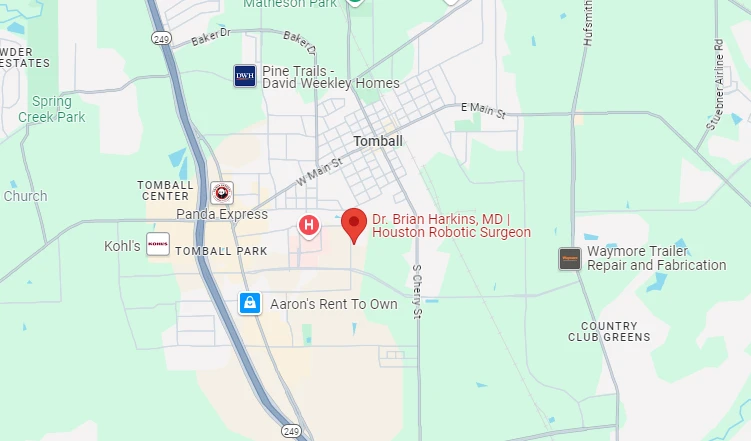
455 School St. Bldg. 1, Suite 10 Tomball, Texas 77375
Mon-Thu: 9:00 am – 5:00 pm | Fri: 9:00 am – 2:00 pm

Hernia surgery recovery in Tomball, TX, generally spans 4 to 6 weeks for a full return to normal activities. Many patients choose minimally invasive laparoscopic hernia repair or robotic hernia surgery for a faster recovery compared to traditional open surgery; others still benefit from the tried-and-true open hernia surgery technique. Whichever type of hernia repair you and your surgeon select—open, laparoscopic, or robotic—the goal is the same: push the hernia back, reinforce the defect, and guide you every step toward dependable, pain-free living.
This updated guide explains the typical hernia surgery recovery timeline, factors that affect healing time, and practical ways to reduce pain and complications so you can return to work, exercise, and family life with confidence.
Many hernia cases—inguinal, umbilical, ventral, or incisional—require surgery. Your hernia surgeon in Tomball will recommend an approach that matches the type of hernia, your job demands, and overall health. Knowing exactly what the surgery involves helps set a realistic recovery timeline.
Open surgical repair uses one larger incision over the defect. By contrast, laparoscopic hernia or robotic-assisted hernia repair uses several tiny ports to complete the procedure internally. Recovery from robotic or laparoscopic surgery is usually faster because the muscle layers are disturbed less, allowing you to return to normal sooner.
| Approach | Typical OR Time | Hospital Stay | Return to Desk Work | Return to Heavy Lifting | Scarring |
|---|---|---|---|---|---|
| Open Hernia Surgery | 45–60 min | Same-day or 1 night | 7–10 days | 4–6 weeks | 1 × 2-inch incision |
| Laparoscopic Hernia Repair | 60–90 min | Same-day | 3–5 days | 4–6 weeks | 3-5 × ¼-inch incisions |
| Robotic Hernia Surgery | 70–100 min | Same-day | 3–5 days | 4–6 weeks | 3-5 × ¼-inch incisions |
Most complex hernia repairs and even straightforward inguinal hernia surgeries use synthetic mesh to lower recurrence rates. Mesh does not lengthen healing time; instead, it spreads tension and may reduce pain.
Although minimally invasive surgical techniques shorten tissue trauma, any surgical procedure that requires general anesthesia can leave you tired for 24–48 hours after surgery. Hydration, light activities, and deep breathing exercises can jump-start your energy reserves.
Even with the same surgical team and technique, recovery time can vary widely. The timeline below highlights why many patients can return to work in a week, while others with similar hernia surgeries need extra days off.
Nicotine narrows blood vessels and reduces wound oxygenation, making the hardest day after hernia surgery feel harder still. Quitting even two weeks before surgery promotes a smoother recovery.
Higher abdominal pressure in patients with a body-mass-index over 30 stresses the repair, increases the risk of hernia recurrence, and may delay a full recovery. Pre-op core exercises can shorten your hernia recovery by several days.
The outline below combines surgeon advice with real-world patient experiences to help you understand the hernia surgery recovery process at each stage.
Consume about 1 g of protein per kilogram of body weight. Adequate protein reduces pain, promotes faster tissue repair, and helps you return to normal activities sooner.
Drink at least 64 oz of water daily to combat constipation and lower stress on the repair site.
Press a small pillow across your abdomen when coughing or sneezing to support the incision and reduce pain spikes.
Ten-minute strolls four times a day accelerate circulation, shorten the recovery period, and decrease clot risk.
Your follow-up visit allows the surgeon to detect fluid collections, early mesh integration issues, or nerve irritation before they escalate into recurrent hernia problems.
A recliner or wedge pillow set-up will help you maintain posture and reduce strain on the repair.
Frozen, single-serve, protein-packed meals cut temptation to lift heavy pots or shop prematurely.
Line up friends, family, or professional services for tasks that involve sudden force or heavy lifting.
A written note spelling out weight limits and phased return protects your role under FMLA or company policy.
Yes. Take them slowly and hold the railing; stairs do not endanger the repair but might feel tight until swelling improves.
Once you’re off narcotics and can twist and brake without pain—usually 3–5 days after laparoscopic and 7–10 days after open surgery.
Binders help in large ventral or incisional cases by reducing swelling and supporting core muscles. Follow your surgeon’s instructions for fit and wear time.
A faint ridge or patch is common early on; the sensation fades as nerves desensitize and scar tissue forms over three to six months.
When you can walk briskly without discomfort—about 10–14 days for most—you may resume sexual activity, avoiding positions that over-strain the abdomen.
Absolutely. Robotic-assisted surgery is widely offered throughout Houston, including facilities associated with Dr. Harkins. Many patients choose the Houston medical center for complex hernia repairs and enjoy the same quicker recovery seen with Tomball’s minimally invasive options.
Ventral hernia repairs occur on the abdominal wall and often need a binder, while inguinal hernia surgery happens in the groin. Recovery time is similar—about 4–6 weeks—but ventral patients sometimes report tighter sensations because the repair spans a broader area.
Most patients say post-op day two is toughest because anesthesia has worn off and swelling peaks. Scheduled pain medicine, ice packs, and short walks alleviate discomfort and prevent the day from feeling overwhelming.
Laparoscopic and robotic surgical techniques use small incisions, less tissue separation, and magnified visuals, leading to less nerve disruption. Studies show patients need fewer narcotics and experience faster returns to daily routines compared to traditional open hernia techniques.
Hernia recurrence rates with modern mesh are low—1–3 %. However, smoking, obesity, and premature heavy lifting can stretch the repair. Following your activity restrictions and maintaining a healthy weight best protect your long-term outcome.
After surgery, you’ll spend 30–90 minutes in the recovery room while nurses monitor vital signs, pain, and nausea. Once you meet safety criteria—stable vitals, controlled pain, and ability to sip fluids—you’ll be discharged home or to an overnight unit if needed.
Slim Surgical, a term some clinics use for advanced, low-profile mesh and minimally invasive techniques, focuses on smaller incisions, quicker recovery, and cosmetic healing. The philosophy aligns with laparoscopic and robotic hernia repair strategies practiced in Tomball and Houston.
Most major insurers cover robotic-assisted hernia repairs when medically indicated. Pre-authorization generally requires documentation of symptoms, size of the hernia, and why minimally invasive surgery offers clinical advantages. Check with your carrier to verify deductibles and copays.
Many patients can return to air travel at the six-week mark, provided they have no complications. Wear compression socks, walk the aisles every hour, and stay well-hydrated to reduce clot risk. Always get explicit clearance from your hernia repair surgeon.
Maintain a healthy weight, strengthen your core, avoid heavy lifting without support, and stop smoking. These steps, combined with balanced nutrition, lower abdominal pressure and support strong collagen formation, minimizing the odds of future hernias.
Most patients reach key recovery milestones on schedule: walking the same day, desk duties in a week, and unrestricted life by week six. Whether you choose open, laparoscopic, or robotic surgery, diligent self-care and close follow-up make the biggest difference.
Ready to discuss personalized options? Contact a trusted hernia repair surgeon in Tomball or explore hernia surgery in Houston for advanced care and a smoother recovery.


Dr. Brian Harkins is a renowned surgeon specializing in advanced, minimally invasive, and robotic surgical techniques. With a dedication to innovation and personalized patient care, he has transformed countless lives by delivering exceptional outcomes.
I want a website like this, where do i start?