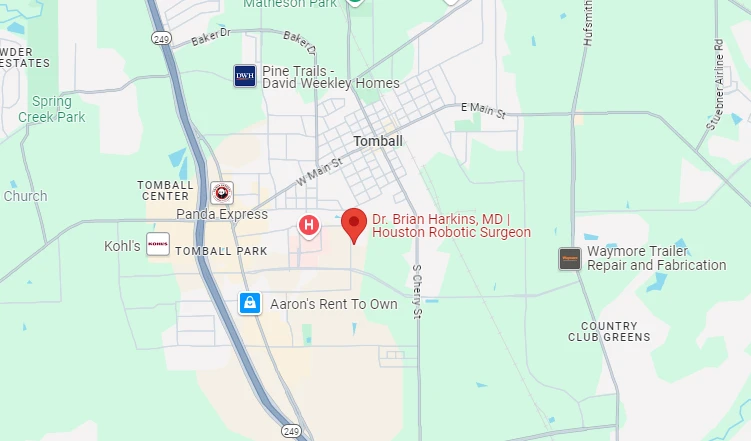
455 School St. Bldg. 1, Suite 10 Tomball, Texas 77375
Mon-Thu: 9:00 am – 5:00 pm | Fri: 9:00 am – 2:00 pm

Some people lose a small amount of weight after gallbladder removal, usually over the first few weeks to a few months, because of smaller meals, a lower-fat recovery diet and loose stools. The loss is typically temporary, and gallbladder surgery is not a weight-loss treatment. Long-term weight tends to follow diet and activity, not the operation.
If you are preparing for gallbladder surgery in Tomball, TX, or you are a few weeks past it and the scale reads lower than it did before, you are probably wondering whether that change will last. The question is a fair one, because weight is one of the first things people notice as they start eating normally again after a cholecystectomy, the operation that removes the gallbladder.
Patients across Tomball, Northwest Houston and the greater Houston area ask this question both before and after surgery, and the honest answer comes in two parts. A small drop in the first weeks can happen for reasons that are easy to understand, while the longer picture depends far more on how you eat and move than on the organ that was removed.
In this guide, you'll learn why weight can fall in the first weeks after gallbladder removal, how long that change usually lasts, what published research says about weight further out, which everyday habits support a steady recovery, and which kinds of weight loss are a reason to call your surgeon rather than wait it out.
Some people do lose weight after gallbladder removal, and the amount is usually modest rather than dramatic. The drop tends to come from eating less while you recover, choosing lighter low-fat meals and, for some patients, looser stools in the first weeks, rather than from any lasting change caused by the surgery itself.
Gallbladder surgery is not a weight-loss treatment, and no surgeon can promise a particular result on the scale. The early change reflects the recovery period, so it is more accurately read as a temporary shift than as a new baseline.
If you are still weighing surgery with a robotic surgeon in Texas, ask during your consultation what eating will look like in the first weeks, because knowing the plan makes it easier to tell an expected change from one that needs attention.
Weight can drop in the first weeks after gallbladder surgery because of four connected recovery factors: eating less while you recover, smaller portions, lower-fat eating and, in some people, loose stools. Each factor usually eases as the body settles, which is why the early loss rarely continues for long.
Eating less while you recover is the most common reason the scale moves after a cholecystectomy, because total intake often falls for a while during the recovery period.
Smaller, more frequent meals are a common part of the recovery diet after gallbladder removal, and they often add up to fewer calories across the day.
Easing back into fat is another reason intake drops, because many people go easy on fatty foods in the first period after surgery. Richer foods are usually added back gradually as digestion adjusts.
Loose stools can contribute to early weight loss in some patients after gallbladder removal. Digestive symptoms such as bloating, gas, diarrhea and indigestion after the operation are grouped under the name postcholecystectomy syndrome, and the chronic diarrhea in that group is described as a type of bile acid diarrhea, which doctors can treat with medicines called bile acid sequestrants.
| Cause of early weight loss | What usually happens | Typical timing |
|---|---|---|
| Eating less while you recover | You eat less overall while the body recovers from the operation | First weeks after surgery |
| Smaller, more frequent meals | Lighter plates add up to fewer calories across the day | Recovery period, often a few weeks to a few months |
| Lower-fat recovery eating | Fewer fatty foods while digestion adjusts | Often the first weeks, then a gradual return |
| Loose stools (bile acid diarrhea) | Loose stools can add to the drop in some people | Can last weeks to months; ongoing diarrhea needs review |
Early weight changes after gallbladder removal usually last a few weeks to a few months, as eating, portion sizes and bowel habits return toward normal. Once you are eating your usual range of foods again, weight tends to move back toward where it was before surgery, with diet and exercise shaping the rest.
Most patients return to light activity within 2 to 3 weeks of surgery. As meals return to their usual size, the factors that pushed weight down in the first weeks gradually fade, so a continued steady drop after that point is worth mentioning to your surgeon.
| Recovery stage | Typical weight pattern | What to watch |
|---|---|---|
| First weeks after surgery | A small drop can occur as you eat less, with smaller portions and less fat | Pain, fever or signs of infection at the incisions |
| A few weeks to a few months | Weight usually steadies as meals return to normal size | Diarrhea that worsens instead of easing |
| Months after recovery | Weight follows diet and exercise rather than the surgery | Weight that keeps falling without trying |
Steady habits during recovery help your weight settle, and your surgeon's written instructions come before any of these general patterns:
Over the longer term, one 2025 study that analyzed US national health survey data found an association between gallbladder removal and a slightly higher body mass index (BMI, a measure of weight relative to height), compared with people who still had their gallbladder.
That study looked at one point in time without following patients forward, so it shows an association rather than proof that the surgery causes weight gain. The link was stronger in participants aged 50 or younger, and fat in the liver, called hepatic steatosis, appeared to explain part of it.
For your own long-term weight, diet choices and exercise do most of the work after recovery, so the habits you build in the months after surgery shape where the scale settles.
Weight loss after gallbladder surgery is a reason to call your surgeon when it keeps going without you trying, or when it comes with worsening diarrhea, fever, signs of infection or abdominal pain. A small early drop can happen during recovery, but loss paired with these symptoms deserves a prompt review rather than a wait-and-see approach.
| Sign | What it may point to | What to do |
|---|---|---|
| Weight that keeps falling after the first months | Recovery eating or digestion may not be settling as expected | Call your surgeon's office and describe the trend |
| Diarrhea that worsens instead of easing | Ongoing loose stools, sometimes bile acid diarrhea | Call your surgeon, since treatment options exist |
| Fever after surgery | A possible infection that needs checking | Call your surgeon promptly |
| Signs of infection at an incision | Possible signs of infection | Call your surgeon promptly |
| Abdominal pain that grows instead of fading | A problem that needs an examination | Call your surgeon, and seek urgent care if pain is severe |
Only your surgical team can tell you what a symptom means in your case, so these signs are prompts to call rather than a way to diagnose yourself. If anything on this list applies to you, or you simply want a clearer picture of your recovery, you can request a consultation about your digestion after gallbladder removal with Dr. Harkins' office.
Dr. Brian Harkins is a board-certified general surgeon (American Board of Surgery) who has practiced in the Northwest Houston area since 1997. His gallbladder care centers on safety, efficacy, and minimally invasive surgery, with personalized treatment plans built around each patient's health and goals.
Robotic gallbladder surgery. Dr. Harkins performs robotic-assisted cholecystectomy, the same gallbladder removal carried out through small incisions with the surgeon controlling the robotic instruments throughout. Robotic and laparoscopic approaches are both excellent options for uncomplicated gallbladder removal, and every operation carries real risks that are discussed before surgery.
Personalized planning. Care with Dr. Brian Harkins (MD, FACS) follows a personalized treatment plan, so ask your surgeon whether surgery fits your situation and what recovery, including eating in the first weeks, is likely to involve.
Post-operative care. Most patients return to light activity within 2 to 3 weeks, and Dr. Harkins provides post-operative care, so ask your surgeon about any weight changes, bowel habits or eating during recovery. Dr. Harkins is affiliated with HCA Houston Healthcare Tomball and cares for patients from Tomball and the greater Houston area.
Yes, a small drop can happen during recovery. Eating less while you recover, smaller meals and lighter low-fat eating usually explain it, and the change tends to ease over a few weeks to a few months as eating returns to normal.
Some people develop loose stools after the operation, and the chronic form is described as a type of bile acid diarrhea. It often eases with time, and your doctor can discuss treatment, including bile acid sequestrants, if it continues or worsens.
One 2025 study of US survey data found an association between gallbladder removal and a slightly higher BMI. The study does not show that the surgery causes weight gain, and diet and exercise shape long-term weight most.
Many people go easy on fat in the first period after surgery and add richer foods back gradually. Your surgeon's written instructions set the plan for your recovery, so follow those first and ask about anything unclear.
Most people move back toward their usual meals over the first weeks as digestion settles. The pace varies, and your surgeon can tell you what suits your recovery and which foods to reintroduce slowly.
A small early drop can happen, but weight that keeps falling without trying is worth reporting. Call your surgeon, especially if the loss comes with worsening diarrhea, fever, signs of infection or abdominal pain.
Robotic and laparoscopic removal are both excellent options for uncomplicated cases, and weight afterwards depends mainly on eating patterns, activity and how digestion settles, so ask your surgeon what to expect.
Postcholecystectomy syndrome is the name for digestive symptoms that can follow gallbladder removal, such as bloating, gas, diarrhea and indigestion. Many people never develop it, and those who do can discuss treatment options with their doctor.
Gallbladder removal is not a weight-loss treatment and is performed to treat gallbladder problems. Any early loss is usually temporary, so a weight goal depends on diet and exercise rather than the operation.
Most patients return to light activity within 2 to 3 weeks of surgery. Your surgeon sets the exact timeline based on your procedure and recovery.
You may lose a little weight after your gallbladder is removed, but that loss usually comes from the recovery period rather than the surgery, and it tends to fade within a few weeks to a few months. Smaller meals, lighter low-fat eating and, for some people, loose stools explain most of the early change on the scale.
Over the longer term, one 2025 study found an association between gallbladder removal and a slightly higher BMI, though not proof of cause, and your diet and activity will shape your weight far more than the operation. Watch for weight that keeps falling, worsening diarrhea, fever or growing pain, and raise any change with your surgeon at follow-up.
Ask about weight changes after gallbladder surgery.
Call 281-247-0503 to discuss your recovery plan.
This information is educational and is not a substitute for professional medical advice. Every patient is different. Dr. Brian Harkins will discuss whether robotic-assisted surgery is right for your specific situation based on your anatomy, health, and goals.


Dr. Brian Harkins is a renowned surgeon specializing in advanced, minimally invasive, and robotic surgical techniques. With a dedication to innovation and personalized patient care, he has transformed countless lives by delivering exceptional outcomes.
I want a website like this, where do i start?