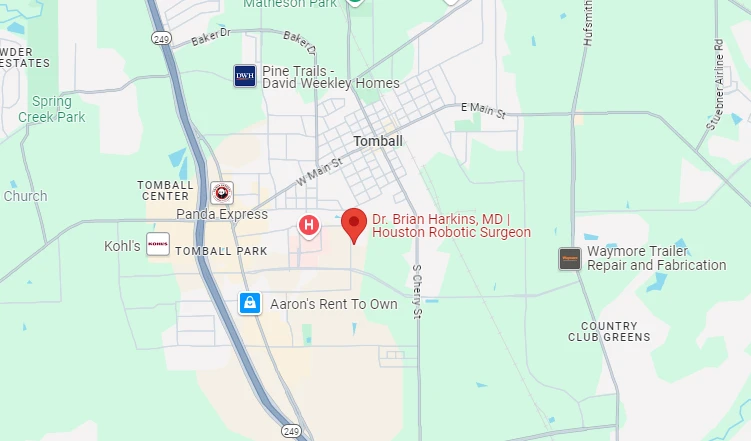
455 School St. Bldg. 1, Suite 10 Tomball, Texas 77375
Mon-Thu: 9:00 am – 5:00 pm | Fri: 9:00 am – 2:00 pm

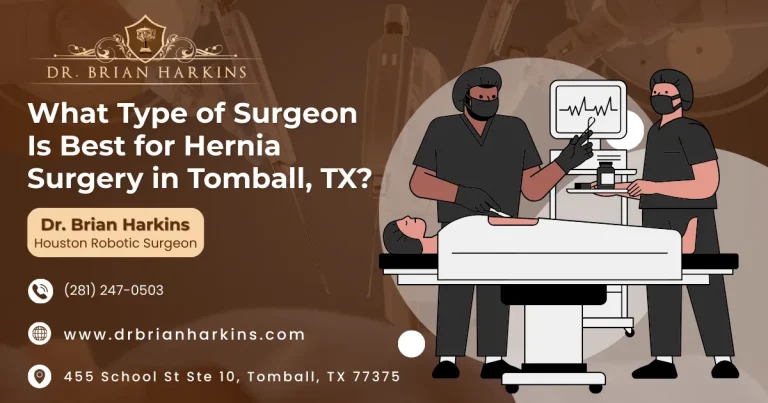
For hernia surgery in Tomball, TX, a board-certified general surgeon with expertise in minimally invasive laparoscopic and robotic techniques delivers the best outcomes. High-volume surgeons who perform these procedures weekly, stay current with robotic platforms, and explain every step from anesthesia to follow-up provide faster recovery and lower recurrence rates.
Hernias form when tissue protrudes through a weakened area of muscle, yet finding the right specialist can feel more daunting than the operation itself. Choosing the correct surgeon directly impacts everything from operative time and hospital stay to scar size and chronic pain risk.
Working with an experienced robotic hernia surgeon ensures access to advanced techniques that minimize incisions, reduce pain, and speed recovery. Whether you need inguinal hernia, ventral hernia, or hiatal hernia repair, the right specialist combines surgical expertise with personalized care throughout your treatment journey.
Operator skill influences every aspect of your surgical outcome. High-volume general surgeons who embrace advanced robotic-assisted surgery consistently demonstrate superior results across multiple performance measures.
Experienced surgeons achieve lower infection rates at the surgical site and quicker discharge through Enhanced Recovery After Surgery protocols. Robotic platforms provide steady mechanical arms that reduce tremor during delicate mesh placement, improving precision and long-term durability of repairs.
Optimized ergonomics allow surgeons to focus on nerve-sparing maneuvers that cut chronic groin pain risk significantly. Studies show that surgeons performing higher annual case volumes deliver measurably better outcomes across nearly every metric patients care about.
| Outcome Measure | High-Volume Surgeon | Low-Volume Surgeon |
| Recurrence Rate | Under 3% | 5-10% |
| Infection Rate | Under 1% | 2-4% |
| Chronic Pain Risk | 3-5% | 10-15% |
| Same-Day Discharge | 85-95% | 60-75% |
| Return to Work | 3-5 days | 7-14 days |
General surgery residency provides five years of hands-on training in abdominal emergencies, bariatric procedures, gallbladder surgery, and all common hernia types. Many Tomball surgeons then complete fellowships in minimally invasive surgery or robotic techniques, refining skills for complex ventral, hiatal, and abdominal wall reconstructions.
Board-certified general surgeons remain the backbone of surgical care for hernia repair because these cases represent their daily practice. Training typically includes five-year general surgery residency covering open and laparoscopic approaches, optional fellowship in advanced robotic surgery for complex defects, and ongoing continuing education in robotic systems and mesh technology.
The ideal surgeon combines broad general surgery training with specialized focus on hernia repair, performing enough annual cases to maintain sharp technical skills while staying current with evolving techniques and technologies.
Robotic-assisted platforms like the da Vinci Surgical System allow surgeons to operate through tiny incisions using advanced technology. Three-dimensional optics, wristed instruments, and intuitive robotic arms enable doctors to close large defects with millimeter accuracy.
Patients benefit from faster recovery times with many returning to desk work in three to five days. Reduced narcotic use results from minimal pain at each small incision site. Lower risk of wound complications compared with traditional open surgery means fewer follow-up issues and better cosmetic outcomes.
| Surgical Approach | Incision Size | Hospital Stay | Return to Work | Best For |
| Open Repair | 3-6 inches | 1-2 days | 2-4 weeks | Emergency, complex scarring |
| Laparoscopic | 3-5 small ports | Same day | 1-2 weeks | Most inguinal hernias |
| Robotic-Assisted | 3-5 small ports | Same day | 3-7 days | Complex, bilateral, recurrent |
Open hernia repair remains best for strangulated hernias requiring emergency surgery or patients with extensive scar tissue from previous operations where safe laparoscopic access proves impossible. The key is finding a surgeon who can pivot between open and minimally invasive solutions based on your specific situation without bias toward any single technique.
Annual case volume represents one of the most important factors in surgical outcomes. Surgeons performing 50 or more hernia repairs yearly, including laparoscopic and robotic-assisted procedures, demonstrate consistently better results than lower-volume practitioners.
Transparent data sharing indicates confidence in outcomes. Ask about specific recurrence rates, infection percentages, and patient satisfaction scores. Quality surgeons willingly discuss their statistics because strong numbers reflect their expertise.
Clear communication in plain language about surgical procedures, recovery timelines, and potential complications helps patients make informed decisions. Advanced care pathways including ERAS protocols, multimodal pain control, and telehealth follow-ups demonstrate commitment to optimizing every phase of your surgical experience.
Bring a complete medication list, prior imaging studies, and prepared questions about surgical technique, expected hospital stay, and realistic recovery times. Understanding how the team uses robotic systems, multimodal pain control, and enhanced recovery protocols helps reduce pre-operative anxiety.
Ask how surgery will be performed, which mesh type suits your situation, and when you can safely lift 20 pounds or return to exercise. Knowing every step of the process from pre-operative preparation through final follow-up empowers you to participate actively in your care.
Consider asking how many hernia repairs they perform annually and what percentage use robotic techniques. Inquire which approach fits your specific hernia type best. Request their specific recurrence and infection statistics rather than accepting general estimates.
Clarify whether you will go home the same day and what activity restrictions apply during recovery. Understand who answers after-hours calls if you notice concerning symptoms like redness or drainage at the surgical site.
Most patients walk the hospital halls within hours of surgery, leave the facility the same day, and resume normal sleep patterns within a week. Ice packs, supportive garments, and early ambulation all accelerate healing and improve comfort.
Following enhanced recovery guidelines for diet advancement and pain control maximizes the benefits of robotic or laparoscopic repair. Patients who adhere to post-operative instructions consistently report better outcomes and faster return to normal activities.
| Recovery Phase | Timeline | Activities | Restrictions |
| Immediate | Day 0-1 | Walking every few hours, regular diet | No driving, no lifting |
| Early | Day 3-5 | Desk work if off narcotics | Lift under 10 lbs |
| Intermediate | Week 2-3 | Light exercise, short walks | Lift under 20 lbs |
| Full Recovery | Week 6 | Core workouts, full activity | None if cleared |
Selecting the best hernia surgeon in Tomball means confirming board certification, high annual case volume, mastery of minimally invasive robotic surgery, and transparent outcome statistics. Compare data across providers, evaluate communication style during consultations, and verify insurance coverage before scheduling.
With the right surgical partner, your hernia repair delivers faster recovery, minimal scarring, and long-lasting relief from symptoms that prompted you to seek treatment.
Ready to discuss your hernia surgery options with an experienced specialist? Contact Dr. Brian Harkins to schedule your consultation and learn which approach best fits your situation.
While robotic systems add equipment costs, many insurers cover them because shorter hospital stays and fewer complications offset expenses. When factoring quicker return to work and reduced medication needs, overall costs often balance out for patients.
Combining procedures is sometimes possible with minimally invasive robotic platforms that allow multi-quadrant access. Patient safety, operative time, and insurance coverage all factor into this decision. Discuss your goals during consultation.
Maintaining healthy weight, practicing core-strengthening exercises, and managing chronic cough or constipation reduce abdominal wall pressure. Smokers should quit because nicotine impairs collagen healing. Following lifting guidelines during recovery protects the repair site.
Most patients resume driving within three to five days once off narcotic pain medication and able to perform emergency braking safely. Test gentle braking in a parking lot first. Your surgeon clears you based on pain level and incision comfort.
Not always. Small umbilical hernias in healthy patients sometimes close with sutures alone. Larger defects, ventral hernias, or cases with weakened tissue almost always benefit from mesh reinforcement to lower recurrence risk significantly.
Yes. ERAS encourages early oral intake of clear fluids and protein within hours of surgery to maintain gut function. You typically progress to soft food the next day and regular diet by day two, with detailed instructions in your discharge materials.
Increasing redness spreading beyond the incision, pus-like drainage, fever over 101 degrees, or worsening pain despite medication warrant immediate contact with your surgeon. Small bruising and mild swelling are normal post-operative findings.
Modern robotic arms contain precise calibration and safety mechanisms that halt movement if unexpected resistance occurs. Surgeons undergo extensive simulation training before operating independently. Studies show organ injury rates comparable to or lower than traditional laparoscopy.
Anesthesia teams position patients securely because robotic repair often involves steep head-down angles. They use protective measures and short-acting medications supporting rapid wake-up. Standard pre-operative fasting and continuous monitoring apply throughout surgery.
Scar tissue from prior surgeries can complicate laparoscopic entry, yet experienced surgeons often navigate safely using specialized techniques. Pre-operative CT scans map adhesions, and robotic instruments provide extra dexterity. Discuss your surgical history during consultation.
Schedule Your Hernia Surgery Consultation Today
Discover Your Best Treatment Options Now


Dr. Brian Harkins is a renowned surgeon specializing in advanced, minimally invasive, and robotic surgical techniques. With a dedication to innovation and personalized patient care, he has transformed countless lives by delivering exceptional outcomes.
I want a website like this, where do i start?