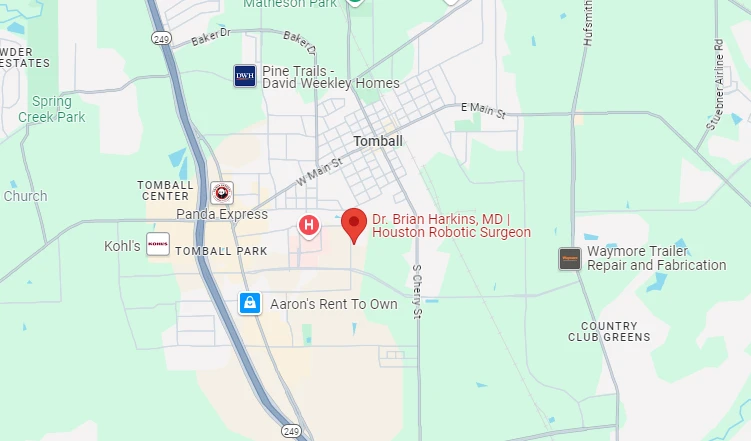
455 School St. Bldg. 1, Suite 10 Tomball, Texas 77375
Mon-Thu: 9:00 am – 5:00 pm | Fri: 9:00 am – 2:00 pm


Complex ventral hernias, recurrent incisional hernias, and large parastomal hernias are the most difficult to repair, with recurrence rates reaching 30 to 50% even at experienced centers. These cases involve distorted anatomy, extensive scar tissue, and loss of domain, and outcomes depend far more on surgeon expertise than on geography.
Not all hernias are created equal when it comes to surgical repair. While some hernias can be fixed with straightforward procedures and quick recovery times, others present significant challenges that require specialized expertise and advanced techniques. National health resources such as MedlinePlus note that treatment is usually surgery to repair the opening in the muscle wall, but the complexity of that surgery varies enormously from case to case.
Complex ventral hernias, recurrent incisional hernias, and large parastomal hernias are among the most difficult to repair successfully, often involving distorted anatomy, extensive scar tissue, and higher risks of complications. If you're facing hernia surgery in Tomball, TX, understanding which types are most challenging, and why, can help you make informed decisions about your treatment and choose the right surgeon for your specific situation.
Complex ventral hernias (CVH) represent some of the most difficult abdominal wall defects to repair. These hernias are characterized by large defect sizes (often 10 cm or wider), multiple recurrences, and serious patient comorbidities that complicate surgery. Any one of those three factors raises difficulty on its own, and complex cases typically present with all three at once.
What makes these hernias especially challenging is their size and location. Large midline or lateral hernias frequently occur after prior abdominal surgery, where scar tissue and weakened tissue create a perfect storm for repair difficulties. Each previous operation leaves behind adhesions and altered planes, so the surgeon is working through territory that no longer matches normal anatomy.
The statistics are sobering. Even in the hands of experienced surgeons, recurrence rates reach approximately 30%, with overall complication rates ranging from 4% to 48% and some studies showing recurrence rates up to 50%. Those figures explain why these repairs are treated as a specialty problem rather than a routine one, and why the choice of surgeon carries so much weight.
One of the most complex aspects of difficult hernias is a condition called loss of domain (LOD). This occurs when a large hernia contains abdominal organs that have been living outside the abdominal cavity for so long that the cavity itself has contracted.
Surgeons use CT imaging to calculate the hernia sac volume compared to the abdominal cavity volume. When this ratio exceeds 15 to 20%, it signals high operative risk because returning the organs to the abdomen can cause dangerous pressure increases. This is why loss of domain changes the entire surgical plan rather than simply making an operation longer, since the abdomen may no longer have room for its own contents.
The surgical challenges are significant:
Parastomal hernias develop around an intestinal stoma and represent one of the most vexing complications in hernia surgery. Medical experts have described repairing these hernias as trying to optimize the impossible, which speaks volumes about the difficulty involved. These hernias are remarkably common, with incidence rates of 30 to 50% or higher depending on the type of stoma and how long patients are followed.
The fundamental problem is anatomical. Any repair must accommodate bowel passing through the abdominal wall, so surgeons cannot simply close the defect without relocating or removing the stoma. That single constraint rules out the tension-free closure that makes most other hernia repairs durable. Additional complications include:
For giant parastomal hernias with loss of domain, surgeons use volumetric assessment to determine whether tension-free repair is possible or if bowel resection will be necessary. That planning step is what separates a considered reconstruction from an attempt that is likely to fail, and it should happen well before the day of surgery.
Large hiatal hernias, particularly sizable paraesophageal hernias where much of the stomach herniates into the chest cavity, represent another category of complex repairs. The recurrence challenge is substantial, with paraesophageal hernia repair recurrence rates varying between 25% and 42%, meaning that a significant portion of repairs fail over time and some patients face a second operation. Because these hernias sit at the junction between the chest and abdomen, they also intersect with anti-reflux surgery considerations that a straightforward abdominal wall repair never involves.
A newer approach called the critical view of repair (CVR) technique has shown promising results. Patients who underwent repair with CVR had lower recurrence rates compared to standard techniques (9.7% versus 20%) and significantly lower reoperation rates (0.5% versus 10%).
Recurrent hiatal hernias after prior repair add even more complexity. Scar tissue distorts normal anatomy, and sometimes prior mesh at the hiatus creates additional technical challenges. However, laparoscopic revisional surgery can be safe and effective when performed at experienced centers, which again points to volume and familiarity with the specific problem as the deciding factors rather than the technique alone.
The table below summarizes how the major hernia types compare in repair difficulty and recurrence risk. Reading across it makes clear that difficulty is driven less by where a hernia sits than by how much the anatomy has already been altered before the surgeon begins.
| Hernia Type | Difficulty | Recurrence / Incidence | Key Complicating Factor |
| Complex ventral / incisional | Highest | Approximately 30%, up to 50% in some studies | Large defects, scar tissue, loss of domain |
| Parastomal | Highest | Incidence 30 to 50% or higher | Bowel must pass through the repair; contaminated field |
| Large paraesophageal / hiatal | High | 25% to 42% recurrence | Stomach in the chest; recurrent cases distorted by scar |
| Recurrent inguinal | Moderate | Higher than primary repair | Scar tissue and prior mesh obscure anatomy |
| Femoral | Moderate, often urgent | High incarceration risk | Narrow, rigid femoral ring |
| Primary inguinal | Lowest | Low with experienced surgeons | Generally straightforward anatomy |
The hernia itself is only half the equation. Patient health has a direct effect on how difficult a repair becomes and how likely it is to hold.
Obesity with BMI above 30 roughly doubles the probability of developing a hernia and increases the severity of symptoms. Obese patients face multiple challenges, including thicker abdominal walls that complicate surgical access, more visceral fat obscuring anatomy, elevated baseline abdominal pressure, and higher risk of recurrence and wound complications.
Several other medical and lifestyle factors make hernia repair more challenging:
Each of these works against the repair in a different way, either by loading the abdominal wall repeatedly or by weakening the body's ability to heal the reconstruction once it is in place. The practical implication is that a technically excellent repair placed into a poorly optimized patient still carries elevated risk, which is why surgeons often ask patients to address these factors before scheduling a complex case.
Primary inguinal hernias in healthy patients are generally considered straightforward with relatively low complication rates when performed by experienced surgeons. This makes them among the easier hernia repairs, and this overview of common hernia conditions shows where they sit relative to the harder categories.
However, recurrent inguinal hernias are more complex due to scar tissue obscuring anatomy and sometimes prior mesh. Guidelines recommend using a different surgical approach than the original repair, precisely because the first operation has already altered the field.
Femoral hernias carry high risk of incarceration due to the narrow, rigid femoral ring, making them frequent causes of emergency surgery. Despite this urgency, they typically involve smaller defects than giant ventral or parastomal hernias and don't require large-scale abdominal wall reconstruction, so urgency and technical difficulty are not the same thing. A femoral hernia may need attention far sooner than a complex ventral hernia while still being the simpler operation once the patient reaches the operating room.
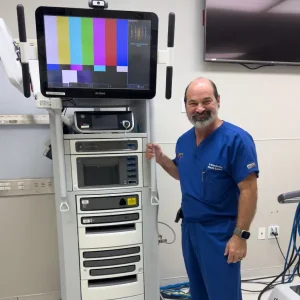
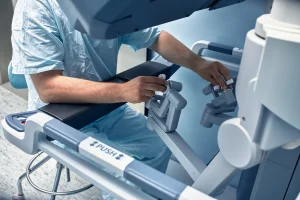
HCA Houston Healthcare Tomball offers surgical services including hernia repair, with outpatient procedures available at The Medical Complex Surgery Center. Dr. Brian Harkins specializes in Da Vinci Xi robotic surgery and offers robotic hernia repair services in Tomball.
For the most challenging abdominal wall hernias, Houston Methodist's Complex Hernia and Abdominal Wall Reconstruction Clinic provides robot-assisted, minimally invasive techniques specifically designed for complex repairs. For difficult hiatal hernias, Houston Methodist's Underwood Center for Digestive Health treats complex cases using advanced surgical and non-surgical methods, including laparoscopic and robotic approaches.
The hardest hernias to repair in Tomball are essentially the same as those considered most difficult worldwide, namely complex ventral hernias with loss of domain, parastomal hernias, and large paraesophageal hernias. However, outcomes depend heavily on appropriate referral and surgeon expertise rather than geography alone. Patients with complex hernias benefit from seeking surgeons who specialize in advanced robotic surgery and hernia repair techniques and have experience managing the specific type of hernia they face.
Complex ventral hernias and parastomal hernias are the most difficult, with recurrence rates of 30 to 50% even at experienced centers. Large paraesophageal hernias are also highly challenging, with recurrence rates between 25% and 42%.
They involve large defects, often 10 cm or wider, multiple prior recurrences, and serious patient comorbidities. Scar tissue from previous abdominal surgery distorts the anatomy, and complication rates range from 4% to 48%.
Loss of domain occurs when herniated organs have been outside the abdominal cavity so long that the cavity has contracted. When the hernia volume exceeds 15 to 20% of the abdominal cavity, returning organs can cause dangerous pressure increases.
Any repair must accommodate bowel passing through the abdominal wall, so the defect cannot simply be closed. The field is also repeatedly exposed to intestinal contents, which contaminates the site and impairs wound healing.
Incidence rates run 30 to 50% or higher, depending on the type of stoma and how long patients are followed. Multiple repair strategies exist, but none has proven universally superior and all carry substantial recurrence risk.
Primary inguinal hernias in otherwise healthy patients are generally considered straightforward, with relatively low complication rates when performed by experienced surgeons. They do not require the large-scale abdominal wall reconstruction that complex cases demand.
Yes. A BMI above 30 roughly doubles the probability of developing a hernia and worsens symptoms. Obesity also means thicker abdominal walls, more visceral fat obscuring anatomy, elevated abdominal pressure, and higher recurrence and wound complication risk.
Yes. Scar tissue obscures the anatomy and prior mesh can create technical challenges. For recurrent inguinal hernias, guidelines recommend using a different surgical approach than the one used in the original repair.
It is a newer approach for hiatal hernia repair that has shown lower recurrence rates than standard techniques, at 9.7% versus 20%, along with significantly lower reoperation rates of 0.5% versus 10%.
Yes. Losing weight if obese, quitting smoking, and controlling diabetes or lung disease can substantially reduce complications and recurrence. Managing chronic cough and constipation also lowers the repeated abdominal pressure that stresses a repair.
The hardest hernias to repair share a common profile: large defects, anatomy already reshaped by previous surgery, and a body that has adapted around the hernia rather than against it. Complex ventral and parastomal hernias sit at the top of that list, with large paraesophageal hernias close behind, and their recurrence rates reflect genuine surgical difficulty rather than any failure of effort.
What that means practically is that the type of hernia you have should determine the level of expertise you seek. Straightforward repairs are well handled locally, while the most complex reconstructions reward high-volume experience and advanced technique. Optimizing your own health before surgery is the one variable fully within your control, and it meaningfully improves the odds that a repair holds.
Understand where your hernia falls on the difficulty scale.
Schedule a consultation with a Tomball hernia specialist today.


Dr. Brian Harkins is a renowned surgeon specializing in advanced, minimally invasive, and robotic surgical techniques. With a dedication to innovation and personalized patient care, he has transformed countless lives by delivering exceptional outcomes.
I want a website like this, where do i start?