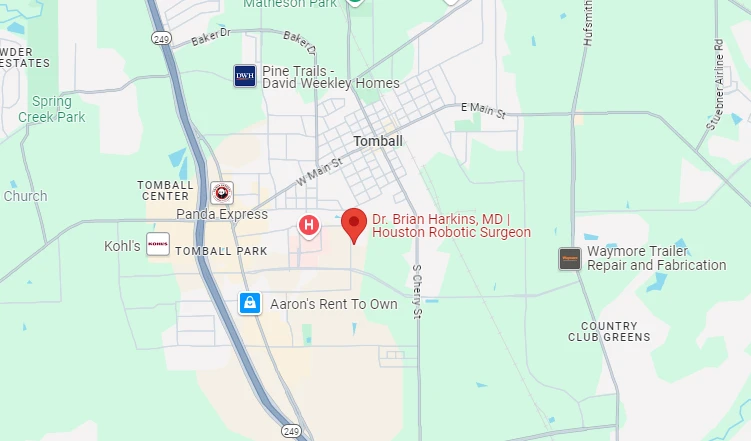
455 School St. Bldg. 1, Suite 10 Tomball, Texas 77375
Mon-Thu: 9:00 am – 5:00 pm | Fri: 9:00 am – 2:00 pm


Hernia surgery may not be recommended when a hernia is small and minimally symptomatic, or when medical conditions such as poorly controlled diabetes, severe COPD, decompensated heart failure, cirrhosis with a MELD score above 11, active infection, or malnutrition raise operative risk. In these cases, watchful waiting or health optimization first is often the safer path.
If you've been diagnosed with a hernia, you might assume surgery is your only option, but that's not always the case. The truth is that hernia surgery isn't recommended for everyone, and factors like your symptoms, overall health, and the type of hernia you have all play a role in whether immediate repair is necessary.
Many patients wonder if it's safe to delay surgery, what medical conditions make the procedure too risky, and whether watchful waiting could be a viable alternative. National health resources such as MedlinePlus note that treatment is usually surgery, yet timing and patient health shape whether that surgery should happen now or later. In this article, we'll explore when hernia repair may not be the right choice and help you understand the factors that influence this important decision.
Not every hernia requires immediate surgery. For many patients, a watchful waiting approach can be a safe and reasonable option, and the research behind it is reassuring rather than merely permissive.
Research shows that approximately one-third of men with asymptomatic or minimally symptomatic inguinal hernias crossed over to surgery after three years, increasing to two-thirds after ten years. Importantly, the rate of acute hernia-related operations requiring emergency intervention remained low at only 2 to 3%.
The good news is that watchful waiting was not associated with increased mortality or postoperative complications. Long-term follow-up studies extending to twelve years found that the incarceration rate during watchful waiting was just 3.9%, meaning the vast majority of patients who delay surgery do not experience serious complications. That figure matters because the fear driving many patients toward immediate surgery is the fear of sudden emergency, and the data suggests that risk is far lower than commonly assumed.
You may be a good candidate for watchful waiting if you have:
If your hernia isn't causing significant pain or interfering with your daily activities, your doctor may recommend monitoring it rather than rushing into surgery. This overview of common hernia conditions can help you understand where your own case is likely to fall.
Certain medical conditions can make hernia repair surgery more dangerous. In these cases, your surgeon may recommend delaying the procedure until your health improves or finding alternative approaches. The table below summarizes the major conditions and how each one changes the recommendation.
| Condition | Why It Raises Risk | Typical Recommendation |
| Cardiovascular disease | Substantially increased postoperative morbidity; INR above 3 raises hematoma risk | Defer elective repair until cardiovascular status improves |
| Severe COPD | Contraindication to laparoscopic repair | Consider local or spinal anesthesia instead of general |
| Diabetes mellitus | Higher wound infection, dehiscence, impaired healing, metabolic complications | Defer until glycemic control improves |
| Cirrhotic liver disease | MELD above 11 is an independent risk factor for 30-day mortality | Elective repair preferred if MELD under 11; risks escalate above it |
| Immunocompromise | Odds ratio of 3.264 for recurrence, pronounced in ventral and incisional hernias | Weigh benefits against higher recurrence risk |
| Malnutrition | Impairs wound healing and immune function | Nutritional optimization before elective repair |
Patients with cardiovascular disease show substantially increased operative risk for postoperative morbidity. If you have poorly controlled hypertension, have had a recent heart attack, or have decompensated heart failure, you should defer elective hernia surgery until your cardiovascular status improves.
Blood thinners present another challenge. An INR greater than 3 significantly increases risk of postoperative hematoma, which is bleeding that collects under the skin. Your doctor will need to carefully balance the risks of stopping blood thinners against the bleeding risks during surgery, and for some patients that balance is what tips the decision toward waiting.
Breathing problems can complicate both the surgery itself and your recovery. Severe COPD is a contraindication to laparoscopic hernia repair. However, this doesn't necessarily mean you can't have surgery at all.
In cases of severe respiratory disease, repair should ideally be performed under local or spinal anesthesia rather than general anesthesia. This approach avoids the breathing tube and ventilator support that general anesthesia requires, reducing stress on your lungs and often making an otherwise high-risk operation feasible.
Diabetes significantly complicates hernia repair. Patients with diabetes demonstrate significantly higher risks including hyperglycemia and hypoglycemia, wound infection and bleeding, superficial wound dehiscence, impaired wound healing, and serious metabolic complications.
If you have poorly controlled diabetes with an elevated HbA1c, you should defer elective hernia repair until your blood sugar is better managed. The CDC recommends preoperative glycemic control optimization through medication adjustments and lifestyle modifications before proceeding with surgery.
Liver disease dramatically increases surgical risk. Both a MELD score greater than 11 and emergency surgery were independent risk factors for thirty-day mortality. The MELD score measures how severe your liver disease is.
For patients with compensated liver disease and a MELD score less than 11, elective hernia repair in specialized centers is preferred. However, for decompensated cirrhosis with MELD scores above 11, the perioperative risks escalate substantially, and surgery may not be recommended.
If your immune system is weakened by medication or disease, hernia surgery outcomes may be worse. Immunosuppression was associated with higher rates of hernia recurrence, with an odds ratio of 3.264 for recurrence. The increased recurrence risk was particularly pronounced in ventral and incisional hernias.
This doesn't always mean surgery is off the table, but you and your surgeon will need to carefully weigh the benefits against the higher chance the hernia may come back.
Proper nutrition is essential for healing after surgery. Preoperative malnutrition impairs wound healing and immune function, leading to higher rates of impaired wound healing, skin breakdown, wound dehiscence, and surgical site infections.
Patients with severe malnutrition should undergo nutritional optimization before elective repair. This may involve working with a dietitian, taking nutritional supplements, or in severe cases, receiving nutrition through a feeding tube before surgery.
Age alone doesn't disqualify you from hernia surgery, but older patients do face higher risks. Octogenarians aged 80 to 89 experienced increased rates of mortality, malnutrition, sepsis, respiratory failure, pneumonia, and other complications compared to seniors aged 65 to 79. The odds ratio for mortality in octogenarians was 3.9 in elective cases.
However, the type of anesthesia can make a significant difference. For patients aged 75 and older undergoing inguinal hernia repair, using local rather than general anesthesia was associated with a 0.6% reduction in postoperative complications. In fact, local anesthesia was associated with a 37% decrease in odds of postoperative complications across all ages, which makes anesthesia choice one of the most useful levers available for older patients.
Timing is everything when it comes to hernia surgery during or around pregnancy. In pregnant patients with small and asymptomatic hernias, surgery should be delayed until after delivery or after the last planned pregnancy.
If symptomatic, postponement until the second trimester or after delivery is recommended. For non-pregnant women planning future pregnancies, if the hernia is large and symptomatic, wait 1 to 2 years after repair before attempting pregnancy to allow proper healing and reduce recurrence risk.
Some risk factors can be changed, and addressing them before surgery often converts a high-risk case into a routine one.
Obesity does increase surgical complexity and complication rates. However, recent evidence shows that with appropriate surgical expertise, outcomes can be comparable between obese and non-obese patients. For patients with severe obesity, meaning a BMI above 40, with large ventral hernias, consideration of combined bariatric surgery and hernia repair may be appropriate, addressing both conditions simultaneously and potentially improving long-term outcomes.
Smoking impairs circulation, lung function, and wound healing. If you smoke, your surgeon will likely recommend quitting before surgery, and smoking should be discontinued for at least 4 to 6 weeks before surgery when feasible. Quitting isn't just about following doctor's orders, since it directly impacts your healing and reduces your risk of complications like wound infections and breathing problems after surgery.
Patients with active skin infections should delay surgery until infection completely resolves. Operating through infected tissue dramatically increases the risk of mesh infection and other serious complications. Staphylococcus aureus accounts for 57.7% of mesh infections, making it the most common culprit. If you're a nasal carrier of this bacteria, preoperative decolonization is recommended using 4% chlorhexidine daily total body wash and topical 2% nasal mupirocin ointment twice daily for five days before surgery.
The timing of your hernia surgery matters tremendously, and the gap between planned and emergency repair is one of the widest in the data.
| Measure | Elective Surgery | Emergency Surgery |
| Complication rate | 10% | 32% |
| Average hospital stay | 1 day | 8 days |
| Thirty-day mortality | 0.87% | 6.67% |
These statistics highlight why surgeons prefer to repair hernias electively before they become emergencies. When a hernia becomes incarcerated or strangulated, you lose the luxury of optimizing your health before surgery. Emergency operations must proceed regardless of your cardiovascular status, blood sugar control, or other risk factors, which is precisely why the conditions listed earlier carry so much more weight in an emergency setting.
It's important to have realistic expectations about hernia surgery outcomes. While many patients experience improvement, surgery isn't always a complete cure. While 63% of patients reported improved abdominal wall status after incisional hernia repair, 37% reported status was the same or worse.
Even more surprisingly, 63% still reported symptoms three years after repair, mostly discomfort, pain, and bulging. This doesn't mean surgery failed, since many of these patients still felt better than before, but it highlights that hernia repair isn't always a perfect solution.
For some patients with multiple risk factors and minimal symptoms, these statistics support choosing watchful waiting over surgery. The decision should be individualized based on your specific situation, symptoms, and overall health status, and it is worth discussing openly with a surgeon experienced in robotic surgery and modern repair techniques.
Surgery may not be recommended for small, minimally symptomatic hernias, or when conditions like poorly controlled diabetes, severe COPD, decompensated heart failure, cirrhosis with MELD above 11, active infection, or malnutrition raise operative risk beyond the benefit of repair.
Yes, for appropriate patients. Watchful waiting was not associated with increased mortality or postoperative complications, and long-term studies found an incarceration rate of just 3.9% over twelve years, with acute emergency operations at only 2 to 3%.
Often, yes. About one-third of men with asymptomatic or minimally symptomatic inguinal hernias crossed over to surgery after three years, rising to two-thirds after ten years. Waiting delays surgery rather than permanently avoiding it for most patients.
Yes, but control matters. Diabetes raises risks of wound infection, dehiscence, impaired healing, and metabolic complications. With an elevated HbA1c, elective repair should be deferred until blood sugar is better managed through medication and lifestyle changes.
Severe COPD is a contraindication to laparoscopic repair, but not necessarily to surgery altogether. Repair under local or spinal anesthesia avoids the breathing tube and ventilator support of general anesthesia, reducing stress on the lungs.
A MELD score above 11 is an independent risk factor for thirty-day mortality. Patients with compensated disease and MELD under 11 can have elective repair at specialized centers, while risks escalate substantially above that threshold.
Age alone doesn't disqualify you. Octogenarians face an odds ratio of 3.9 for mortality in elective cases, but local anesthesia reduces complications by 37% across all ages, making anesthesia choice an important consideration for older patients.
Pregnant patients with small, asymptomatic hernias should delay surgery until after delivery or after the last planned pregnancy. If symptomatic, postponement until the second trimester or after delivery is recommended.
Emergency repairs carry a 32% complication rate versus 10% for elective surgery, with hospital stays of 8 days versus 1 day and thirty-day mortality of 6.67% versus 0.87%. Emergencies also remove any chance to optimize your health first.
Not always. After incisional hernia repair, 63% reported improved abdominal wall status while 37% reported the same or worse, and 63% still reported some symptoms three years later, most often discomfort, pain, and bulging.
Hernia surgery is common, but it is not automatic. For small, minimally symptomatic hernias, watchful waiting carries a low complication rate and does not raise mortality, which makes monitoring a legitimate choice rather than a delay tactic. For patients with cardiovascular disease, poorly controlled diabetes, severe respiratory or liver disease, immunosuppression, malnutrition, or active infection, the safer course is usually to optimize health first and operate once the risk profile improves.
What the data consistently shows is that planned surgery beats emergency surgery by a wide margin, so the goal is never to avoid repair indefinitely but to time it well. An individualized assessment that weighs your symptoms, your hernia type, and your overall health is the only reliable way to decide whether now is the right moment.
Find out whether surgery or watchful waiting fits your situation.
Schedule an individualized assessment with a Tomball hernia specialist.


Dr. Brian Harkins is a renowned surgeon specializing in advanced, minimally invasive, and robotic surgical techniques. With a dedication to innovation and personalized patient care, he has transformed countless lives by delivering exceptional outcomes.
I want a website like this, where do i start?