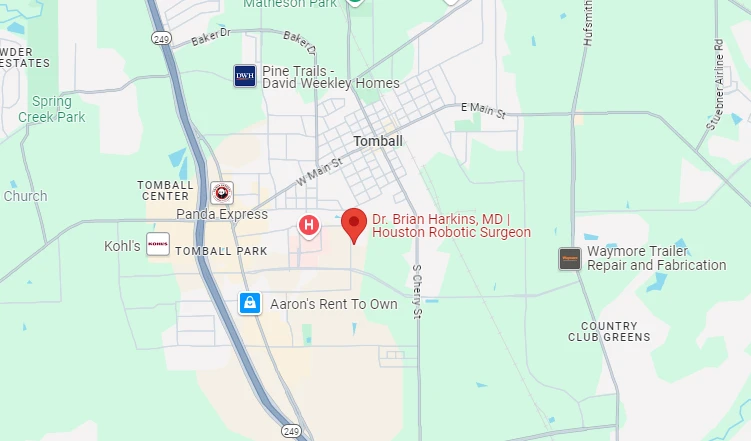
455 School St. Bldg. 1, Suite 10 Tomball, Texas 77375
Mon-Thu: 9:00 am – 5:00 pm | Fri: 9:00 am – 2:00 pm

Most patients leave the hospital 1-3 days after robotic colon surgery, return to desk work around 2-3 weeks, and reach full recovery between 2-6 months. Pain is typically mild after the first week, bowel function returns within days when chewing gum and walking are added to the routine, and overall complication rates run about 12 percent (with severe complications under 3 percent).
If you are preparing for robotic colon surgery in Houston, you are probably wondering what the recovery process will really look like and when you can get back to your daily routine. Common concerns include how much pain to expect, how long you will need to stay in the hospital, and when your bowel function will return to normal.
This guide walks you through what happens after robotic colorectal surgery, from your first days in recovery to your return to full activity. Dr. Brian Harkins runs a Tomball robotic surgical center and performs colon procedures at HCA Houston Healthcare Tomball.
After Da Vinci robotic colon surgery, you will be taken to a recovery room where medical staff closely monitor your vital signs and watch for any immediate complications. Common normal sensations in the first 24 hours:
Most patients stay in the hospital for 1-3 days, significantly shorter than open surgery. The American College of Surgeons patient resources complement what your surgical team provides for surgery preparation and recovery.
By the first day after surgery, your care team will encourage you to get up and walk with assistance. Early mobilization significantly reduces your risk of complications such as blood clots and accelerates bowel function recovery.
Even though it may feel uncomfortable at first, these short walks around the hospital floor are an essential part of your recovery process.
Pain after robotic colorectal surgery differs from open surgery. Patients undergoing minimally invasive surgery experience more pain on the day of surgery but significantly less pain on postoperative days 2 and 3 compared to open procedures.
Your surgical team will use a multimodal approach combining several types of medications:
The goal is to keep you comfortable while minimizing side effects and helping you stay mobile.
The return of normal bowel function is a key recovery milestone. Your medical team monitors this closely as a clinical indicator of progress. During the first week, expect changes in bowel movement frequency, consistency, and color as your digestive system adjusts.
Chewing gum can help. Studies show patients who chewed gum achieved first passage of gas on day 2.1 versus day 3.2, and first bowel movement on day 3.1 versus day 5.8.
Constipation is common after colon resection. Strategies that help:
Your diet will progress gradually as your digestive system heals. Immediately after surgery, you will start with clear liquids like broths, electrolyte drinks, and clear juices for 1-2 days. Once your system can handle liquids, you advance to soft, low-fiber foods such as mashed potatoes, applesauce, plain toast, bananas, and eggs.
Certain foods can cause problems during early recovery:
Your surgeon will provide specific dietary guidelines based on the type of robotic procedure you had.
Understanding what to expect during each phase of recovery helps you plan accordingly and recognize normal progress.
Table 1: Recovery Milestone Timeline
| Phase | Activities Allowed | Pain Level | Diet |
| Days 0-2 (hospital) | Walking with assistance | 3-5 out of 10 | Clear liquids advancing |
| Week 1 | Light walking, self-care | 3-4 out of 10 | Soft, low-fiber foods |
| Week 2 | Longer walks, light activity | 1-2 out of 10 | Gradual normal foods |
| Weeks 3-4 | Desk work, driving | 0-1 out of 10 | Most foods tolerated |
| Weeks 4-6 | Light exercise resumed | Minimal | Full normal diet |
| Months 2-6 | Full activities including lifting | None | Full diet |
Pain gradually decreases, with acute postoperative pain typically resolving within the first week. Begin short walks of 5-10 minutes, gradually increasing by 5-minute intervals daily. Avoid heavy lifting (over 10 pounds) and strenuous activity.
Most patients achieve substantial functional recovery. Desk work typically resumes around 2-3 weeks post-surgery. Driving usually resumes at 2-4 weeks once you are off prescription pain medication and have physician clearance.
Physical therapy sessions transition to 1-2 times per week with emphasis on increasing core strength. More strenuous exercise can begin as core strength improves.
Full recovery typically occurs between 2-6 months. Most patients feel essentially back to normal by this point, though individual experiences vary.
When you can return to work depends primarily on your job type:
Discuss your specific work requirements with your surgeon during follow-up appointments. Returning too early can set back your recovery, while waiting too long may not be necessary.
While robotic surgery has excellent outcomes, it is important to understand potential complications. The overall postoperative complication rate is 12.2 percent, with severe complications occurring in 2.4 percent of patients.
Table 2: Complication Rates After Robotic Colon Surgery
| Complication Type | Rate |
| Overall complications | 12.2 percent |
| Severe complications | 2.4 percent |
| Local complications | 8.8 percent |
| Systemic complications | 3.5 percent |
| Mortality | 0.4 percent |
| Anastomotic leak | 2.8-30 percent (procedure-dependent) |
Certain factors increase the likelihood of complications:
Contact your surgeon immediately if you experience:
Nearly one-quarter of colon surgery patients are readmitted within 3 months. Common causes include surgical site infections, dehydration as the digestive system recovers, and ostomy-related complications.
Table 3: Top Causes of Readmission
| Cause | Prevention Strategy |
| Surgical site infections | Proper wound care, watch for redness/warmth |
| Dehydration | Drink 8-10 glasses water daily |
| Ostomy complications | Follow ostomy nurse instructions carefully |
| Anastomotic leak | Report severe pain or fever immediately |
| Postoperative ileus | Walk daily, chew gum, hydrate well |
Many readmissions are preventable through proper wound care, hydration, nutrition, and prompt attention to concerning symptoms.
A little preparation before surgery makes a big difference. Steps to take in the weeks before:
If you are considering robotic colon surgery in the Houston area, Dr. Brian Harkins offers experienced surgical care with a focus on faster recovery and better outcomes.
Call 281-351-5409 to book your evaluation and learn how robotic surgery can help you return to your normal activities sooner.
Most patients leave the hospital in 1-3 days, return to desk work in 2-4 weeks, and reach full recovery between 2-6 months. Light walking starts immediately, while heavy lifting waits until 4-6 weeks.
You start with clear liquids for 1-2 days, progress to soft low-fiber foods over the first week, and gradually add normal foods over 2-4 weeks. High-fiber, spicy, and raw foods are typically reintroduced last.
You will start short assisted walks within 24 hours of surgery. Early walking reduces blood clot risk and speeds bowel function recovery. Walking distance gradually increases by 5-minute intervals daily.
Most patients resume driving 2-4 weeks after surgery once they are off prescription pain medication and have physician clearance. Reaction time and abdominal strength must support safe driving.
Most patients stay 1-3 days in the hospital, much shorter than the 5-7 days typical with open surgery. About 14.8 percent meet discharge criteria within 48 hours.
Watch for fever over 101°F, increasing abdominal pain, incision redness or drainage, persistent nausea, inability to pass gas for several days, calf pain, or shortness of breath. Contact your surgeon immediately for any of these.
Light walking starts immediately. Light exercise typically resumes at 4-6 weeks. Strenuous exercise and heavy lifting wait until 6-8 weeks or longer, depending on individual recovery and surgeon clearance.
Nearly one-quarter of colon surgery patients are readmitted within 3 months. Common causes include surgical site infections, dehydration, and ostomy complications. Many readmissions are preventable.
Yes. Studies show patients who chewed gum had first gas passage on day 2.1 versus day 3.2 in controls, and first bowel movement on day 3.1 versus day 5.8. It is a simple, low-risk strategy.
Avoid lifting more than 10 pounds for the first 4-6 weeks. Full lifting and strenuous activity typically resume 6-8 weeks post-surgery, depending on procedure and individual healing.
Discuss your robotic colon surgery options.
Plan a smoother recovery starting today.


Dr. Brian Harkins is a renowned surgeon specializing in advanced, minimally invasive, and robotic surgical techniques. With a dedication to innovation and personalized patient care, he has transformed countless lives by delivering exceptional outcomes.
I want a website like this, where do i start?