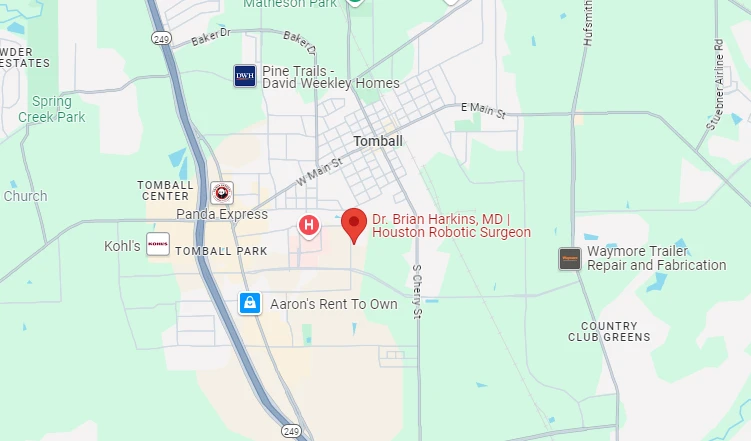
455 School St. Bldg. 1, Suite 10 Tomball, Texas 77375
Mon-Thu: 9:00 am – 5:00 pm | Fri: 9:00 am – 2:00 pm

Yes, almost everyone does. Most patients settle back into a predictable bowel pattern within a few weeks of gallbladder removal, and the loose or urgent stools that show up in the first days after surgery are usually a temporary adjustment rather than a permanent change.
If you are reading this a few days after your cholecystectomy and wondering whether your body will ever behave the way it used to, you are asking the question almost every patient asks, usually somewhere between the second and the fifth day at home. The gallbladder is a storage pouch, not a manufacturing plant, so removing it does not stop your body from making bile. What it changes is the timing of how that bile arrives in your small intestine, and your digestive tract needs a little while to adapt to the new schedule.
That adjustment period is where the loose stools, the sudden urgency after a fatty meal, and the occasional swing toward constipation all come from. Understanding which changes are expected, roughly how long each one tends to last, and which symptoms genuinely warrant a phone call will save you a great deal of worry during recovery. Below is what patients in Tomball can reasonably expect, along with the practical adjustments that tend to help most.
Your liver keeps producing bile exactly as before, but it now drips continuously into the small intestine instead of arriving in a concentrated squeeze at mealtimes.
Before surgery, your gallbladder collected bile between meals, concentrated it, and released a well-timed dose when a meal containing fat reached your small intestine. That coordination is what let you eat a rich meal and digest it comfortably. After the gallbladder is removed, bile flows straight from the liver through the bile ducts on a slow and steady basis, which works well for ordinary meals and less well for a sudden load of fat that arrives with no concentrated bile ready to meet it.
The result is a temporary mismatch between how much fat you eat and how much bile is on hand to break it down. Undigested fat and unabsorbed bile salts that continue into the colon draw in water, which is the direct reason loose stools are so common early on.
| Digestive step | Before gallbladder removal | After gallbladder removal |
|---|---|---|
| Bile storage | Gallbladder concentrates and holds bile between meals | No storage pouch, so bile is not concentrated |
| Bile delivery | Released in a timed surge when a meal arrives | Flows continuously in smaller amounts |
| Large fatty meal | Concentrated bile dose handles the fat load | Available bile may fall short of the fat load |
| Effect in the colon | Little unabsorbed bile reaches the colon | Extra bile salts and fat can draw water in |
| Typical stool pattern | Your established baseline | Looser and more urgent at first, then steadier |
Most patients notice clear improvement inside two to four weeks, and the majority are back to a familiar pattern by the three month mark.
Recovery is rarely a straight line. Patients tend to describe a good day followed by a setback after a heavier meal, then a longer stretch of good days. Because a robotic cholecystectomy uses very small incisions, patients are usually eating a normal range of food far sooner than they expect, which sometimes means the digestive adjustment is the most noticeable part of recovery rather than the incisions.
| Stage | What patients commonly report | What usually helps |
|---|---|---|
| First 3 days | Loose or frequent stools, gas, mild cramping | Smaller portions, lower fat, steady fluids |
| Days 4 to 10 | Urgency after richer meals, unpredictable timing | Spreading fat across the day rather than one heavy meal |
| Weeks 2 to 4 | Fewer episodes, more predictable timing | Reintroducing foods one at a time |
| Months 2 to 3 | Pattern close to the old baseline for most patients | Normal diet, with personal trigger foods identified |
| Beyond 3 months | A minority still have intermittent loose stools | Reassessment with your surgeon |
Constipation is the other half of the picture and it surprises people, because they came in expecting the opposite. Prescription pain medication, less movement than usual, lighter eating, and lower fluid intake all push in the constipating direction at the same time, which is why some patients swing between the two extremes in the first week.
The two patterns come from different causes, so telling them apart matters more than treating whatever happens to be happening today.
Loose stools generally trace back to bile and fat:
Constipation generally traces back to the surgery and the recovery routine rather than to bile:
Because the two have separate drivers, the same patient can experience both in the same week without anything being wrong. What matters is the direction of travel across a week rather than any single day.
Small, frequent, moderate-fat meals plus steady walking do more for bowel regularity in the first month than any single food restriction.
Patients get the most benefit from adjusting portion size and pace before they start eliminating whole categories of food. Cutting fat to nearly nothing tends to backfire, because some fat is needed for normal digestion and for absorbing fat-soluble vitamins.
| Adjustment | Why it helps | Practical version |
|---|---|---|
| Smaller, more frequent meals | Matches fat intake to continuous bile flow | Four to five modest meals instead of two or three large ones |
| Moderate rather than minimal fat | Supports digestion without overwhelming it | Lean proteins, olive oil in normal amounts, avoid fried food early |
| Soluble fiber | Adds form to loose stools and eases constipation | Oats, bananas, applesauce, psyllium if your surgeon agrees |
| Consistent fluids | Counters both dehydration and constipation | Water through the day rather than large amounts at once |
| Short, frequent walks | Restores normal bowel motility | Several brief walks daily from the first day home |
| One new food at a time | Identifies your personal triggers | Note what you ate before any episode |
A short food and symptom log is worth more than a general list of foods to avoid, because triggers are genuinely individual. Some patients tolerate dairy and react to fried food, while others find the reverse. If you would like a starting framework, our guide on which foods to avoid after gallbladder removal covers the categories that most often cause trouble.
Call the office if symptoms are worsening rather than easing, or if any warning sign appears alongside them.
Contact us promptly if you notice:
The first four on that list can point to a bile duct problem rather than an adjustment issue, which is why they are worth a call the same day rather than waiting for a scheduled follow-up. Ongoing diarrhea past three months is a separate matter and is usually manageable once identified, but it needs to be assessed rather than endured. Our patient resources section answers many of the routine recovery questions that come up between appointments.
A robotic, minimally invasive cholecystectomy is designed around smaller incisions and faster return to normal activity, which supports the digestive adjustment rather than competing with it.
Dr. Brian Harkins, MD, performs robotic-assisted gallbladder surgery using the Da Vinci surgical system, working through three to four small incisions or, in selected cases, a single incision near the belly button. The procedure uses Firefly imaging, a fluorescence technology that shows the bile ducts in real time during the operation, which supports safer identification of the anatomy and helps reduce the risk of bile duct injury. Smaller incisions and less tissue disruption mean most patients are walking comfortably and eating a reasonable range of food sooner, and earlier movement is one of the most reliable things you can do for bowel regularity.
The same approach applies across the gallbladder conditions we treat, including gallstones, cholecystitis, and acute acalculous cholecystitis in patients who are seriously unwell. You can read more about robotic gallbladder surgery and the range of gallbladder conditions we manage, or learn about our broader Da Vinci Xi robotic surgery program serving Tomball if you are still weighing your options.
Most patients have a bowel movement within two to three days of surgery. Pain medication and anesthesia commonly delay it. Walking, fluids, and reducing opioid use as soon as your pain allows all help move things along.
For most patients it is not. The large majority see steady improvement over the first month and settle into a normal pattern within three months. A smaller group has ongoing loose stools, which is manageable once your surgeon identifies the cause.
Fat entering the small intestine without a concentrated dose of bile to meet it can pass along partly undigested, and unabsorbed bile salts pull water into the colon. That combination speeds transit and produces the urgency you are noticing.
No, and it usually backfires. Some fat is necessary for digestion and for absorbing fat-soluble vitamins. Moderate fat spread across several smaller meals works better than a very low-fat diet, which often leaves patients undernourished and no more comfortable.
Normal brown shades are expected. Pale, clay-colored, or grey stools suggest bile is not reaching the intestine properly and should be reported the same day, particularly alongside yellowing of the eyes or skin, or unusually dark urine.
Many patients return to their exact previous pattern. Others settle into something slightly different, such as needing the bathroom a little sooner after a large meal. Both outcomes are considered normal provided symptoms are not disruptive.
The bile timing change is the same whichever technique is used. A minimally invasive robotic approach with small incisions generally allows earlier walking and earlier normal eating, and both of those support faster return to regular bowel habits.
Soluble fiber such as psyllium helps some patients by adding form to loose stools. Ask your surgeon before starting one, particularly in the first two weeks, so it fits your recovery plan and any other medication you are taking.
Partly. Some gas comes from the carbon dioxide used during a minimally invasive procedure and clears within days. The rest reflects the same digestive adjustment causing your stool changes, and it tends to ease on the same timeline.
Bring it up at your scheduled post-operative visit if symptoms are improving. Call sooner if they are worsening, if any warning sign appears, or if disruptive diarrhea persists beyond three months rather than waiting for the next appointment.
The honest answer to the question in the title is that yes, your bowel habits will very likely feel normal again, and for most patients that happens faster than they feared during the uncomfortable first week. The changes you are noticing reflect a shift in bile timing rather than damage to your digestive system, and the practical steps that help are modest ones: eat smaller and more often, keep fat moderate rather than absent, drink steadily, and walk a little several times a day.
What matters most is knowing the difference between an adjustment and a complication. An adjustment gets better week by week. A complication tends to announce itself with fever, jaundice, severe pain, or bleeding, and those symptoms deserve a phone call the same day. If your recovery is not following the pattern described here, that is worth a conversation rather than a wait.
Call 281-351-5409 today
Schedule your gallbladder consultation now


Dr. Brian Harkins is a renowned surgeon specializing in advanced, minimally invasive, and robotic surgical techniques. With a dedication to innovation and personalized patient care, he has transformed countless lives by delivering exceptional outcomes.
I want a website like this, where do i start?