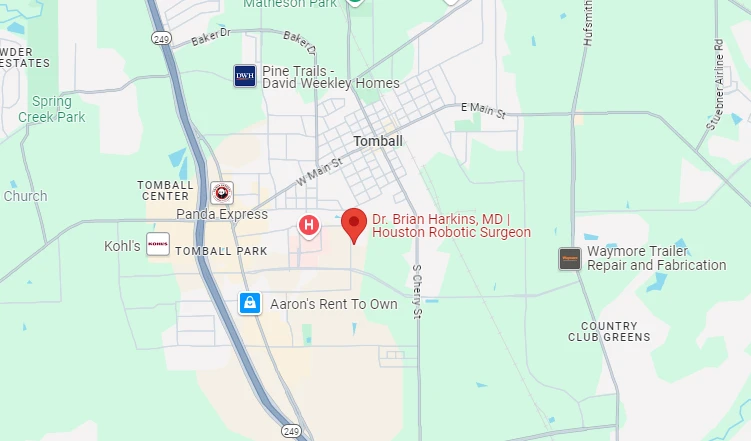
455 School St. Bldg. 1, Suite 10 Tomball, Texas 77375
Mon-Thu: 9:00 am – 5:00 pm | Fri: 9:00 am – 2:00 pm

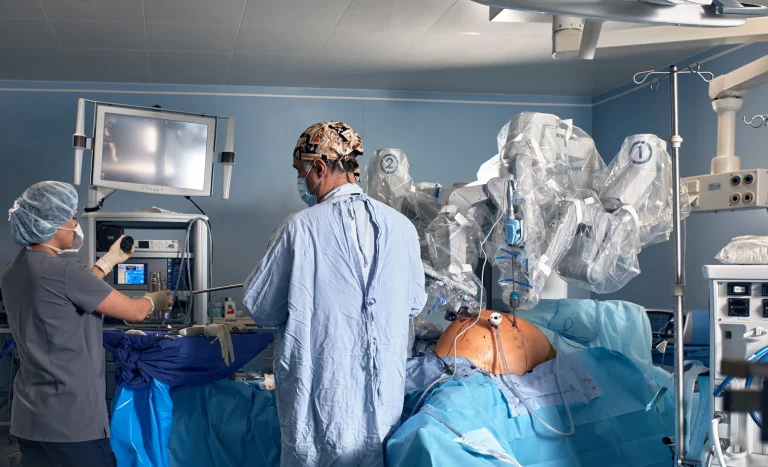
Having prior abdominal surgery doesn’t automatically rule out robotic surgery; a Robotic Surgeon in Houston can review your operative history, imaging, scars, and current condition to judge whether a minimally invasive approach remains appropriate.
The thought of another abdominal operation can bring back every difficult part of your earlier recovery. You may picture hidden scar tissue, implanted mesh, or past complications turning a minimally invasive procedure into a large incision. Those concerns deserve attention, but your surgical history is planning information, and not an automatic rejection.
Your candidacy depends on the operation you had, the area requiring treatment now, and what your surgeon learns from records, imaging, examination, and careful preparation before recommending a surgical approach.
Open, laparoscopic, and robotic operations create access points and may alter anatomy in different ways. Your surgeon will consider which organ was treated, where each incision sits, and whether infection, an emergency, or complications affected healing.
The number of operations matters too, but scars don’t tell the story.
A previous abdominal operation changes the information your surgeon needs; it doesn’t automatically determine which surgical approaches remain available.
Abdominal adhesions are bands of scar-like tissue that may form after surgery, connecting organs, bowel, or the abdominal wall. They don’t always cause symptoms, and imaging may not reveal every adhesion beforehand.
During an operation, adhesions can affect entry, tissue separation, visibility, and timing. Still, their presence doesn’t automatically make robotic surgery unsuitable.
Adhesions may change surgical access and dissection even when they haven’t caused noticeable symptoms.
Your surgeon compares the earlier operative field with the area needing treatment now. A lower-abdominal operation may shape planning differently than prior surgery near the gallbladder, stomach, colon, or abdominal wall.
Mesh, reconstructed anatomy, and scar location can influence instrument access and port placement. Surgery count alone can’t determine your individual surgical risk.
Robotic feasibility depends partly on where previous surgery occurred relative to the new operative area.
Bring your operative report, pathology results, discharge summary, recent imaging, plus mesh or implant records. Notes about complications or difficult recoveries also help complete the picture.
Reviewing these materials with a Robotic Surgeon in Houston can clarify how your anatomy changed and which questions require examination, updated testing, or further discussion.
Previous surgical records often provide details that scars and current imaging can’t supply alone.
Preparation can’t reveal everything before surgery. Extensive adhesions, unclear anatomy, bleeding, or limited access may lead your surgeon to reposition instruments, add an incision, or convert to open surgery.
Discuss the intended technique, alternatives, and conditions that could change the plan before consent. A conversion reflects intraoperative judgment, not inadequate preparation.
Changing the operative approach can protect patient safety rather than indicate that the robotic plan was mistaken.
Recovery depends on the completed procedure, adhesion removal, incision size, unexpected findings, and your overall health. Ask about the hospital stay, pain plan, bowel function, activity restrictions, incision care, and symptoms requiring attention.
Ask what recovery could involve after either approach. Fixed timelines can mislead because patients recover differently.
Your recovery plan should account for the intended procedure and any safe change in approach.
Bring your records, imaging, procedure dates, mesh details, complications, symptoms, and diagnosis. Dr. Brian Harkins brings decades of experience in robotic and minimally invasive hernia, gallbladder, colorectal, anti-reflux, and other abdominal procedures, supported by enhanced recovery and multimodal pain practices at HCA Houston Healthcare–Tomball.
Patients across Greater Houston and beyond can consult a Robotic Surgeon in Houston. Let’s discuss options—contact us at 281-351-5409 for an informed next step.
Meta Title: Can You Have Robotic Surgery After Prior Abdominal Surgery?
Meta Description: Had prior abdominal surgery? See how adhesions, mesh, and old records shape candidacy, and what a Robotic Surgeon in Houston reviews before your surgery.
Having prior abdominal surgery doesn't automatically rule out robotic surgery; a Robotic Surgeon in Houston can review your operative history, imaging, scars, and current condition to judge whether a minimally invasive approach remains appropriate. The answer depends on what was done before, what needs treatment now, and what careful preparation reveals.
The thought of another abdominal operation can bring back every difficult part of your earlier recovery, from the nights in the hospital to the weeks it took before daily life felt normal again. You may picture hidden scar tissue, implanted mesh, or past complications turning a minimally invasive procedure into a large incision. Those concerns deserve attention, but your surgical history is planning information, not an automatic rejection.
Your candidacy depends on the operation you had, the area requiring treatment now, and what your surgeon learns from records, imaging, examination, and careful preparation before recommending a surgical approach. This guide walks through each of those pieces so you can arrive at your consultation with a clear sense of what matters, what to bring, and which questions are worth asking before you agree to a plan.
Open, laparoscopic, and robotic operations create access points and may alter anatomy in different ways. Your surgeon will consider which organ was treated, where each incision sits, and whether infection, an emergency, or complications affected healing, because each detail shapes where it is safest to enter the abdomen next time.
The number of operations matters too, but scars don't tell the whole story. A single emergency operation involving infection can leave more internal scarring than two planned laparoscopic procedures, while a long skin scar may say little about what happened deeper inside. That is why your surgeon looks past the surface to the details of each operation.
Details your surgeon will usually want to know about each earlier operation include:
The table below shows how different kinds of earlier operations can shape what your surgeon reviews before recommending an approach.
| Prior Approach | What It May Leave Behind | What Your Surgeon May Review |
| Open surgery with one larger incision | A longer scar and a greater chance of adhesions near the incision line | Entry points away from the old scar and the strength of the abdominal wall |
| Laparoscopic surgery with several small incisions | Small scars and often fewer widespread adhesions | Where earlier ports sat and whether any area healed with complications |
| Robotic-assisted surgery | Small port scars similar to laparoscopy | The operative report to confirm exactly what was done inside |
| Emergency surgery | Scarring influenced by inflammation or infection at the time | Records describing contamination, drains, or a slower recovery |
| Hernia repair with mesh | Mesh that has become incorporated into nearby tissue | Mesh type, position, and distance from the new operative area |
Taken together, these details help your surgeon map your abdomen before surgery, and that map often reveals more than one safe route to the area that needs treatment.
A previous abdominal operation changes the information your surgeon needs; it doesn't automatically determine which surgical approaches remain available.
Abdominal adhesions are bands of scar-like tissue that may form after surgery, connecting organs, bowel, or the abdominal wall. They don't always cause symptoms, and imaging may not reveal every adhesion beforehand, so many people carry them for years without knowing they are there.
During an operation, adhesions can affect entry, tissue separation, visibility, and timing. Still, their presence doesn't automatically make robotic surgery unsuitable. Surgeons who perform minimally invasive surgery regularly plan for them by choosing entry points away from old incisions and setting aside time to carefully free tissue before the main part of the procedure begins.
Adhesions can influence an operation in several practical ways:
The magnified, three-dimensional camera view used in robotic-assisted surgery helps the surgeon see tissue planes, which are the natural boundaries between structures, while wristed instruments allow fine movements in tight spaces. Those features can be useful when adhesions are present, although the surgeon's judgment, not the equipment, decides how to proceed safely.
Symptoms worth mentioning at your consultation, even if they seem minor, include:
Adhesions may change surgical access and dissection even when they haven't caused noticeable symptoms.
Your surgeon compares the earlier operative field with the area needing treatment now. A lower-abdominal operation may shape planning differently than prior surgery near the gallbladder, stomach, colon, or abdominal wall, because scar tissue tends to be most concentrated where the earlier work took place.
Mesh, reconstructed anatomy, and scar location can influence instrument access and port placement. Surgery count alone can't determine your individual surgical risk, and two patients with the same number of past operations may face very different planning decisions depending on where those operations happened.
| Earlier Surgery | New Procedure | How Planning May Change |
| Cesarean section or other lower-abdominal surgery | Gallbladder removal in the upper right abdomen | Old scarring often sits away from the new operative area, so access may be less affected |
| Appendix removal in the lower right abdomen | Inguinal hernia repair in the groin | Nearby scarring may influence port placement on that side |
| Open colon surgery through a midline incision | Incisional or ventral hernia repair | The new repair involves the earlier incision, so the old scar is central to planning |
| Previous hernia repair with mesh | Repair of a recurrent hernia | Existing mesh position and type guide the approach and technique |
| Laparoscopic gallbladder removal | Antireflux or hiatal hernia repair in the upper abdomen | Adhesions near the liver and stomach may require extra dissection time |
Beyond location, several other factors help your surgeon judge whether a robotic approach is practical:
This side-by-side comparison is one of the main reasons a consultation matters, because only a surgeon who reviews both operations together can explain what the combination means for your body and your plan.
Robotic feasibility depends partly on where previous surgery occurred relative to the new operative area.
Bring your operative report, pathology results, discharge summary, recent imaging, plus mesh or implant records. Notes about complications or difficult recoveries also help complete the picture, even when they come from a different hospital or a surgeon you saw many years ago.
Reviewing these materials with a Robotic Surgeon in Houston can clarify how your anatomy changed and which questions require examination, updated testing, or further discussion. The operative report is especially valuable because it describes what the earlier surgeon saw and did inside the abdomen, which no scar on the skin can show.
Records worth requesting before your visit include:
Requesting records can take time, so it helps to call the earlier hospital or surgeon's office soon after you decide to seek a consultation. Most facilities have a medical records department that can release copies with your signed authorization, and many can send them electronically so they arrive before your appointment.
If some records are hard to find, these details from memory still help your surgeon:
Missing paperwork doesn't end the conversation, since a careful review and updated imaging can fill many of the gaps old records leave behind.
Previous surgical records often provide details that scars and current imaging can't supply alone.
Preparation can't reveal everything before surgery. Extensive adhesions, unclear anatomy, bleeding, or limited access may lead your surgeon to reposition instruments, add an incision, or convert to open surgery once the operation is underway.
Discuss the intended technique, alternatives, and conditions that could change the plan before consent. A conversion reflects intraoperative judgment, not inadequate preparation, and it shows that the surgeon placed your safety above finishing the operation in one particular way.
Adjustments a surgeon may make during a minimally invasive operation include:
Talking about these possibilities in advance helps you consent with a full picture. It also prepares your family, since a change in approach can mean a longer hospital stay, and knowing that ahead of time keeps an adjustment from feeling like a crisis on the day of surgery.
Questions to ask your surgeon about the backup plan:
Changing the operative approach can protect patient safety rather than indicate that the robotic plan was mistaken.
Recovery depends on the completed procedure, adhesion removal, incision size, unexpected findings, and your overall health. Ask about hospital stay, pain management, bowel function, activity restrictions, incision care, and symptoms that require attention.
Ask what recovery could involve after either approach. Fixed timelines can mislead because patients recover differently, and a patient whose operation required extensive adhesion removal may need more time than someone having the same procedure with no prior surgery.
| Recovery Topic | Question to Ask | Why It Matters |
| Hospital stay | Will I go home the same day or stay overnight, and what could change that? | Helps you plan transport and support at home |
| Pain control | Which medications will I use, and how will pain be managed beyond opioids alone? | Multimodal plans combine several approaches to control pain |
| Bowel function | When should eating and bowel movements return to normal? | Adhesion removal can slow bowel activity for a time |
| Activity limits | When can I drive, lift, return to work, and exercise? | Limits often differ between small incisions and a larger one |
| Incision care | How do I care for each incision, and when can I shower? | Proper care lowers the chance of wound problems |
| Warning signs | Which symptoms mean I should call the office right away? | Fever, worsening pain, or vomiting need prompt attention |
Practical steps that make recovery easier to plan for either outcome:
Planning for both scenarios is not pessimism. It simply means that whatever happens in the operating room, you and your family already know what the next few weeks may involve.
Your recovery plan should account for the intended procedure and any safe change in approach.
Bring your records, imaging, procedure dates, mesh details, complications, symptoms, and diagnosis. Dr. Brian Harkins brings decades of experience in robotic and minimally invasive hernia, gallbladder, colorectal, anti-reflux, and other abdominal procedures, supported by enhanced recovery and multimodal pain practices at HCA Houston Healthcare Tomball.
A simple consultation folder might include:
Patients across Greater Houston and beyond can consult a Robotic Surgeon in Houston. Let's discuss options together, so contact us at 281-351-5409 for an informed next step.
There is no fixed number. Surgeons weigh where earlier operations took place, whether complications occurred, and how close old scarring sits to the new operative area. A detailed review of records and imaging gives a far better answer than a simple count.
A cesarean section can leave adhesions in the lower abdomen. For gallbladder surgery in the upper abdomen, this often has a limited effect on access. For lower-abdominal hernia repairs, your surgeon will consider the scar more closely when choosing port positions.
Often, yes. Existing mesh does not automatically prevent robotic surgery, but its type, position, and relationship to the new operative area shape the plan. Bring any mesh records or implant cards so your surgeon can identify the material and where it was placed.
It can. When extensive adhesions need to be freed, the operation may take longer and bowel function may return more slowly. Many patients with prior surgery recover without added delay, so ask your surgeon how your findings could affect your own recovery.
Imaging such as a computed tomography (CT) scan may suggest adhesions in some cases, but it often cannot show them clearly or completely. That is why surgeons combine imaging with operative records, examination, and planning for what they may find during surgery.
The operation continues through a larger incision so the surgeon can work safely. Recovery may involve a longer hospital stay and more activity limits. Discussing this possibility before consent helps you and your family prepare for either outcome without surprise.
Do not stop any medication on your own. Bring a complete list, including blood thinners, supplements, and diabetes medicines, to your consultation. Your surgical team will explain which ones, if any, need adjusting before surgery and when to make those changes.
Adhesions can be divided during minimally invasive surgery when they are causing problems, but new adhesions can form afterward. Your surgeon can explain whether treating adhesions makes sense for your symptoms and how that decision fits into your overall plan.
Request them as soon as you schedule a consultation. Records departments can take days or weeks to respond, especially for older operations or hospitals that have since changed names. Having copies ready helps your surgeon plan without delays.
Yes. Patients travel from other areas of Texas, other states, and abroad. Sending records and imaging ahead of the visit helps your surgeon review your history efficiently and make the most of your time during the consultation.
Prior abdominal surgery adds layers to your story, but it rarely closes the door on a minimally invasive approach by itself. What matters is how your earlier operations relate to the problem you face now, what your records and imaging reveal, and how carefully your surgeon plans for adhesions, mesh, and the possibility of changing approach during the operation.
Gathering your records, writing down your questions, and asking about recovery under both the planned and backup approaches puts you in a strong position to decide with confidence. A consultation with a Robotic Surgeon in Houston who reviews your full surgical history can help you understand your options and move forward with a plan built around your own anatomy.
Bring your surgical history to a consultation

Dr. Brian Harkins is a renowned surgeon specializing in advanced, minimally invasive, and robotic surgical techniques. With a dedication to innovation and personalized patient care, he has transformed countless lives by delivering exceptional outcomes.
I want a website like this, where do i start?