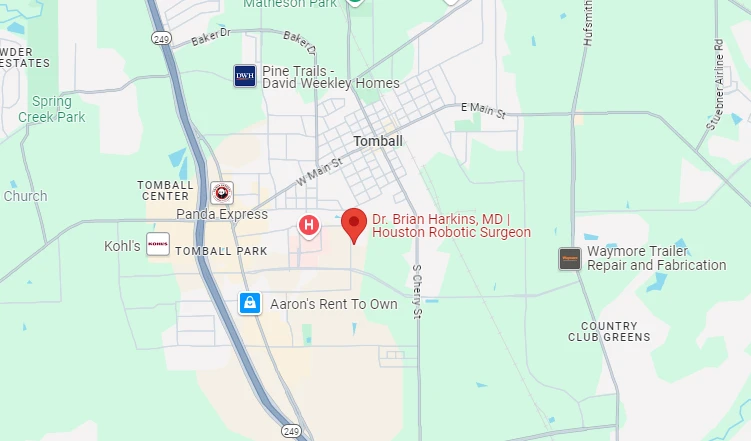
455 School St. Bldg. 1, Suite 10 Tomball, Texas 77375
Mon-Thu: 9:00 am – 5:00 pm | Fri: 9:00 am – 2:00 pm


Acute cholecystitis, an inflamed and often infected gallbladder usually caused by a stone blocking the cystic duct, is the most common reason for emergency gallbladder surgery. The standard treatment is early cholecystectomy (gallbladder removal), ideally within 72 hours of symptom onset, performed laparoscopically or robotically when possible. Early surgery is associated with shorter hospital stays and fewer complications than delayed surgery. Warning signs that warrant emergency evaluation include severe, persistent right upper abdominal pain, fever, and jaundice.
Most gallbladder problems are handled on a planned, elective basis, but sometimes the gallbladder becomes an emergency. When a gallstone lodges in the cystic duct and the gallbladder becomes acutely inflamed and infected, the situation of acute cholecystitis develops, and it often requires prompt surgical treatment. Knowing what it is, how it is treated, and when gallbladder symptoms cross from uncomfortable to urgent can help patients and families act appropriately.
This guide explains what causes gallbladder emergencies, how acute cholecystitis is diagnosed and treated, why early surgery is preferred, and what recovery looks like. For patients in the Tomball area, gallbladder emergencies are managed at HCA Houston Healthcare Tomball, where Dr. Brian Harkins performs robotic gallbladder surgery as part of his broader robotic surgery practice.

Acute cholecystitis is sudden inflammation of the gallbladder. In roughly 90 to 95 percent of cases, it is caused by a gallstone lodged in the cystic duct, the narrow channel that drains bile from the gallbladder. When the duct is blocked, bile backs up, the gallbladder wall becomes inflamed and swollen, and bacteria can proliferate, leading to infection. Unlike ordinary biliary colic, where pain comes and goes as a stone temporarily blocks and releases, acute cholecystitis involves sustained obstruction and does not resolve on its own.
The classic presentation is persistent, severe pain in the right upper abdomen, often radiating to the right shoulder blade, lasting more than several hours. It is commonly accompanied by fever, nausea, vomiting, and tenderness over the gallbladder. A physical exam finding called Murphy's sign, pain and a catch in the breath when the examiner presses on the right upper abdomen during a deep breath, is characteristic. A less common but more dangerous variant is acalculous cholecystitis, inflammation without stones, which occurs in critically ill patients. Untreated, acute cholecystitis can progress to gangrene, perforation, and abscess, which is why timely treatment matters.
Diagnosis usually begins in an emergency department with a history and physical examination that raise suspicion, followed by confirmatory testing:
The goal is to confirm acute cholecystitis, gauge its severity, and identify complications that would change the surgical plan, such as a stone that has migrated into the common bile duct.
For most patients with acute cholecystitis, the treatment is cholecystectomy, and timing matters. Current evidence and surgical guidelines favor early cholecystectomy, ideally within 72 hours of symptom onset, over the older strategy of cooling the inflammation with antibiotics for several weeks and operating later. Multiple randomized trials and meta-analyses show that early surgery is associated with shorter overall hospital stays, lower complication rates, and no increase in surgical difficulty or bile duct injury compared with delayed surgery. Delay also risks recurrent attacks in the waiting period.
In the emergency setting, the operation is still most often performed laparoscopically or robotically. While acute inflammation can make the dissection more challenging, minimally invasive cholecystectomy for acute cholecystitis is standard and successful in the large majority of cases. The robotic platform's magnified 3D view and wristed instruments can be particularly helpful in an inflamed, edematous field, where clearly identifying the critical structures is essential for a safe operation. In a minority of cases where inflammation is severe and anatomy is unclear, the surgeon may convert to open surgery, which is a sound safety decision rather than a complication.
Not every patient can safely undergo immediate surgery. Patients who are critically ill or have severe medical conditions that make anesthesia dangerous may need a temporizing measure first. The most common is a percutaneous cholecystostomy, a drain placed through the skin into the gallbladder under image guidance to relieve the obstruction and drain the infection. This stabilizes the patient and controls the acute infection, allowing definitive cholecystectomy later once the patient has recovered. Antibiotics are part of the treatment in nearly all cases, but they rarely provide a durable cure on their own because the obstructed, inflamed gallbladder remains. For most patients, antibiotics are a bridge to surgery rather than a substitute for it.
Emergency gallbladder surgery for acute cholecystitis differs from elective gallbladder removal in a few important ways, summarized below.
| Factor | Elective cholecystectomy | Emergency cholecystectomy |
| Gallbladder condition | Not acutely inflamed | Inflamed, swollen, sometimes adherent |
| Operative difficulty | Standard | More demanding; occasional conversion to open |
| Hospital stay | Often same-day discharge | Typically 1 to a few nights |
| Antibiotics | Usually not needed | IV antibiotics part of treatment |
| Recovery to full activity | ~2 weeks | ~3 to 4 weeks |
| Complication rate | Lower | Somewhat higher, reflecting acute illness |
Despite these differences, outcomes for early laparoscopic or robotic cholecystectomy in acute cholecystitis remain very good at experienced centers.

Recovery follows the same general arc as elective recovery, extended somewhat by the acute illness. Most patients stay one to a few nights, receiving IV antibiotics and pain control while the infection and surgical recovery are monitored, and are discharged once they are afebrile, tolerating a diet, and controlling pain with oral medication. At home, the first week is spent recovering energy, gradually advancing from a light low-fat diet toward normal eating, and taking short walks to rebuild stamina, with lifting limited in the early weeks.
Most patients return to desk work within one to two weeks and reach full activity by three to four weeks, somewhat longer than the typical elective recovery. As with elective gallbladder removal, some patients notice looser stools after fatty meals in the early weeks, which usually settles over time. Warning signs during recovery, including fever, worsening pain, jaundice, or persistent vomiting, warrant a prompt call to the surgical team at 281-351-5409.
Knowing when gallbladder symptoms cross from uncomfortable to urgent helps patients seek care at the right time. A typical gallbladder attack (biliary colic) causes right upper abdominal pain lasting 30 minutes to a few hours that then subsides, often after a fatty meal; this is a reason to see a surgeon electively but is usually not an emergency. Seek emergency evaluation for:
Jaundice combined with fever and pain can signal a serious bile duct infection (cholangitis) that is a true emergency. When in doubt, it is safer to be evaluated promptly.
Acute cholecystitis is sudden inflammation of the gallbladder, usually caused by a gallstone lodged in the cystic duct, which blocks bile drainage and leads to swelling, inflammation, and often infection. Unlike an ordinary gallbladder attack, it involves sustained obstruction with persistent severe pain and often fever, and does not resolve on its own. It usually requires prompt surgical treatment.
Yes. While most gallbladder surgery is elective, acute cholecystitis often requires urgent surgery. Other gallbladder emergencies include gallstone pancreatitis, common bile duct obstruction, and ascending cholangitis (a serious bile duct infection). These situations warrant prompt evaluation and often emergency or urgent cholecystectomy.
Current evidence and guidelines favor early cholecystectomy, ideally within 72 hours of symptom onset. Randomized trials and meta-analyses show early surgery is associated with shorter overall hospital stays and fewer complications than treating with antibiotics for weeks and operating later, without increasing surgical difficulty or bile duct injury risk.
Antibiotics are part of the treatment for nearly all cases, but they rarely provide a durable cure because the obstructed, inflamed gallbladder remains. For patients too ill for immediate surgery, a percutaneous cholecystostomy drain can control the infection and stabilize the patient, allowing definitive cholecystectomy later. For most patients, surgery is the definitive treatment and antibiotics are a bridge to it.
Emergency cholecystectomy is most often performed laparoscopically or robotically, even with inflammation present. The robotic platform's magnified 3D view and wristed instruments can be particularly helpful in an inflamed field. In a minority of cases where inflammation is severe and anatomy is unclear, the surgeon may convert to open surgery, which is a sound safety decision rather than a complication.
Recovery is modestly longer than elective surgery. The hospital stay is typically one to a few nights (versus same-day for many elective cases), reflecting the acute illness and need for IV antibiotics. Most patients return to desk work within one to two weeks and reach full activity by three to four weeks. Some notice looser stools after fatty meals early on, which usually settles.
Acalculous cholecystitis is gallbladder inflammation without gallstones, occurring most often in critically ill or hospitalized patients. It is less common than stone-related cholecystitis but carries higher risk. Treatment depends on the patient's overall condition and may involve a percutaneous drain, cholecystectomy, or both, coordinated with care of the underlying illness.
Untreated acute cholecystitis can progress to gangrene of the gallbladder wall, perforation, abscess formation, and spreading infection. These complications increase the risk of the operation and the overall danger to the patient, which is a central reason timely treatment is recommended. Early evaluation and surgery when indicated substantially reduce these risks.
Seek emergency evaluation for severe, persistent right upper abdominal pain lasting more than several hours, fever or chills, yellowing of the skin or eyes (jaundice), persistent vomiting, or a rigid, exquisitely tender abdomen. Jaundice combined with fever and pain can signal a serious bile duct infection (cholangitis) that is a true emergency. When in doubt, it is safer to be evaluated promptly.
Yes. Once you recover from the acute illness and the operation, life without a gallbladder is generally normal. The liver continues to produce bile, which flows continuously into the intestine. Most patients return to a normal diet and activity, with some noticing looser stools after fatty meals early on that usually settle over weeks to months. Outcomes for early emergency cholecystectomy at experienced centers are very good.
Acute cholecystitis turns the gallbladder from a manageable elective problem into an urgent one, but it is a well-understood emergency with a clear, effective treatment. Early cholecystectomy, most often performed minimally invasively, resolves the infection, removes the source, and gets patients back to normal life. Recognizing the warning signs (severe persistent pain, fever, jaundice) and seeking prompt care is the most important thing a patient or family can do.
If you are dealing with gallbladder symptoms or want to understand your options, schedule a consultation with Dr. Brian Harkins, a robotic surgeon in Tomball, by calling 281-351-5409 or contact us online. For a suspected gallbladder emergency with severe pain, fever, or jaundice, seek immediate evaluation at an emergency department. Emergency and elective gallbladder surgeries are performed at HCA Houston Healthcare Tomball's Center of Excellence in Robotic Surgery.
Sarah Chen is a healthcare communications specialist with 12+ years of experience in clinical environments. She writes about robotic and minimally invasive surgery for patients and families navigating surgical decisions. Her work is clinically reviewed by Dr. Brian Harkins, MD, FACS, ensuring medical accuracy and evidence-based information.
Based in: Tomball, TX | Serves: Greater Houston Area
This information is educational and is not a substitute for professional medical advice or emergency care. If you have severe abdominal pain, fever, jaundice, or other concerning symptoms, seek immediate medical evaluation. Treatment for acute cholecystitis is individualized based on severity, overall health, and other factors. Dr. Brian Harkins and the emergency and surgical teams determine the appropriate treatment for each patient. Statistics cited reflect published research on aggregate patient populations, and individual outcomes vary. This content has been reviewed for medical accuracy by Dr. Brian Harkins, MD, FACS.

Dr. Brian Harkins is a renowned surgeon specializing in advanced, minimally invasive, and robotic surgical techniques. With a dedication to innovation and personalized patient care, he has transformed countless lives by delivering exceptional outcomes.
I want a website like this, where do i start?