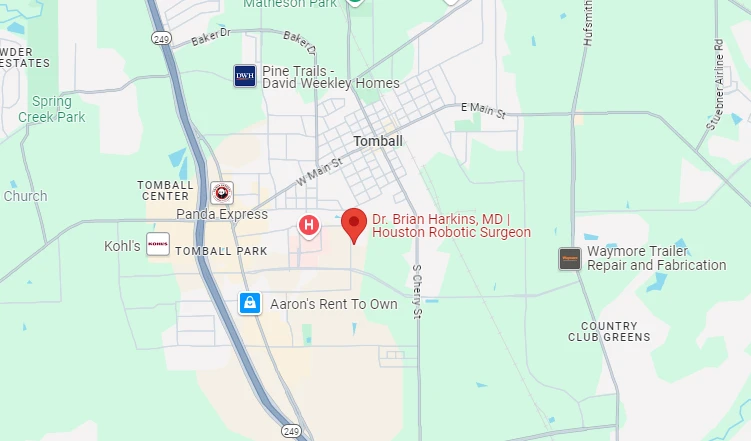
455 School St. Bldg. 1, Suite 10 Tomball, Texas 77375
Mon-Thu: 9:00 am – 5:00 pm | Fri: 9:00 am – 2:00 pm

Inguinal hernia surgery with Dr. Brian Harkins in Tomball, TX is an outpatient robotic procedure that typically takes one to two hours, sends you home the same day, and has most patients back to light activity within three to five days. Knowing exactly what to expect — from check-in to discharge — is the single best thing you can do to reduce anxiety and set yourself up for a smooth recovery.
The groin bulge has been bothering you for months. Your doctor referred you to a surgeon. You've made the appointment with Dr. Brian Harkins and the surgery is scheduled. Now comes the part most patients struggle with: the uncertainty of not knowing what the day actually looks like.
This article closes that gap. Here's an honest, step-by-step picture of inguinal hernia surgery day at Dr. Harkins' practice — from the moment you arrive at HCA Houston Healthcare Tomball to the moment you walk out.

An inguinal hernia occurs when tissue — usually part of the intestine or fatty tissue — pushes through a weak spot in the lower abdominal wall into the inguinal canal, which runs through the groin. Inguinal hernias are the most common type of hernia, accounting for the majority of all hernia repairs performed annually, and they're significantly more prevalent in men due to anatomical differences in the groin.
Inguinal hernias don't heal on their own. And they tend to progress over time — a small, manageable bulge can gradually become a larger defect that's harder to repair. The risks of waiting include:
| Hernia Stage | Characteristics | Surgical Approach |
| Small, easily reducible | Minor bulge, minimal symptoms | Elective robotic repair |
| Moderate, symptomatic | Regular pain, limits activity | Elective — schedule promptly |
| Large or non-reducible | Difficult to push back, significant discomfort | Semi-urgent repair recommended |
| Incarcerated | Cannot be reduced, persistent pain | Urgent surgical evaluation |
| Strangulated | Severe pain, nausea, fever | Emergency surgery |
Dr. Harkins uses either the TAPP (transabdominal preperitoneal) or TEP (totally extraperitoneal) robotic technique — the choice depends on your anatomy, your history of prior surgeries, and whether one or both sides are affected. He'll explain which approach is right for you at your consultation.
Your pre-operative preparation sets the foundation for both a safe operation and a smooth recovery. Dr. Harkins' team follows ERAS (Enhanced Recovery After Surgery) protocols that begin before you ever enter the operating room — including specific nutrition timing, medication management, and arrival instructions. The ERAS Society describes ERAS as a treatment program built from the best available medical science that actively involves patients in their own recovery from the start.
You'll receive detailed written instructions from the practice before surgery. Here's what the standard preparation looks like:
| Preparation Task | Timing | Notes |
| Stop blood thinners | Per doctor's instruction (usually 5–7 days before) | Confirm with care team |
| Carbohydrate loading beverage | Night before + morning of | Part of ERAS protocol |
| NPO (no food or water) | Midnight before surgery | Strict — no exceptions |
| Antibacterial shower | Night before and morning of | Reduces infection risk |
| Arrange transportation | Before surgery day | Required — no driving post-anesthesia |
| Arrive at hospital | 1.5–2 hours before scheduled time | Allows preparation time |
On surgery day, you'll move through three distinct phases: pre-operative preparation (check-in through anesthesia), the procedure itself, and recovery room before discharge. Most patients are home within four to six hours of arriving at the hospital. Here's what each phase looks like in real time.
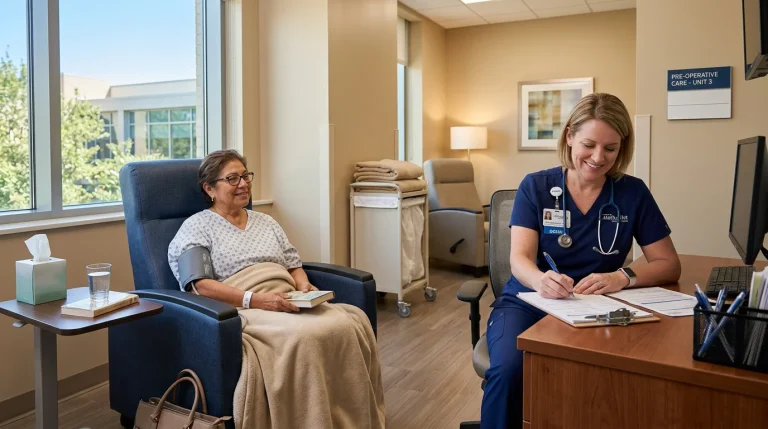
You arrive, check in, and are taken to the pre-operative area. Here, the nursing team:
Dr. Harkins comes to see you in the pre-op area before surgery. He reviews what he's going to do, confirms the side and location, marks the surgical site, and gives you the opportunity to ask any last-minute questions. Patients consistently describe this as reassuring — you know exactly what's happening before you're ever wheeled in.
The anesthesiologist also meets with you to review your anesthesia plan. For inguinal hernia surgery, general anesthesia is standard. A nerve block at the inguinal region may also be administered as part of multi-modal pain management.
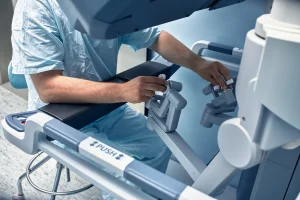
You're taken to the operating room and positioned for surgery. After anesthesia is administered, Dr. Harkins makes three to four small incisions — none longer than a centimeter. Trocars are placed, the Da Vinci Xi system is docked, and the repair begins.
Using 3D visualization and wristed robotic instruments, Dr. Harkins:
You won't feel or remember any of this. When you wake up in recovery, it's done.
You'll spend time in the recovery area while the anesthesia clears. The nursing team monitors your vital signs, manages any discomfort, and encourages you to take small sips of liquid when ready. Most patients feel surprisingly clear-headed within an hour.
You'll be discharged with:

The first week after inguinal hernia surgery is one of progressive improvement each day. Day one is the hardest — soreness, fatigue, and limited mobility are normal. By day five, most patients with desk jobs are back to light activity and feel like themselves again. Here's what to realistically expect.
Day 1 (Surgery Day): Rest completely. Sleep when you need to. Eat light — soup, crackers, soft foods. Take pain medication as prescribed (or as directed for over-the-counter options). Keep the incision sites dry.
Day 2–3: Soreness peaks around day two for many patients, then begins to ease. Short walks around the house are encouraged — they reduce the risk of blood clots and promote circulation. The referred shoulder discomfort some patients feel (from the CO2 gas used during surgery) typically resolves by day two or three. Low-pressure insufflation in Dr. Harkins' approach minimizes this significantly compared to standard technique.
Day 4–5: Most patients feel significantly better. Desk work, light computer use, and short car rides as a passenger are generally manageable. Many patients describe day five as the turning point.
Day 7: Follow-up appointment. Dr. Harkins checks the incisions, confirms the repair is healing normally, and begins clearing activity restrictions. Light walking for exercise is typically approved.
Week 2–3: Physical activity expands. Lifting restrictions begin to loosen. Most patients are back to their normal daily routine without significant limitations.
Contact the practice immediately if you experience fever above 101°F, increasing redness or discharge at incision sites, severe worsening pain, or inability to urinate — these warrant prompt evaluation.
Inguinal hernia surgery with Dr. Brian Harkins is a carefully planned, well-executed outpatient procedure designed to get you in, repaired, and back home the same day with a clear recovery path in front of you. The uncertainty most patients feel before surgery dissolves quickly once they understand what each hour of the day actually looks like.
If your inguinal hernia surgery is already scheduled, you're in good hands. If you're still deciding, contact Dr. Harkins' office to schedule a consultation — the team will answer every question you have and make sure you walk into surgery day feeling prepared, not anxious.
Yes, robotic inguinal hernia surgery requires general anesthesia. A nerve block may also be administered to minimize post-operative groin pain as part of Dr. Harkins' multi-modal pain management protocol.
No food or water after midnight (or as specifically instructed). An exception is the ERAS carbohydrate loading beverage, which may be permitted up to a specific time before surgery — your pre-op instructions will specify exactly.
You must have a responsible adult drive you home and remain with you the first night. You cannot drive yourself or take a rideshare alone — this is a non-negotiable safety requirement after general anesthesia.
Most patients describe post-operative discomfort as manageable — notably less than they anticipated. Dr. Harkins' multi-modal pain approach means opioids are typically not required. Over-the-counter pain medications are often sufficient by day two or three.
Most patients can shower 24–48 hours after surgery. You'll be given specific incision care instructions including when to keep them dry and when showering is safe. Avoid submerging in baths, pools, or hot tubs until cleared by Dr. Harkins.
Many patients find sleeping on their back easiest in the first few days. Some find a pillow under the knees more comfortable. Avoid sleeping positions that put pressure on the repair site until your one-week follow-up.
Contact the practice immediately for: fever above 101°F, increasing pain that isn't responding to medication, redness or discharge at incision sites, scrotal swelling or bruising that is rapidly worsening, or difficulty urinating. These warrant prompt evaluation.
Your follow-up is typically scheduled for one week after surgery. At this appointment, Dr. Harkins checks the incisions, reviews your recovery progress, and begins lifting activity restrictions as appropriate.
Sexual activity is typically restricted for two to three weeks post-surgery to avoid straining the repair. Dr. Harkins will give you a specific timeline at your one-week follow-up based on how your recovery is progressing.
Lifting restrictions apply immediately after surgery — typically no lifting over ten pounds for the first two weeks. If you have young children or pets that need to be lifted, arrange for help during the first two weeks of recovery.

Dr. Brian Harkins is a renowned surgeon specializing in advanced, minimally invasive, and robotic surgical techniques. With a dedication to innovation and personalized patient care, he has transformed countless lives by delivering exceptional outcomes.
I want a website like this, where do i start?