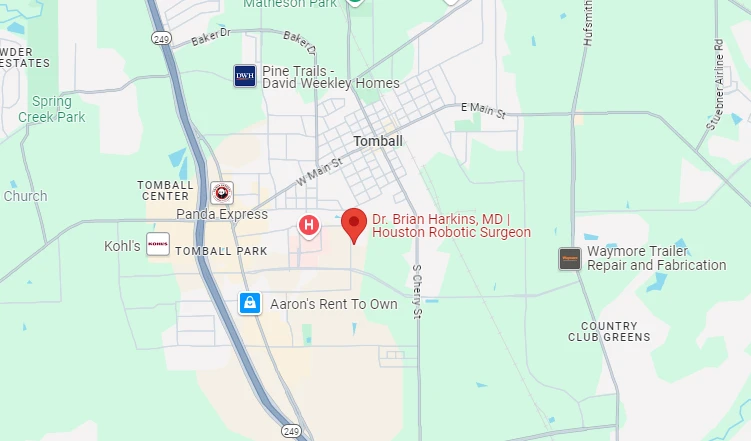
455 School St. Bldg. 1, Suite 10 Tomball, Texas 77375
Mon-Thu: 9:00 am – 5:00 pm | Fri: 9:00 am – 2:00 pm

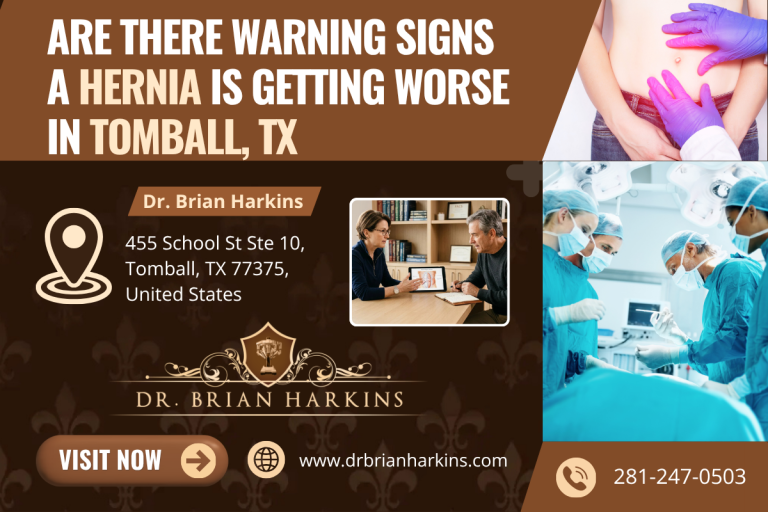
The most urgent warning signs are a bulge that suddenly will not push back in, severe or rapidly worsening pain, a bulge turning red or purple, fever, vomiting, or inability to pass gas. These can signal strangulation, a life-threatening emergency that needs immediate care.
If you have been living with a hernia, you might wonder whether the discomfort you are feeling is normal or a sign that something more serious is happening. Many people struggle to tell the difference between everyday hernia symptoms and warning signs that require immediate medical attention, like when the hernia becomes trapped or loses blood supply.
Understanding these red flags can help you know when to schedule an appointment with a surgeon versus when you need to head to the emergency room right away. In this article, you will learn the specific warning signs that indicate your hernia is getting worse and what steps to take to protect your health.
Hernias do not always stay the same. What starts as a small, painless bulge can gradually worsen over time. Understanding how hernias progress helps you recognize when a manageable condition is becoming dangerous, and the stages follow a predictable pattern.
Most hernias begin as reducible, meaning you can gently push the protruding tissue back into place. As hernias worsen, they may become incarcerated, where the tissue gets trapped and will not go back in. The most dangerous stage is strangulation, when blood supply gets cut off to the trapped tissue, creating a life-threatening emergency. The table below summarizes how the stages differ in urgency.
| Stage | What It Means | Urgency |
| Reducible | Bulge can be gently pushed back in | Monitor, plan repair |
| Incarcerated | Tissue trapped, will not reduce | Prompt care within 24 hours |
| Strangulated | Blood supply cut off to trapped tissue | Immediate emergency care |
Recognizing which stage you are in is the single most useful thing you can do, because the right response changes completely from one stage to the next.
Some symptoms mean the situation has already crossed into emergency territory. These signs point to tissue losing its blood supply, and waiting can lead to serious complications including bowel necrosis.
A strangulated hernia is a medical emergency requiring immediate care. Research shows that certain symptoms indicate your hernia has progressed to a dangerous stage:
These symptoms indicate that tissue trapped in the hernia is losing its blood supply. Without emergency surgery, the tissue can die, leading to serious complications.
If you have been able to gently push your hernia back into place but suddenly cannot anymore, this is a significant warning sign. When hernia contents become incarcerated, they create a permanent bulge that will not reduce. This progression from reducible to irreducible does not always mean immediate danger, but it requires prompt medical evaluation, because incarceration can quickly progress to strangulation.
Understanding the distinction between these two conditions helps you gauge urgency. Incarceration means the tissue is stuck but still has some blood flow, while strangulated hernia progression means blood supply is cut off completely. Incarcerated hernias need prompt attention within 24 hours, while strangulated hernias require immediate emergency care.
Certain signs suggest strangulation rather than simple incarceration and should prompt an immediate trip to the emergency room:
Studies indicate that the risk of strangulation doubles every 24 hours after symptoms begin, making timing critical.
Not every warning sign is dramatic. Some develop gradually over days or weeks and signal that a hernia is progressing toward the point where repair becomes urgent. Catching these early gives you the option of planned surgery rather than emergency surgery.
Pain that gradually increases over days or weeks signals your hernia is progressing. While some discomfort is common with hernias, pain that interferes with daily activities or wakes you at night warrants evaluation by a surgeon. Sharp, stabbing pain or pain that suddenly intensifies is particularly concerning, since this often indicates tissue is becoming compressed or blood flow is being compromised.
A hernia that is noticeably larger than it was weeks or months ago indicates progression. As the opening in your abdominal wall widens, more tissue can push through, which makes the hernia more likely to become incarcerated. Some hernias remain stable for years, but any significant size increase should prompt a consultation about robotic hernia repair options before complications develop.
New or worsening digestive problems can signal hernia complications. Symptoms that may indicate bowel tissue is involved in the hernia include:
These symptoms become especially concerning when combined with other warning signs like pain or an irreducible bulge.
The timeline for hernia progression varies significantly. Research shows that approximately 5% of patients with groin hernias will require emergency surgery within 48 months of diagnosis, with strangulation risk around 0.25% in monitored cases. Many of these begin as common inguinal hernias that remain stable for long periods before changing.
However, once acute symptoms begin, the situation can deteriorate rapidly. An irreducible hernia without signs of strangulation may allow 24 hours for scheduled repair, but the presence of fever, skin discoloration, or severe pain necessitates immediate emergency room evaluation. The doubling of strangulation risk every 24 hours after symptom onset creates urgency, which is why recognizing warning signs early and acting quickly is crucial.
Practical examples show how quickly a manageable hernia can turn into an emergency, and how acting on warning signs changes the outcome.
A 55-year-old construction worker in Tomball had lived with a groin bulge for over a year. After lifting heavy equipment one afternoon, he noticed the bulge had become painful and would not push back in. By evening, he felt nauseated and saw the bulge had turned reddish-purple. Recognizing these as potential signs of strangulation, he went directly to the emergency room rather than waiting for his scheduled appointment the following week. Medical evaluation confirmed early strangulation, and emergency surgery prevented bowel necrosis.
A 72-year-old woman with a small umbilical hernia ignored increasing abdominal pain and constipation for three days, assuming it was indigestion. When she developed fever and vomiting, her family brought her to the hospital. Imaging revealed a strangulated hernia requiring emergency surgery with bowel resection. The delay in seeking care meant that compromised bowel tissue had to be removed. Earlier intervention could have prevented this outcome.
Knowing where to go, and how fast, is half the battle. The right response depends entirely on which symptoms you are seeing. The table below sorts the most common situations.
| Go to the ER now | Call your doctor (non-emergency) |
| Hernia suddenly will not push back in | Gradual increase in hernia size |
| Severe or rapidly worsening pain | New or increasing discomfort |
| Bulge turning red, purple, or dark | Hernia more noticeable with activity |
| Fever with hernia symptoms | Digestive changes that persist |
| Vomiting or inability to pass gas |
Do not wait if you experience a hernia that suddenly will not push back in, severe or rapidly worsening pain, the bulge changing color to red or purple, fever combined with hernia symptoms, vomiting, or any combination of the strangulation symptoms listed earlier. Healthcare guidelines are clear: if you cannot push the hernia back in, it is time to get to the emergency room.
Do not attempt to forcefully push an irreducible hernia back in, especially if you have signs of strangulation. Forcing reduction when strangulation is present can push compromised tissue back into the abdomen, delaying necessary surgery until more severe complications develop. Reduction should only be attempted within 24 hours of symptoms beginning and only when there are no signs of strangulation.
When hernias are repaired before they become emergencies, surgeons have multiple approaches available, and outcomes are markedly better. The contrast between planned and emergency repair is the strongest argument for acting early.
Options include traditional open repair, minimally invasive laparoscopic techniques, and robot assisted surgery. The choice depends on the type of hernia, its size and location, your overall health, and your surgeon's expertise. Minimally invasive approaches typically offer benefits like smaller incisions, less pain, and faster recovery, while robotic surgery provides enhanced precision and visualization for complex repairs.
Emergency hernia repairs are different. Emergency repairs typically require open approaches rather than minimally invasive options because the surgeon needs immediate, direct access to assess tissue damage. Research consistently shows that emergency hernia repairs carry substantially higher risks:
These statistics highlight why recognizing warning signs and seeking timely treatment before an emergency develops is so important.
While some hernias remain stable for extended periods, there is no way to predict which ones will suddenly worsen. The significant difference in outcomes between elective and emergency repair makes a strong case for proactive evaluation. If you have a known hernia, regular monitoring and open communication with Dr. Brian Harkins helps ensure you are making informed decisions about timing for repair.
If you notice any of the warning signs discussed here, do not adopt a wait-and-see approach. Your hernia will not heal on its own, and the risks of waiting often outweigh the risks of planned surgical repair. Understanding these warning signs empowers you to take action before a manageable condition becomes a medical emergency.
A bulge that turns red, purple, or dark, combined with severe pain, fever, or vomiting, signals strangulation. Blood supply to the trapped tissue is cut off, and this requires immediate emergency care.
It means the hernia has likely become incarcerated, with tissue trapped in place. This needs prompt evaluation within 24 hours because it can progress quickly to strangulation.
Once acute symptoms start, deterioration can be rapid. The risk of strangulation roughly doubles every 24 hours after symptoms begin, so timely evaluation matters greatly.
Yes. Pain that gradually increases, interferes with daily activities, or wakes you at night warrants evaluation. Sudden sharp pain is especially concerning and may indicate compromised blood flow.
No. Hernias do not heal on their own and only worsen over time. Surgical repair is the definitive treatment, and planned repair carries far lower risk than emergency surgery.
Only within 24 hours of symptoms and only with no signs of strangulation. Never force an irreducible hernia, since that can push compromised tissue back into the abdomen and delay needed surgery.
Persistent constipation, difficulty passing gas, bloating, or changes in bowel habits may mean bowel tissue is involved. These are especially concerning alongside pain or an irreducible bulge.
Emergency repairs usually require open access, carry 2 to 3 times higher mortality, longer hospital stays, more complications, higher infection risk, and may require bowel resection if tissue has died.
Options include open repair, minimally invasive laparoscopic techniques, and robotic-assisted surgery. The right choice depends on hernia type, size, location, your health, and your surgeon's expertise.
Schedule a prompt appointment for a growing bulge, new or increasing discomfort, a hernia more noticeable with activity, or persistent digestive changes. These indicate progression that may need repair soon.
A hernia rarely improves on its own, and the line between a manageable bulge and a medical emergency can be crossed quickly. The gradual signs, increasing pain, a growing bulge, and new digestive changes, are your cue to schedule an evaluation. The acute signs, a bulge that will not reduce, discoloration, fever, and vomiting, are your cue to go straight to the emergency room.
Because outcomes for planned repair are far better than for emergency surgery, acting early is almost always the safer path. Knowing these warning signs puts you in control of the timing rather than leaving it to chance.
If you notice any signs your hernia may be getting worse, do not wait for it to become an emergency. Dr. Brian Harkins in Tomball specializes in hernia care and can evaluate your condition before complications develop.


Dr. Brian Harkins is a renowned surgeon specializing in advanced, minimally invasive, and robotic surgical techniques. With a dedication to innovation and personalized patient care, he has transformed countless lives by delivering exceptional outcomes.
I want a website like this, where do i start?