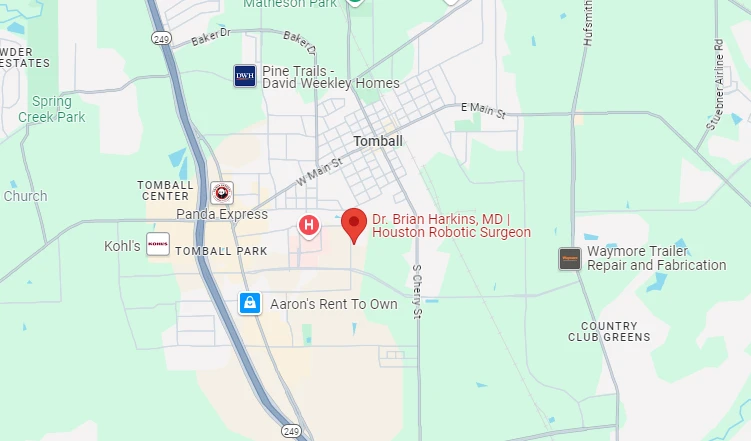
455 School St. Suite 10 Tomball, Texas 77375
Mon-Thu: 9:00 am – 5:00 pm | Fri: 9:00 am – 2:00 pm


It's usually better to keep your gallbladder when gallstones cause no symptoms, because most silent stones never do. It's usually better to have it removed when stones cause repeated pain attacks or complications such as cholecystitis or pancreatitis, because laparoscopic cholecystectomy is the standard treatment for symptomatic gallstones. Your surgeon decides which situation applies to you.
Hearing that you have gallstones often comes with a quick suggestion to "just take the gallbladder out." For many people in Tomball and across Northwest Houston, that advice raises a fair question. If the organ is doing no harm, why remove it, and if it is causing pain, what do you actually give up by letting it go?
The answer depends far less on the gallbladder itself than on what your gallstones are doing. Guidelines draw a clear line between stones that stay quiet and stones that cause attacks or complications, and a large recent trial has added useful detail about the patients who sit somewhere in between.
In this guide, you'll learn when keeping your gallbladder is usually the better choice, when removal is usually recommended, what the evidence says about mild or occasional symptoms, and what each path commits you to over the months and years that follow.
For a large group of people, the right answer is simply to leave the gallbladder where it is. Gallstones are common, and most of them never cause a problem, which is why finding them on a scan is not by itself a reason for surgery.
Many gallstones turn up on an ultrasound or CT scan done for something else entirely. A StatPearls review on the NCBI Bookshelf notes that 6 percent of men and 9 percent of women in the United States have gallstones, most of which cause no symptoms, and that stones in a normal gallbladder and bile duct "do not need treatment unless they develop symptoms."
The same review puts the long-term risk in perspective: about 20 percent of silent gallstones go on to cause symptoms over 15 years of follow-up, and biliary pain develops in roughly 1 to 2 percent of these people each year. For most, that means keeping the gallbladder carries a low and slowly accumulating risk rather than an urgent one.
Keeping your gallbladder with silent stones usually means knowing the warning signs and acting on them, rather than regular testing or treatment. The NIDDK guidance on treating gallstones puts it plainly: if your gallstones are not causing symptoms, you probably don't need treatment.
In practice, watchful waiting means learning what a gallbladder attack feels like. NIDDK describes it as pain in the upper right abdomen, sometimes lasting several hours, that often follows a heavy meal and usually comes in the evening or during the night. It also means knowing that abdominal pain lasting several hours, fever or chills, or yellowing of the skin or eyes calls for prompt medical care rather than another wait.
Some people ask whether medicine can dissolve the stones and let them keep the gallbladder for good. NIDDK notes that ursodiol and chenodiol work best on small cholesterol stones and may need months or years of treatment, and that gallstones can return even with treatment, so this route suits a limited group of patients rather than most people with symptoms.
Once gallstones start causing trouble, the balance usually shifts toward surgery. Gallbladder removal, called cholecystectomy, is one of the most common operations performed on adults in the United States. For symptomatic gallstones, the laparoscopic approach is the standard treatment that a general or robotic surgeon will usually discuss first.
A first gallbladder attack is often not the last. A 2018 review of gallstone management in a peer-reviewed medical journal reported that people who have had biliary pain have a 69 percent chance of developing recurrent pain within two years, which is why surgeons usually recommend removal once attacks begin.
Some gallstone problems make removal clearly the better choice, because leaving the gallbladder in place invites the same problem to return. StatPearls lists the complications of untreated gallstones as cholecystitis, cholangitis, choledocholithiasis and gallstone pancreatitis.
Gallstones are not the only reason to remove a gallbladder. The StatPearls review of laparoscopic cholecystectomy also lists biliary dyskinesia, where the gallbladder empties poorly and causes typical pain without stones, acalculous cholecystitis, and gallbladder polyps or masses among the indications for surgery.
The table below brings these situations together, so you can see where your own diagnosis usually falls.
| Situation | Usual recommendation | Why |
|---|---|---|
| Silent gallstones found on a scan | Keep the gallbladder and watch for symptoms | Most never cause symptoms; about 1 to 2 percent a year develop pain |
| A single mild episode of possible biliary pain | Discuss both paths with a surgeon | Symptoms may recur, but some patients do well with observation |
| Repeated biliary attacks | Removal is usually recommended | Recurrent pain is likely, and laparoscopic cholecystectomy is the standard treatment |
| Cholecystitis | Removal is usually recommended | The inflamed gallbladder is the source of the problem |
| Stone in the bile duct or gallstone pancreatitis | Removal is usually recommended, often after the stone is cleared | Leaving the gallbladder allows new stones to cause the same problem |
| Biliary dyskinesia, polyps or masses | Removal is often recommended after evaluation | These are listed indications for cholecystectomy |
The hardest decision sits in the middle, for people who have had typical gallstone pain but no complications. A large UK trial called C-GALL, published in The BMJ in 2023, randomly assigned 434 adults with uncomplicated symptomatic gallstones to either surgery or conservative management and followed them for up to two years.
The results suggest that watchful waiting is a reasonable option for some of these patients, although it does not suit everyone. Pain scores and general quality of life were similar between the two groups. Gallstone-specific symptoms at 18 months were somewhat worse in the group that did not have surgery at first, and a quarter of that group had gone on to surgery by then.
| C-GALL measure at 18 months | Conservative management group | Cholecystectomy group |
|---|---|---|
| Had gallbladder surgery | 25 percent | 67 percent |
| Pain and general quality of life | Similar between groups | Similar between groups |
| Gallstone-specific symptom score | Somewhat worse | Somewhat better |
| Any complication recorded | 15 percent | 20 percent (difference not statistically significant) |
For patients in Tomball and the greater Houston area, the practical message is that occasional, uncomplicated symptoms leave room for a real conversation with your surgeon about timing, while repeated attacks or any complication usually point toward removal.
Neither choice is free of trade-offs, and knowing what each one asks of you makes the decision easier to discuss. Keeping the gallbladder asks for attention to symptoms over the years, while removal asks for a short recovery and a small, real surgical risk.
Most people live normally without a gallbladder, because bile simply flows from the liver into the small intestine instead of being stored first. NIDDK notes that a small number of people have softer and more frequent stools afterward, and the StatPearls review reports bile duct injury in about 0.6 percent of laparoscopic cholecystectomies, which is why surgeon experience and careful technique matter.
| Consideration | Keeping your gallbladder | Having it removed |
|---|---|---|
| Day-to-day life | No change while stones stay silent | Most people eat and live normally after recovery |
| Main risk | Future attacks or complications such as cholecystitis or pancreatitis | Surgical risks, including bile duct injury in about 0.6 percent |
| Digestion | Unchanged unless stones cause symptoms | A small number have softer, more frequent stools |
| Recovery time | None | Most people return to light activity within 2 to 3 weeks after minimally invasive surgery, compared with 6 to 8 weeks after open surgery |
| What to watch for | Upper right abdominal pain lasting hours, fever or chills, yellowing skin or eyes | Fever, worsening pain, yellowing skin or eyes, gray stools |
| Chance of the same problem returning | Stones remain and can cause symptoms later | Gallbladder attacks stop, though some people have other digestive symptoms |
The decision to keep or remove a gallbladder is a conversation, and it starts with an accurate picture of your symptoms and your imaging. Dr. Brian Harkins sees patients from Tomball, Northwest Houston and the greater Houston area, and he has practiced in the Northwest Houston area since 1997.
Evaluation of gallstones and gallbladder conditions: Gallstones and cholecystitis are among the gallbladder conditions he treats, and the visit begins with your history, your scans and the pattern of your symptoms. Silent stones found by accident, a single episode and repeated attacks each lead to a different discussion.
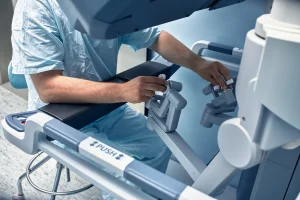
Robotic gallbladder surgery when removal makes sense: When surgery is the better choice, Dr. Harkins performs robotic gallbladder removal through a few small incisions. He operates the da Vinci system from a console with a magnified 3D view and instruments that filter hand tremor, and the system never operates on its own.
An honest view of the options: For an uncomplicated gallbladder in a healthy patient, robotic and laparoscopic surgery are both excellent options, and robotic surgery is not right for every patient. Talking with a surgeon who also explains when watchful waiting is reasonable helps you make the decision on your own terms.
Hospital and credentials: Dr. Harkins is a board-certified general surgeon who serves as Robotics Committee Chairman at HCA Houston Healthcare Tomball, a Center of Excellence in Robotic Surgery.
Often, yes. If your gallstones cause no symptoms, guidelines generally recommend leaving the gallbladder in place and watching for symptoms, because most silent stones never go on to cause problems.
StatPearls reports that about 20 percent of silent gallstones cause symptoms over 15 years, with biliary pain developing in roughly 1 to 2 percent of these people each year. The risk is real but builds slowly.
It often does. One review reported a 69 percent chance of recurrent pain within two years after a first episode of biliary pain, which is why removal is usually recommended once attacks begin.
For some people with a single uncomplicated episode, waiting is reasonable after a discussion with a surgeon. Pain lasting several hours, fever or chills, or yellow skin or eyes need prompt care rather than more waiting.
Sometimes. Ursodiol and chenodiol work best on small cholesterol stones and may take months or years, and gallstones can return afterward, so medicine suits only a limited group of patients.
Not in the way most people fear. Without a gallbladder, bile flows directly from the liver into the small intestine, and most people digest food normally, although a small number have softer, more frequent stools.
Like any surgery, it carries risks. The most serious is bile duct injury, reported in about 0.6 percent of laparoscopic cholecystectomies, along with the usual risks of bleeding, infection and anesthesia.
Cholecystitis, a stone in the common bile duct, cholangitis and gallstone pancreatitis usually point toward removal, because leaving the gallbladder allows new stones to cause the same problem again.
Most people return to light activity within 2 to 3 weeks after minimally invasive surgery, compared with 6 to 8 weeks after open surgery. Full recovery takes longer, and your surgeon sets your specific limits.
You and your surgeon decide together. Your symptoms, imaging, any complications and your own priorities all shape the recommendation, and a consultation is where that picture comes together.
Whether it's better to keep your gallbladder or have it removed comes down to what your gallstones are doing rather than the fact that you have them. Silent stones are usually best left alone, repeated attacks and complications usually point toward removal, and the evidence from the C-GALL trial shows that mild, uncomplicated symptoms leave room for a considered choice about timing.
For patients in Tomball and across Northwest Houston, the most useful next step is a clear diagnosis and an honest discussion of both paths, including what recovery and life without a gallbladder look like. When you're ready to talk it through, you can schedule a consultation to weigh keeping or removing your gallbladder.
Talk through keeping or removing your gallbladder.
Call 281-247-0503 to discuss your gallstones.
This information is educational and is not a substitute for professional medical advice. Every patient is different. Dr. Brian Harkins will discuss whether robotic-assisted surgery is right for your specific situation based on your anatomy, health, and goals.


Dr. Brian Harkins is a renowned surgeon specializing in advanced, minimally invasive, and robotic surgical techniques. With a dedication to innovation and personalized patient care, he has transformed countless lives by delivering exceptional outcomes.
I want a website like this, where do i start?