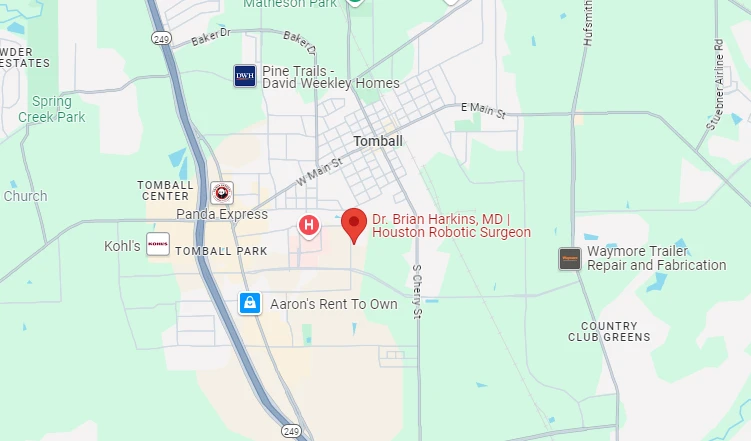
455 School St. Bldg. 1, Suite 10 Tomball, Texas 77375
Mon-Thu: 9:00 am – 5:00 pm | Fri: 9:00 am – 2:00 pm

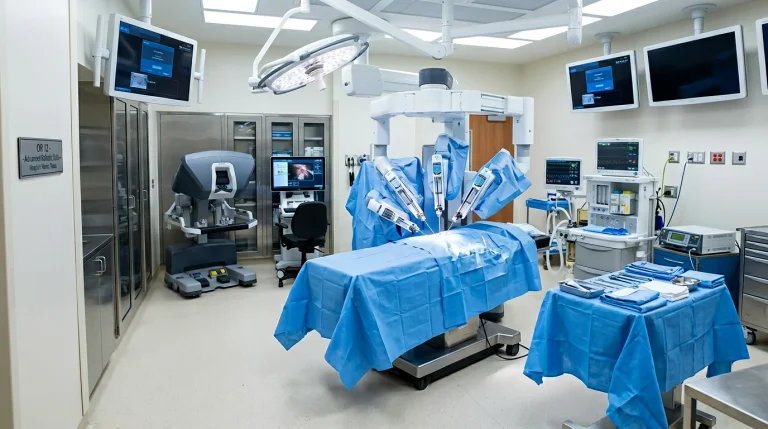
Robotic gallbladder surgery in Tomball, TX with Dr. Brian Harkins removes the gallbladder through tiny incisions using the Da Vinci Xi system, delivering same-day discharge, minimal post-operative pain, and recovery that surprises most patients with how manageable it is. Whether you're dealing with recurring gallbladder attacks, an acute cholecystitis diagnosis, or a gallbladder that's been causing problems for months, this is the most advanced and least disruptive surgical solution available in northwest Houston.
When your gallbladder starts causing trouble, the decision about surgery often feels bigger than it needs to be. Robotic gallbladder surgery — technically called a robotic cholecystectomy — is one of the most common procedures Dr. Harkins performs, and for most patients, it's an outpatient experience from start to finish. You come in, the gallbladder comes out, and you go home the same day.
The complexity that patients fear is mostly associated with open surgery from a previous era. With the Da Vinci Xi robotic system and Dr. Harkins' ERAS-integrated approach, gallbladder removal has become a predictable, well-tolerated procedure with an excellent safety profile — even for urgent and emergency cases.

A robotic cholecystectomy is the surgical removal of the gallbladder using the Da Vinci Xi robotic system, performed through three to four incisions smaller than a centimeter. It's indicated when gallstones, gallbladder inflammation, or gallbladder dysfunction is causing symptoms that affect quality of life, or when the condition poses a risk of serious complications.
The gallbladder is a small pear-shaped organ that sits beneath the liver and stores bile — a digestive fluid the liver produces. When gallstones form or the gallbladder becomes inflamed, it can cause significant pain and health risk. Conditions that typically lead to surgical recommendation include:
Sound familiar? If you've experienced sharp pain in the upper right abdomen — especially after fatty meals, at night, or radiating to your right shoulder — there's a good chance your gallbladder is the source.
| Gallbladder Condition | Key Symptoms | Urgency Level |
| Gallstones (symptomatic) | RUQ pain after meals, nausea, bloating | Elective — schedule soon |
| Acute cholecystitis | Severe constant RUQ pain, fever, tenderness | Urgent — within days |
| Biliary dyskinesia | Chronic RUQ discomfort, nausea, low ejection fraction | Elective |
| Gallbladder polyp (>1cm) | Often asymptomatic; found on ultrasound | Semi-elective |
| Common bile duct stone | Jaundice, severe pain, fever (Charcot's triad) | Emergency |
| Gangrenous gallbladder | Extreme pain, high fever, sepsis | Emergency |
The Da Vinci Xi system gives Dr. Harkins two critical advantages over standard laparoscopic cholecystectomy: superior 3D visualization with up to 10x magnification, and wristed instrument control that allows precise dissection in the confined space beneath the liver. These advantages translate directly into a lower risk of bile duct injury — the most serious potential complication of gallbladder removal.
Bile duct injury during cholecystectomy is rare but devastating when it occurs. Dr. Harkins adds a further layer of protection that most Tomball-area surgeons don't offer: near-infrared fluorescence (NIR) imaging using indocyanine green (ICG). Before dividing any structures, Dr. Harkins activates the Da Vinci's fluorescence imaging to illuminate the bile duct anatomy in real time — making it nearly impossible to confuse the cystic duct with the common bile duct. The Da Vinci Surgical System received FDA clearance in 2000 and has since been used in millions of procedures worldwide, with fluorescence imaging among its most clinically significant advances for general surgery.
Here's how the procedure unfolds from the moment you arrive:
You'll arrive at HCA Houston Healthcare Tomball on the morning of surgery. The anesthesia team administers medications consistent with Dr. Harkins' ERAS protocol — optimized to reduce nausea, minimize stress response, and support fast emergence from anesthesia.
Three to four small incisions are made in the abdomen. Trocars are placed, carbon dioxide is introduced to create working space, and the Da Vinci Xi robotic system is docked. From the console, Dr. Harkins:
Total operative time is typically 45–90 minutes.
You'll spend one to two hours in the recovery area before being cleared for discharge. Most patients leave the hospital the same afternoon they arrived. Pain is typically well-managed with non-opioid medications, and many patients describe the discomfort as "much less than I expected."
| Approach | Incision | Bile Duct Protection | Hospital Stay | Return to Work |
| Open cholecystectomy | 4–6 inch incision | Standard visual only | 2–3 days | 4–6 weeks |
| Laparoscopic (standard) | 4 x 0.5–1 cm | Visual identification | Same day | 1–2 weeks |
| Robotic + NIR imaging | 3–4 x 0.5–1 cm | Fluorescence-guided | Same day | 3–7 days |

Dr. Brian Harkins performs robotic cholecystectomy across the full spectrum of gallbladder conditions — from straightforward elective cases to urgent acute cholecystitis and even gangrenous gallbladder situations. His decades of high-volume experience in the Tomball area means he regularly handles the complex cases that challenge less experienced surgeons.
Most gallbladder surgeries are elective — meaning they're scheduled rather than emergencies. If you're experiencing recurrent gallbladder attacks, Dr. Harkins recommends against indefinite waiting. Each attack carries risk of escalation to acute cholecystitis, which requires more urgent intervention and carries higher risk. Getting ahead of the problem on your own timeline is almost always the better strategy.
When inflammation becomes acute, surgery is typically recommended within 24–72 hours of diagnosis under current guidelines. Dr. Harkins has same-week availability for urgent cases and, as patient testimonials reflect, has operated on emergency presentations within 24 hours when needed. Early cholecystectomy for acute cholecystitis produces better outcomes than delayed surgery — shorter hospital stay, lower complication rate, and faster recovery.
Previous abdominal surgeries can create scar tissue (adhesions) that makes cholecystectomy more technically challenging. The Da Vinci Xi's enhanced visualization and precise instrument control make it particularly well-suited for navigating adhesions safely — a real advantage for patients who've had C-sections, hernia repairs, or other prior abdominal procedures.
Dr. Harkins explicitly serves patients of all ages, including elderly patients and those with significant comorbidities. His ERAS protocol is adapted for higher-risk patients to optimize outcomes and minimize physiological stress from surgery.
Most patients are home within hours of robotic gallbladder surgery and genuinely surprised by how manageable recovery is. Discomfort is real but well-controlled. The typical first week involves progressive improvement each day, and the majority of patients with sedentary work are back to their normal routine within a week.
Recovery after robotic cholecystectomy follows a fairly consistent pattern when ERAS protocols are in place. The ERAS Society describes Enhanced Recovery After Surgery as an evidence-based treatment program that helps patients recover sooner so that life can return to normal as quickly as possible — and Dr. Harkins applies these principles to every gallbladder procedure.
Day of Surgery: Home by early afternoon or evening. Some soreness at port sites and fatigue from anesthesia. Light diet — clear liquids, then soft foods as tolerated. Pain medication as needed, typically non-opioid.
Day 1–2: Soreness peaks and begins to improve. Walking short distances at home is encouraged — movement promotes healing and reduces the risk of blood clots. Most patients are managing pain with over-the-counter medications by day two.
Day 3–5: Most patients with desk jobs feel capable of returning to sedentary work. Driving is typically cleared by day three or four.
Day 7: Follow-up appointment. Incisions are checked, diet is expanded, and activity restrictions begin lifting.
Week 2–3: Full diet is typically resumed without restriction. Most physically demanding jobs can be returned to with modifications. Exercise, including light gym activity, is usually cleared around the two-week mark.
One note on diet after gallbladder removal: the gallbladder stores bile, but the liver continues to produce it continuously. Without the gallbladder, bile flows directly from the liver into the small intestine. Most patients adapt to this without noticeable issues. Some people initially experience looser stools with fatty foods — this typically resolves within a few weeks as the digestive system adjusts.
Robotic gallbladder surgery with Dr. Brian Harkins in Tomball delivers the best available surgical approach — Da Vinci Xi precision, NIR fluorescence protection for the bile duct, and ERAS-accelerated recovery — in a practice that has been serving northwest Houston patients since 1997. Whether you're scheduling an elective cholecystectomy or dealing with an urgent situation, you can expect the same standard: a same-day procedure, a clear care plan, and a surgical team that genuinely knows your name.
You don't have to keep managing gallbladder attacks and hoping for the best. Contact Dr. Harkins' office today to schedule a consultation — same-week appointments are typically available, and the team will help you understand your insurance coverage before you ever step into the operating room.
If you have symptomatic gallstones causing recurrent pain, acute cholecystitis, biliary dyskinesia, or gallbladder polyps over a centimeter in size, surgical removal is typically recommended. A consultation with Dr. Harkins will clarify whether your specific condition warrants surgery.
Robotic cholecystectomy offers enhanced safety through superior visualization and NIR fluorescence imaging for bile duct identification. The robotic approach is particularly valuable in complex cases, revisional surgery, and when adhesions from prior procedures are present.
Bile duct injury is the most significant potential complication. It's rare — occurring in under 0.5% of cases nationally — but can require complex repair. Dr. Harkins uses real-time NIR fluorescence imaging to confirm bile duct anatomy before dividing any structures, making this complication exceptionally uncommon in his practice.
Most patients return to a normal diet within one to two weeks. Some initially find that very fatty foods cause loose stools, which typically resolves as the digestive system adapts. There is no mandatory long-term dietary restriction after cholecystectomy.
Robotic cholecystectomy with Dr. Harkins typically takes 45–90 minutes. Straightforward cases are on the shorter end; cases with significant inflammation, prior surgeries, or complex anatomy take longer.
You'll have three to four small incision marks, typically less than a centimeter each. These fade significantly over the months following surgery and are generally not visible under clothing.
For a severe gallbladder attack with fever or unrelenting pain, go to the emergency room at HCA Houston Healthcare Tomball. For urgent but non-emergency situations, call Dr. Harkins' office at 281-351-5409 — the team has protocols for getting urgent cases seen and scheduled quickly.
Cholecystectomy is covered by most major insurance plans when medically necessary. The practice's insurance specialist helps verify your specific coverage, handle prior authorization, and clarify any out-of-pocket costs before your surgery date.
Yes. Dr. Harkins treats patients of all ages, including elderly patients with multiple comorbidities. His ERAS protocol is adapted for higher-risk patients to optimize safety and minimize surgical stress. Advanced age alone is not a contraindication.
For recurrent attacks, as soon as reasonably possible — waiting risks escalation to acute cholecystitis, which requires more urgent intervention. For acute cholecystitis, surgery within 24–72 hours of diagnosis is recommended and produces the best outcomes.

Dr. Brian Harkins is a renowned surgeon specializing in advanced, minimally invasive, and robotic surgical techniques. With a dedication to innovation and personalized patient care, he has transformed countless lives by delivering exceptional outcomes.
I want a website like this, where do i start?