455 School St. Bldg. 1, Suite 10 Tomball, Texas 77375
Mon-Thu: 9:00 am – 5:00 pm | Fri: 9:00 am – 2:00 pm

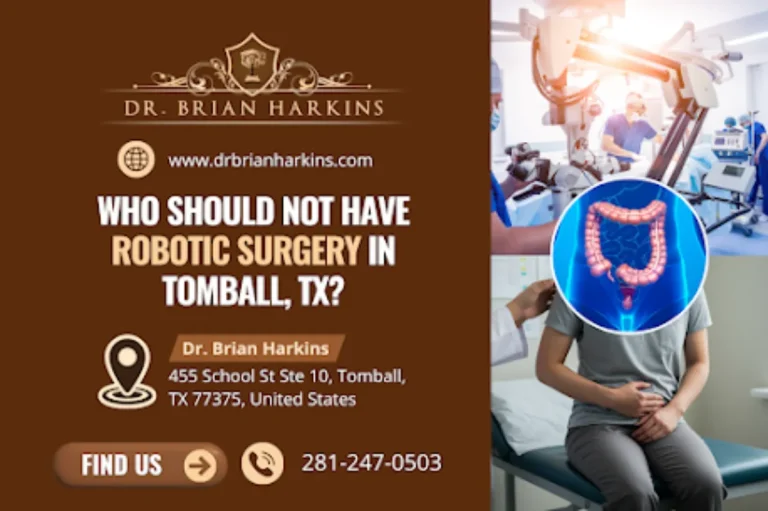
Robotic surgery is not right for everyone. Certain heart and lung conditions, extreme positioning risks, severe anatomical limitations, and specific cancer diagnoses can make traditional open surgery the safer choice. There are no absolute rules that disqualify every patient outright, but these factors require careful evaluation by your surgical team before a recommendation can be made.
Robotic-assisted surgery using the da Vinci system offers many patients faster recovery and less blood loss than traditional open surgery, but it is not the right choice for every situation. If you're considering a robotic surgery procedure in Tomball, TX, you might be wondering whether your age, weight, medications, or medical condition could make you a poor candidate. This article walks you through the key patient-related and disease-related factors that may make robotic surgery less suitable, so you can have an informed conversation with your surgeon.
Patients with serious heart or lung problems face higher risks during robotic-assisted surgery. Conditions like congestive heart failure, chronic obstructive pulmonary disease (COPD), pulmonary artery hypertension, or uncontrolled high blood pressure can make the procedure dangerous.
The reason comes down to positioning. Robotic surgeries often require steep Trendelenburg positioning, where your head is tilted down 30 to 45 degrees. This position increases pressure inside your skull, reduces oxygen to the brain, and makes it harder for your lungs to expand. Prolonged pneumoperitoneum can trigger excess carbon dioxide in the blood, respiratory acidosis, and additional stress on your heart.
| Condition | Risk Level | What's Required |
| Moderate to severe COPD | High | Pulmonology clearance, modified positioning |
| Congestive heart failure | High | Cardiology clearance, ejection fraction evaluation |
| Pulmonary arterial hypertension | High | Specialist clearance, may preclude robotic approach |
| Uncontrolled hypertension | Moderate | Blood pressure optimization before surgery |
| Mild controlled heart disease | Lower | Standard preoperative assessment |
If you have moderate to severe COPD or heart failure, your surgeon will need to carefully evaluate whether robotic surgery is safe. In some cases, a modified approach with less steep positioning or a shorter operative time can make the procedure possible with proper specialist clearance.
The steep Trendelenburg position combined with lithotomy (legs elevated) used in pelvic robotic surgeries creates unique risks beyond heart and lung stress. These risks increase significantly if the surgery lasts more than two hours, you have a high BMI, or you have existing vascular disease.
Positioning-related risks during robotic pelvic surgery include:
Patients with glaucoma or other eye conditions should discuss these risks carefully with their surgeon, as the increased intraocular pressure during surgery can cause permanent vision damage. This is a specific risk that requires screening and is not always discussed proactively unless you ask.
If you take blood thinners like warfarin, direct oral anticoagulants (DOACs), or antiplatelet drugs like aspirin or clopidogrel, robotic surgery requires careful planning. Your surgeon must balance the risk of bleeding during surgery against the risk of blood clots if medications are stopped.
Robotic surgeries carry specific bleeding risks, including thermal injuries from cautery and difficulty controlling bleeding in tight anatomical spaces. Studies show that high D-dimer levels before surgery and non-O blood type independently predict deep vein thrombosis after the procedure.
Typically, warfarin is stopped five days before surgery, while DOACs are held one to four days depending on your kidney function and the bleeding risk of your specific procedure. Your surgeon and primary care physician will create a detailed plan for stopping and restarting these medications safely.
Certain anatomical features or disease characteristics make robotic surgery impossible or unsafe regardless of the patient's overall health. For transoral robotic surgery (TORS), the robotic system simply cannot fit or reach the surgical site in some patients.
Absolute contraindications for transoral robotic surgery include:
For other robotic procedures, disease involving major blood vessels such as the internal carotid artery or vena cava, critical surrounding structures, or the prevertebral fascia may make complete surgical removal impossible robotically. In these cases, attempting robotic surgery could compromise cancer treatment outcomes or cause life-threatening vascular injury.
The learning curve for robotic surgery is steep. Surgeons typically need 21 to 31 cases to achieve basic proficiency, but complication rates remain elevated at low-volume centers even well beyond that initial period. As explained by the American College of Surgeons, procedural volume is one of the most consistent predictors of surgical outcomes.
Before agreeing to robotic surgery, ask these questions directly:
Some surgeons receive "global credentialing" that allows them to perform any robotic procedure, even those outside their training scope. Expertise in robotic prostate surgery does not translate to robotic heart surgery. Inadequate credentialing, lack of mentorship, and insufficient training directly increase patient risk.
Age alone is not a reason to avoid robotic surgery, but frailty is. Frail elderly patients, defined by three or more of these factors including multiple chronic conditions, low physical activity, unintentional weight loss, exhaustion, or fatigue, had a 7% major complication rate compared to 2% in non-frail patients.
Patients age 80 and older can safely undergo robotic surgery if they are not frail. What matters more than age is cognitive reserve, functional status, and ability to tolerate prolonged positioning. Your surgeon should use a comprehensive geriatric assessment, not just your birth date, to determine candidacy. If your surgeon is not conducting this kind of evaluation for elderly patients, that is worth raising.
Contrary to older assumptions, obesity alone is not a reason to avoid robotic surgery. Modern evidence shows that robotic-assisted surgery is actually safer than open surgery for obese patients, with lower complication rates than even laparoscopic approaches in some studies.
The da Vinci system's 3D magnification and precision instruments help surgeons navigate through adipose tissue more safely than traditional methods. Obese patients often experience earlier discharge, less postoperative pain, and equivalent cancer staging compared to open approaches.
| BMI Range | Robotic Candidacy | Notes |
| Under 25 | Excellent | Standard approach |
| 25 to 30 | Excellent | Minimal additional consideration |
| 30 to 40 | Good for most procedures | Some added operative time |
| 40 and above | Procedure-dependent | TORS contraindicated; most others feasible |
| Extreme obesity (BMI 50+) | Case-by-case | Positioning risks increase; specialist evaluation needed |
If you have had previous abdominal surgery, scar tissue (adhesions) can complicate robotic procedures. Adhesions restrict visualization, increase the time needed to safely enter the abdomen, and raise the risk of accidentally injuring the intestines or other organs.
Surgery below the belly button carries the highest risk because that is where pelvic robotic procedures need to operate. Previous cesarean sections, appendectomies, or prior cancer surgeries all create adhesions that must be carefully separated before the main procedure can begin.
This is not an absolute contraindication. Many patients with prior surgery successfully undergo robotic procedures. However, your surgeon must anticipate longer operative time and the possibility of converting to open surgery if adhesions are too severe or dense to safely navigate.
A thorough preoperative evaluation is essential to identify patients who should not have robotic surgery or who need modifications to proceed safely. According to MedlinePlus, preoperative assessment is a critical safety step for any surgical procedure. As a robotic surgeon in Tomball, Dr. Brian Harkins conducts comprehensive evaluations to match each patient to the right surgical approach.
| Risk Factor | Impact on Robotic Candidacy | Action Required |
| Moderate to severe COPD | May preclude standard approach | Pulmonology clearance |
| Heart failure (EF below 40%) | High risk for positioning | Cardiology clearance |
| Glaucoma or eye disease | Increased intraocular pressure risk | Ophthalmology screening |
| Blood thinners (warfarin, DOACs) | Bleeding and clot risk | Anticoagulation management plan |
| Prior abdominal surgery | Adhesion risk, longer OR time | Imaging to assess adhesion burden |
| BMI 40 and above | TORS contraindicated; others case-by-case | Procedure-specific evaluation |
| Frailty (3+ criteria) | Higher complication rate | Geriatric assessment |
Some patients will need formal clearance from a cardiologist or pulmonologist before surgery can proceed. Do not skip or rush this evaluation. It exists to protect you from preventable complications.
The following cases illustrate how these factors play out in practice and how the decision is rarely black and white.
A 72-year-old man with prostate cancer and COPD at 50% of normal lung function was initially considered high-risk. After pulmonology clearance, his surgical team modified the approach with less steep positioning, gentler insufflation pressure, and a plan for shorter operative time. The robotic prostatectomy proceeded successfully with careful postoperative lung monitoring.
A 58-year-old woman with uterine cancer and BMI of 42 was told by one surgeon she needed open surgery. A second opinion at a high-volume robotic center confirmed she was an excellent candidate. Modern robotic series show obese patients have complication rates under 5%, often better than open hysterectomy. She had earlier discharge and less pain than expected.
A 68-year-old woman with early-stage cervical cancer wanted minimally invasive surgery. However, clinical trial data published in the New England Journal of Medicine and FDA communications from 2019 showed that minimally invasive approaches, including robotic, were associated with lower survival rates compared to open surgery for cervical cancer. She chose open hysterectomy based on oncologic outcomes, not technical risk.
An 82-year-old man arrived hemodynamically unstable with an incarcerated hernia and an ASA score of 4. Despite having a da Vinci system available, the team chose rapid open repair. His poor functional reserve and inability to tolerate prolonged positioning made robotic surgery inappropriate in this emergency setting.
It depends on the severity and type of heart disease. Mild, well-controlled heart conditions may not prevent robotic surgery. Moderate to severe heart failure or uncontrolled conditions typically require cardiology clearance and may lead to a recommendation for open surgery or a modified robotic approach.
Not automatically. Mild COPD with well-preserved lung function may allow robotic surgery with appropriate precautions. Moderate to severe COPD requires pulmonology clearance and may necessitate modified positioning and shorter operative times. In severe cases, open surgery may be the safer option.
Yes, for most procedures. Modern evidence shows robotic surgery is safer for overweight and obese patients than open surgery in many cases. Morbid obesity (BMI 40 and above) creates access limitations for throat surgery (TORS) but is generally not a barrier for abdominal or pelvic robotic procedures.
Age alone is not a disqualifying factor. Patients in their 80s and older successfully undergo robotic surgery when they are not frail. Your functional status, cognitive reserve, and ability to tolerate positioning are far more important than your age on paper.
Frailty is a clinical syndrome defined by multiple factors including low physical activity, unintentional weight loss, exhaustion, weakness, and slow walking speed. Frail patients have higher complication rates than non-frail patients regardless of age. A comprehensive geriatric assessment helps identify frailty before surgery.
Current evidence and FDA guidance recommend open surgery for early-stage cervical cancer. Clinical trials showed worse oncologic survival with minimally invasive approaches compared to open surgery. This is a specific exception that overrides the general preference for minimally invasive techniques.
Adhesions increase operative complexity and time but are rarely an absolute contraindication. Your surgeon must evaluate the extent of prior surgery and adhesion burden. In some cases, the risk of bowel injury or inability to safely proceed makes open surgery the better choice.
Warfarin, direct oral anticoagulants (Eliquis, Xarelto, Pradaxa), and antiplatelet agents like aspirin and clopidogrel all require a stopping and restarting plan. Your surgical and medical teams will coordinate this based on your specific clotting risk and the bleeding risk of your procedure.
For pelvic procedures like prostatectomy or hysterectomy, look for surgeons who have performed more than 100 of your specific procedure robotically. General robotic credentialing is not the same as procedure-specific experience. Ask directly about case volume and complication rates.
Your surgeon will recommend the safest alternative, which may be traditional laparoscopic surgery or open surgery. In some cases, a second opinion at a high-volume robotic center may reveal that you are a better candidate than initially assessed. Always feel empowered to seek additional opinions.
Robotic surgery is an excellent option for many patients, but it requires honest preoperative evaluation to identify who it serves best and who is better served by a different approach. Heart and lung conditions, positioning risks, anticoagulation management, anatomical limitations, and specific cancer diagnoses all factor into this decision.
The goal of evaluation is not to find reasons to avoid robotic surgery but to ensure the right procedure is matched to the right patient. A thorough assessment protects you from preventable complications and sets realistic expectations for your recovery.
If you want to know whether robotic surgery is a safe option for your specific condition, call 281-247-0503 or contact us to schedule a consultation with Dr. Brian Harkins in Tomball, TX.
Schedule your robotic surgery consultation in Tomball today.
Contact Dr. Harkins to discuss your health history and candidacy for robotic surgery.


Dr. Brian Harkins is a renowned surgeon specializing in advanced, minimally invasive, and robotic surgical techniques. With a dedication to innovation and personalized patient care, he has transformed countless lives by delivering exceptional outcomes.
I want a website like this, where do i start?