455 School St. Bldg. 1, Suite 10 Tomball, Texas 77375
Mon-Thu: 9:00 am – 5:00 pm | Fri: 9:00 am – 2:00 pm


There is no single age cutoff for hernia surgery. Repair can be performed safely from infancy through advanced age, and timing depends on the type of hernia, whether symptoms are present, and overall health rather than age alone. Incarcerated or strangulated hernias require immediate surgery at any age.
If you or a loved one has been diagnosed with a hernia in Tomball, TX, one of the first questions you'll likely ask is whether surgery is needed now, and whether age plays a role in that decision. Parents wonder if their infant is too young for anesthesia, while older adults may worry they're too old for a safe hernia repair.
The truth is that there's no single age cutoff for hernia surgery. Instead, the timing depends on the type of hernia, your symptoms, and your overall health. National health resources such as MedlinePlus note that hernias affect men, women, and children alike, and that treatment is usually surgical repair. In this guide, you'll learn how surgeons decide when hernia repair is appropriate at every stage of life, from newborns to seniors, so you can make an informed decision with confidence.
Hernias affect people of all ages, from newborns to elderly adults. The timing of hernia surgery depends heavily on the type of hernia, the patient's age, and whether symptoms are present. In Tomball, TX, both pediatric and adult surgical options are available to address these conditions appropriately.
Different hernias behave differently across age groups. Some resolve on their own in young children, while others require prompt surgical intervention regardless of age, and understanding which category applies is the first step toward sensible timing. The table below summarizes how the major hernia types are handled across the lifespan, and each is explained in detail in the sections that follow.
| Hernia Type | Age Group | Typical Timing |
| Umbilical | Infants and young children | Observe until age 4 to 5; most close naturally |
| Inguinal (preterm infants) | Premature newborns | Late repair after NICU discharge and at least 55 weeks postmenstrual age |
| Inguinal (full-term children) | Infants and children | Elective repair within weeks to one month of diagnosis |
| Inguinal (adolescents) | Ages 14 to 17 | Adult mesh-based techniques may be more appropriate |
| Groin hernias (adults) | Any adult age | Surgical treatment when symptomatic; mesh repair first choice |
| Hiatal | Any age | Symptom-driven rather than age-driven |
This overview of common hernia conditions provides additional context on how each type presents and progresses.
Umbilical hernias are extremely common in newborns, affecting 15 to 23% of infants. The good news is that most small umbilical hernias close naturally without any intervention, with closure rates reaching around 95% for defects under one centimeter by age five.
The risk of complications is very low. Incarceration risk is under 1%, with most events occurring in the first year of life, which is why observation rather than early surgery has become the standard approach for uncomplicated cases. Parents are often surprised that doing nothing is the recommended course, but in this specific situation the body reliably resolves the defect on its own.
Contemporary guidelines recommend observation of asymptomatic umbilical hernias until age 4 to 5. Surgery is reserved for specific situations:
AAP guidelines have measurably shifted practice toward delayed repair, partly because anesthesia exposure in children under 3 years might affect learning and behavior if prolonged beyond 3 hours. However, single short exposures appear unlikely to have significant effects, so anesthesia concern alone is not a reason to avoid a clearly indicated operation.
Inguinal hernias are more common in boys and premature infants, arising from a patent processus vaginalis. These hernias carry a higher risk of complications than umbilical hernias, particularly in young infants, and unlike umbilical hernias they do not resolve on their own.
For preterm babies, timing matters significantly. A randomized trial found that late repair after NICU discharge and at least 55 weeks postmenstrual age resulted in fewer serious adverse events, at 18% versus 28%, compared to early repair before discharge.
Delaying repair in preterm infants reduces recurrence and postoperative respiratory insufficiency. This is one of the clearest examples of age-specific timing improving outcomes rather than simply postponing a necessary procedure.
For full-term babies and older children with inguinal hernias, the approach differs from umbilical hernias. Elective repair within weeks to one month of diagnosis is recommended for reducible hernias.
If the hernia becomes incarcerated, meaning trapped and unable to be pushed back, urgent or emergency surgery is required regardless of age. This is why prompt diagnosis and appropriate timing are essential, and why a wait-and-see approach that suits an umbilical hernia is not transferable to an inguinal one. The distinction between these two common childhood hernias is the single most important thing for parents to understand, since the correct response to each is nearly opposite.
Teenagers represent a unique age group where surgical approach matters as much as timing. Adolescents aged 16 to 17 treated by pediatric surgeons had 2.5% recurrence versus 0.8% in younger children. Interestingly, young adults treated by adult surgeons had only 1.2% recurrence.
Obese males aged 14 to 17 had the highest recurrence rate at 4.7%. This suggests mesh-based adult techniques may be more appropriate for older adolescents, particularly those with higher body mass index, and it illustrates that the right operation for a teenager is not always the pediatric one. Choosing the surgical pathway thoughtfully at this age can meaningfully reduce the chance of a second operation later.
For adults with minimal symptoms, surgery isn't always immediately necessary. A randomized trial found watchful waiting safe for minimally symptomatic male inguinal hernias, with similar outcomes to immediate repair at two years, and acute incarceration occurred at only 1.8 per 1000 patient-years.
However, about 23% of patients eventually chose surgery due to increasing pain. This highlights that while waiting is possible, many people ultimately need repair for quality of life, so watchful waiting is best understood as a deferral rather than a permanent alternative. Adult hernias do not close on their own, which means the question is usually when to repair rather than whether to.
Age alone should not prevent hernia repair. In fact, delaying surgery in elderly patients can be dangerous. Emergency groin hernia repair in older adults has 21 to 29% complication rates and 1.2 to 6% mortality, much higher than elective repair.
Elective surgery is safer than watchful waiting in elderly patients given these increased emergency risks. Femoral hernias have higher strangulation risk and warrant timely repair regardless of patient age, which makes them a particular exception to any conservative approach. The reasoning runs opposite to what many older patients expect, since the risk of waiting compounds with age while the risk of a planned operation does not rise nearly as steeply.
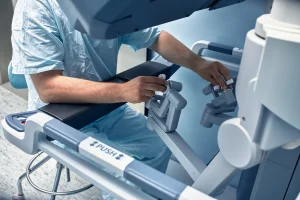
International guidelines recommend that symptomatic groin hernias should be treated surgically at any adult age. Mesh repair, either open surgery or laparoscopic, is the first choice, with day surgery recommended. General anesthesia is preferred over regional anesthesia in patients 65 years and older. Modern robotic hernia repair falls within this minimally invasive category and is widely used for adult repairs today.
Hiatal hernias are repaired based on symptom severity and reflux control rather than age. Patients with severe heartburn, difficulty swallowing, or respiratory problems may benefit from surgery at any age, and the decision often overlaps with anti-reflux surgery planning.
Some experts recommend surgery for asymptomatic patients under 50 with large paraesophageal hernias to prevent complications, though this approach is debated. The decision balances the risk of future emergency surgery against the risks of elective repair.
In children, the median diagnosis age is 10 months, with surgery driven by severe reflux and respiratory complications rather than a specific age threshold.
General and Minimally Invasive Surgery (Singh Surgery) offers advanced laparoscopic and robotic surgery for adults and older adolescents in Tomball. These minimally invasive techniques often result in faster recovery and less postoperative pain. HCA Houston Healthcare Tomball's surgery center provides day-surgery infrastructure, allowing many patients to go home the same day as their procedure.
Infants and children are typically referred to Texas Children's Hospital in Houston for age-appropriate pediatric surgical care. This ensures specialized pediatric anesthesia and nursing support tailored to the unique needs of young patients. Pediatric hernia repair requires different techniques and expertise than adult surgery, making specialized pediatric surgical centers the best choice for younger children.
The question of what age a hernia can be operated on doesn't have a single answer. Surgery can be performed safely from infancy through advanced age when medically indicated, and the decision rests on a handful of clear factors:
Working with an experienced surgeon who understands age-specific considerations ensures the best timing and approach for hernia treatment, whether that means watchful monitoring, scheduled repair, or referral to a specialized center. The goal in every age group is the same, which is to operate under planned conditions rather than emergency ones.
There is no single age cutoff. Hernia repair can be performed safely from infancy through advanced age when medically indicated. Timing depends on the hernia type, whether symptoms are present, and the patient's overall health.
Not necessarily. Umbilical hernias are usually observed until age 4 to 5 because most close naturally. Inguinal hernias in children require repair within weeks to one month of diagnosis, since they do not resolve on their own.
Most do. Umbilical hernias affect 15 to 23% of infants, and closure rates reach about 95% for defects under one centimeter by age five. Incarceration risk is under 1%, mostly during the first year of life.
Late repair after NICU discharge and at least 55 weeks postmenstrual age produced fewer serious adverse events, 18% versus 28%, than early repair before discharge. Delaying also reduces recurrence and postoperative respiratory insufficiency.
Guidelines have shifted toward delayed repair partly because anesthesia exposure under age 3 might affect learning and behavior if prolonged beyond 3 hours. However, single short exposures appear unlikely to have significant effects.
Adolescents aged 16 to 17 treated by pediatric surgeons had 2.5% recurrence versus 1.2% for young adults treated by adult surgeons. This suggests adult mesh-based techniques may suit older adolescents, especially those with higher body mass index.
Age alone should not prevent repair. Delaying is often more dangerous, since emergency groin hernia repair in older adults carries 21 to 29% complication rates and 1.2 to 6% mortality, well above elective repair.
For minimally symptomatic male inguinal hernias, watchful waiting was found safe with similar two-year outcomes to immediate repair. However, about 23% of patients eventually chose surgery due to increasing pain, so waiting often delays rather than avoids repair.
International guidelines recommend general anesthesia over regional anesthesia in patients 65 years and older undergoing groin hernia repair. Mesh repair, whether open or laparoscopic, is the first choice, with day surgery recommended.
Hiatal hernias are repaired based on symptom severity and reflux control rather than age. Severe heartburn, difficulty swallowing, or respiratory problems may warrant surgery at any age, and in children the median diagnosis age is 10 months.
Age is one input into hernia timing, not the deciding factor. Infants with small umbilical hernias are usually watched because the defect closes on its own, children with inguinal hernias are repaired early because it will not, and older adults are generally better served by elective repair than by waiting for an emergency that carries far higher risk.
What holds across every age group is that planned surgery beats emergency surgery, and that an incarcerated or strangulated hernia demands immediate care regardless of how old the patient is. An individualized assessment with a surgeon who understands these age-specific patterns is the surest way to get the timing right.
Find out whether now is the right time for repair.
Schedule an assessment with a Tomball hernia specialist today.


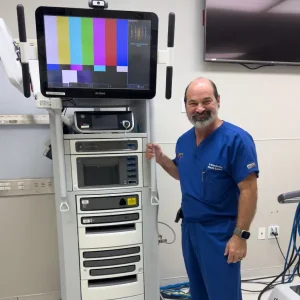
Dr. Brian Harkins is a renowned surgeon specializing in advanced, minimally invasive, and robotic surgical techniques. With a dedication to innovation and personalized patient care, he has transformed countless lives by delivering exceptional outcomes.

I want a website like this, where do i start?